Alternatives
CitedEvidence alternatives with clearer prices and traceable citations
CitedEvidence puts a lot under one login: search over its own scholarly index, PDF chat, a citation generator, a systematic-review tool, and generators for thesis sections and proposals. What it doesn't give you yet is much to go on. It lists no free plan, its pricing page contradicts itself on credits, and no independent benchmark of its citation accuracy has been published.
Paperguide is the nearest match, with systematic reviews, a free plan and a body of Trustpilot reviews to read first. Ponder suits people who think visually. Elephas answers questions from your own PDFs and keeps them on your Mac. EthiWrite, which we make, is for students who want citations drawn only from sources they added.
Prices and features checked on October 17, 2026.
Why CitedEvidence is hard to commit to
Everything runs on credits, and the numbers don't line up. Basic is $10 a month and is listed with both 500 and 100 credits; Advanced, at $85, with both 10,000 and 5,500. Premium is $25 for 1,200 credits. Yearly billing is offered (“Save up to 20%”), but the yearly prices aren't shown.
You can't settle the question by trying it for free, either. An Explore mode opens the system with no account, but its limits aren't stated, so you can look around without learning what a paid month would get done.
Outside opinion is thin. Its Product Hunt launch shows 0 upvotes and one comment, from the maker. The one detailed third-party review is a desk review with no hands-on tests: it credits the range of tools and databases, but notes the missing accuracy benchmark, credit pricing that's hard to predict and very few public reviews.
It also writes for you. AI Thesis generates “proposals, thesis sections, and long-form academic documents”, the AI Editor can “rewrite, humanize” academic text, and Premium includes the AI Humanizer. If you're a student, weigh that against your school's rules.
Credit where it's due: its index draws on Google Scholar, PubMed, Semantic Scholar, Crossref, arXiv and more, it connects a Zotero library on every plan with unlimited files, and the systematic-review tool includes screening and extraction.
What to look for in a CitedEvidence alternative
Credit counts you can plan around
A credit system is only fair if you can predict it. Ponder states its allowances plainly (50 credits a day free, 1,100 a month plus the daily 50 on Casual), and so does Paperguide (2,000 AI credits a month free, 12,500 on Plus).
A way to trace each citation yourself
With no accuracy benchmark to rely on, tracing matters more. Ponder opens the exact source paragraph when you click a citation, Paperguide links each claim to its source sentence, and Elephas opens the quoted passage and page in your own files.
A tool sized for the work you do
Systematic-review machinery is a lot to pay for if you're writing coursework essays. Paperguide's workflows, for one, centre on literature and systematic reviews for researchers and labs rather than on coursework essays.
The best CitedEvidence alternatives
1. EthiWrite
Full disclosure: this is our tool.
EthiWrite does less than CitedEvidence and tells you exactly what you get. The free plan needs no card and doesn't expire, its monthly allowances are written out in full, and uploading sources, searching papers, citing and export are never metered on any Plan. Citations come only from your Library, so when none of your sources supports a claim you get an empty result.
It won't write paragraphs from a prompt: Autocomplete gives a sentence at a time, and Examiner Mode critiques your argument without editing it. The trade-off is search breadth. Paper search covers one index, OpenAlex, rather than a commercial database, where CitedEvidence draws on Google Scholar, PubMed, Crossref and others.
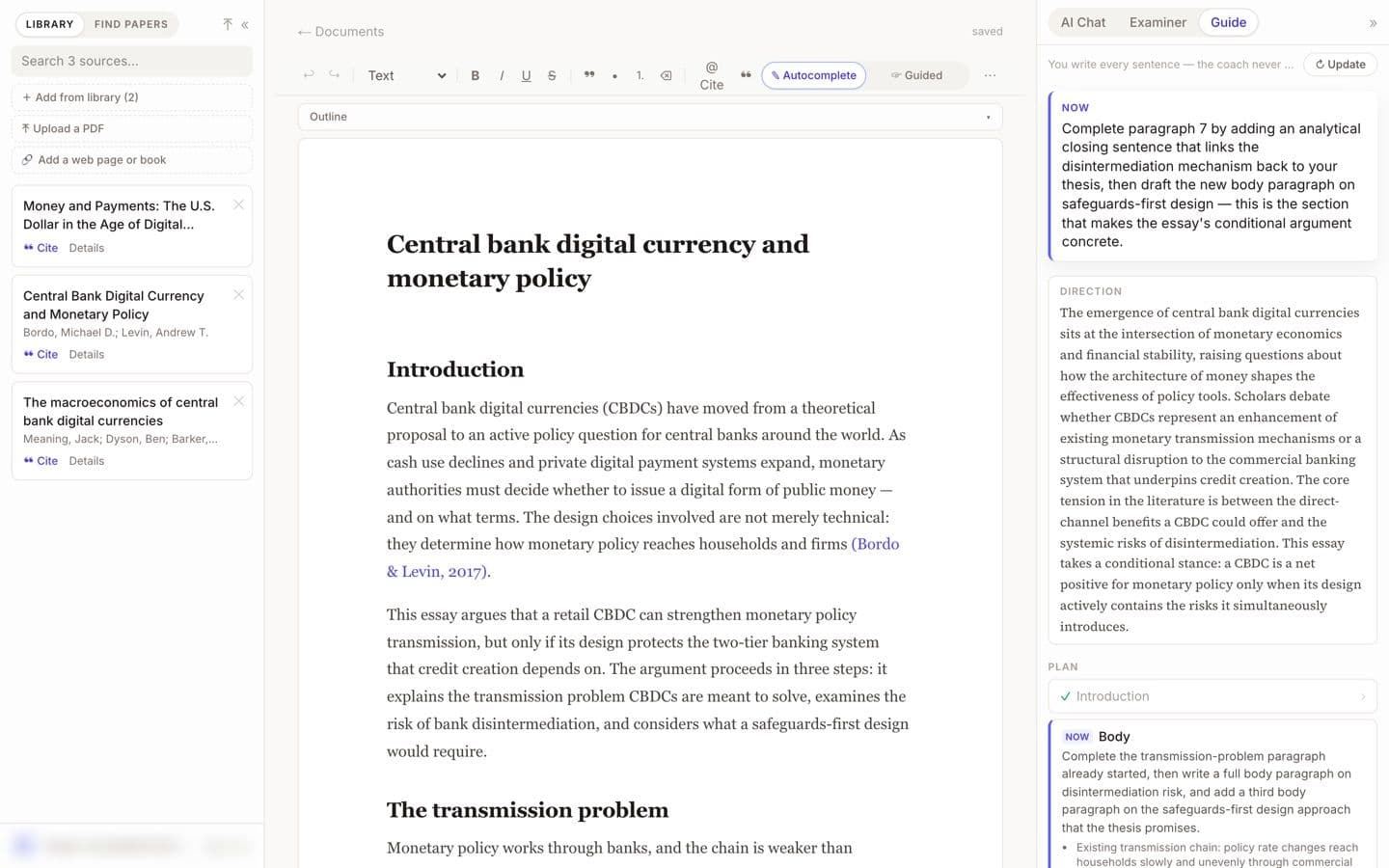
EthiWrite editor with the Guide panel open (demo account, email blurred). Best for: Students who want a free plan with stated limits and citations only from sources they added.
2. Paperguide
Paperguide covers much of the same ground as CitedEvidence. It searches 200M+ papers across PubMed, arXiv, OpenAlex and Semantic Scholar plus your library, runs systematic reviews with dual independent screening and a PRISMA diagram, and pulls details from many papers into a table where every value links to the statement it came from.
Prices are per seat and billed annually: Plus is $12 a month, Pro $29, Evidence Teams $89. The free plan has 2,000 AI credits a month. Its AI Writer will generate a citation-grounded draft from a research question. Trustpilot reviewers praise the search, extraction and systematic reviews, though a doctoral student on an annual plan reports frequent errors and crashes.
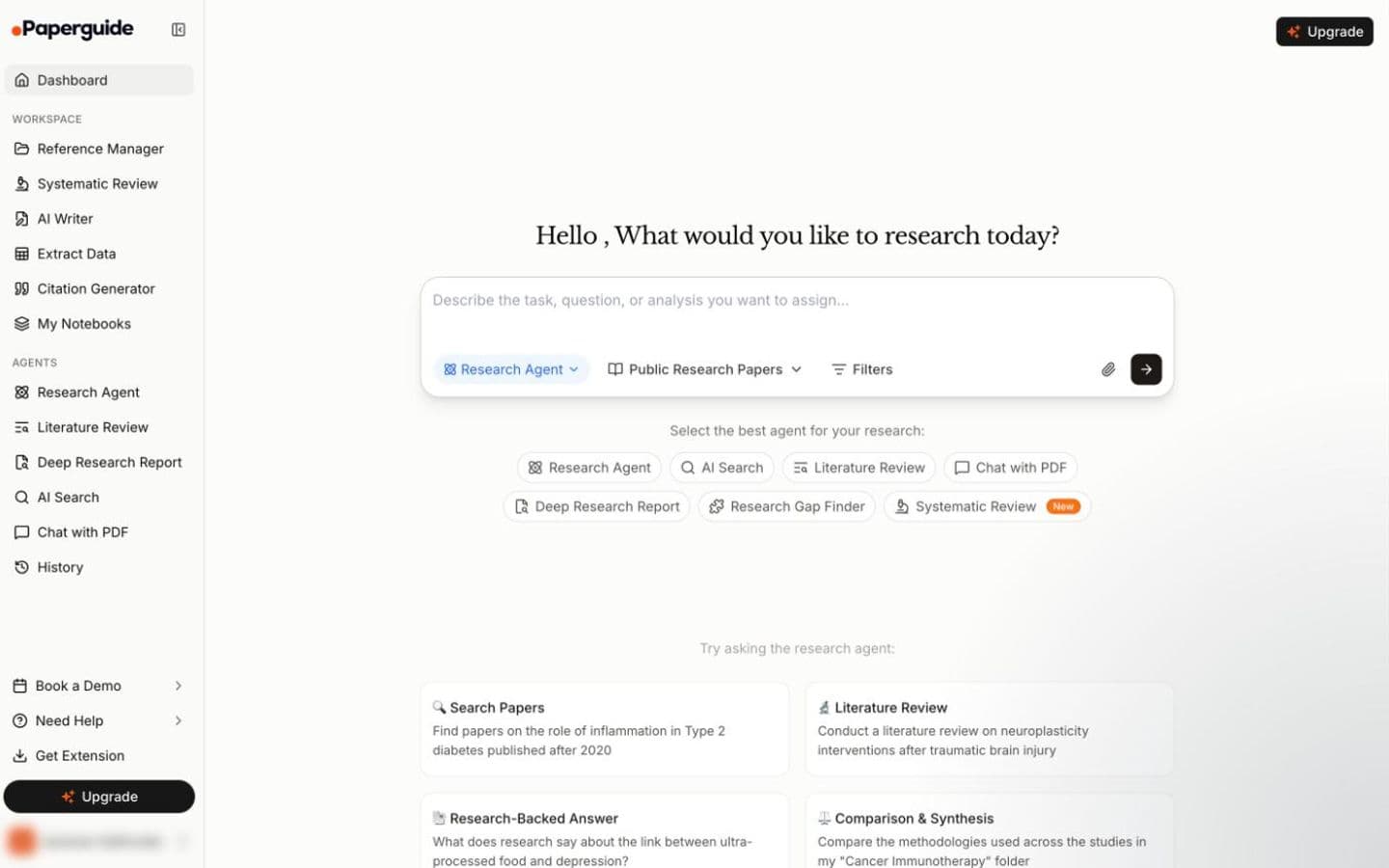
Paperguide dashboard, signed in to a free account (the account name is removed). Best for: Researchers who want CitedEvidence's review tools with stated credit limits and a free plan.
3. Ponder
Ponder is a research workspace for people who think in maps. It searches 320M+ scholarly works alongside your own PDFs, slides, audio and web links, and keeps mind maps, documents and slides in one project. Click a citation and its source paragraph opens; before export, it re-checks for retracted sources.
Ask it to and the Draft stage writes literature reviews and research reports from your sources. Casual costs $16 a month, or $14 billed yearly. The most detailed review was sponsored by Ponder, and it still warned that credits go faster than expected and that the AI sometimes needs very explicit instructions.
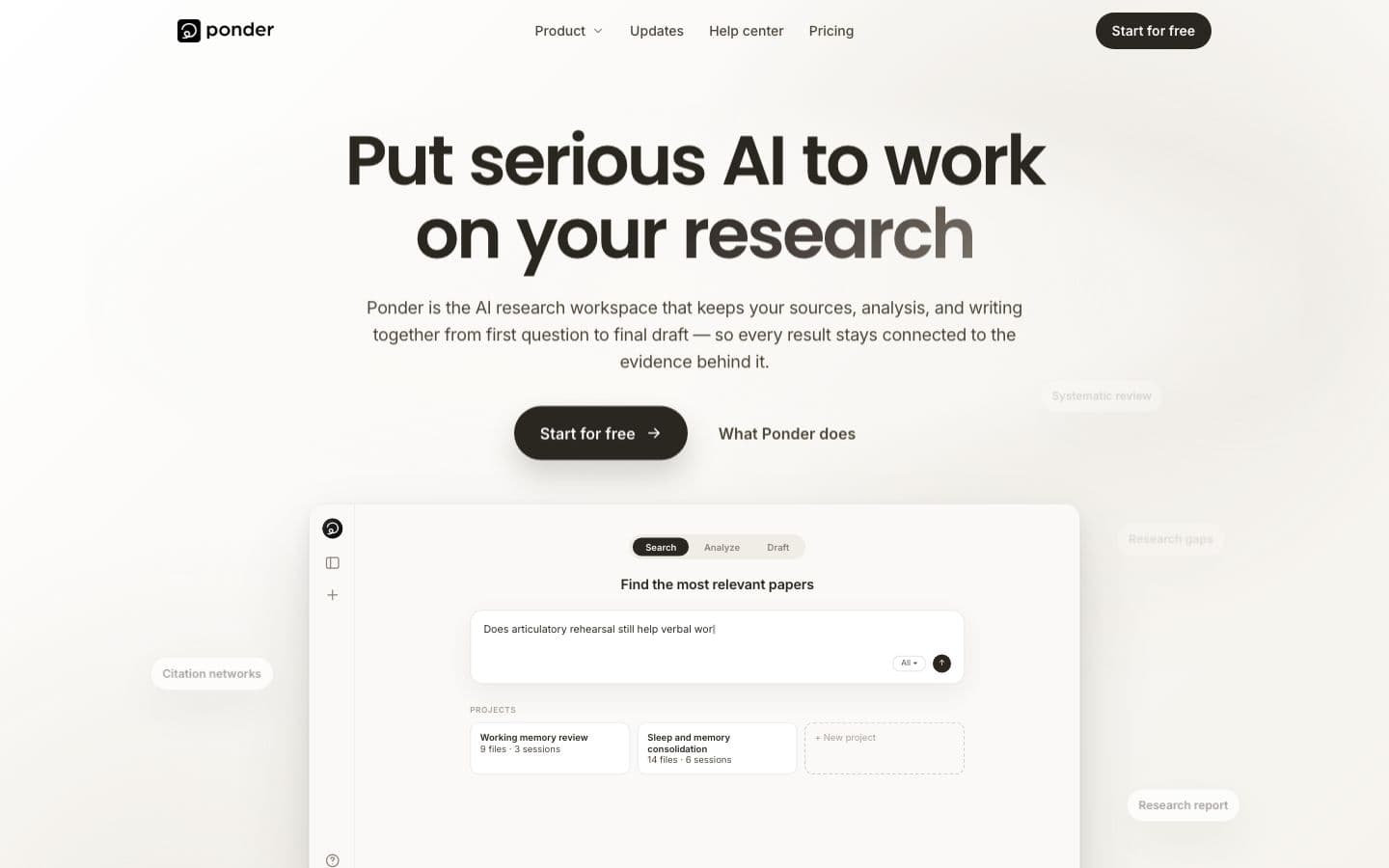
Ponder public homepage, signed out (the workspace needs an account). Best for: Researchers who want to map a literature and check every citation against its passage.
4. Jenni AI
Jenni AI is a writing tool first, with research built in. It searches 200M+ papers or takes your PDFs and Zotero or Mendeley libraries, and its AI chat answers from your library with citations. AI-suggested sentences link to their place in the PDF, and citations format in 10,000+ styles.
Its autocomplete writes sentences for you to accept, one after another, and can be limited to your own library. The free plan has 10 autocompletes a day with unlimited citations; Plus is $12 a month and Pro $29. When r/PhD was asked about tools like Jenni for citations, commenters pointed to a citation manager such as Zotero instead.
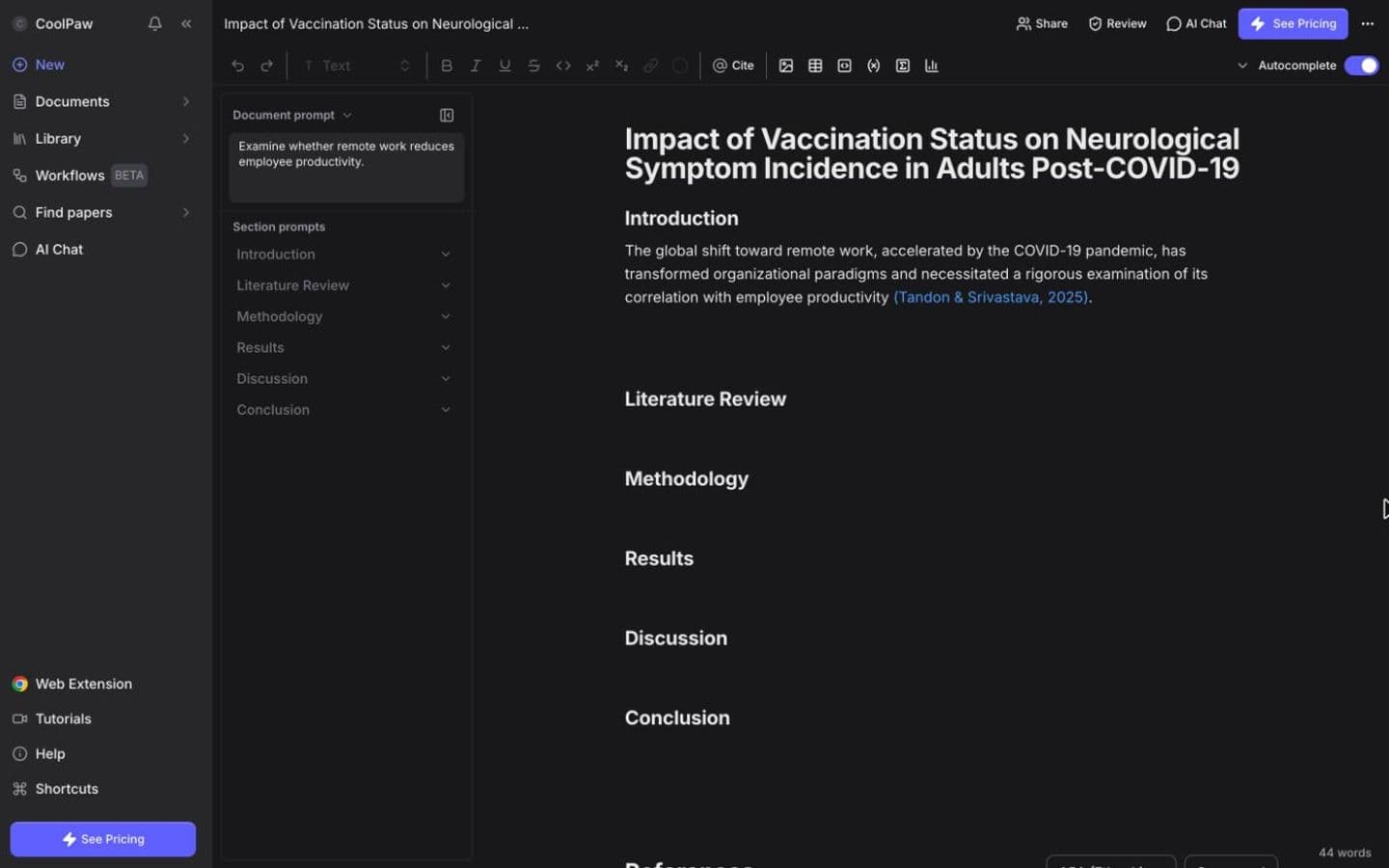
Jenni AI editor, signed in to a free account. Best for: Students who want paper search and citation formatting inside the editor where they write.
5. Elephas
Elephas covers one part of CitedEvidence's job, chatting with your PDFs, and keeps it on your own Mac. It's an app that answers questions from your own documents, citing the file, page and passage, and it keeps the documents, index and chats on your computer. It can hide names, emails and phone numbers before a question goes to a cloud model.
It isn't a writing tool and advertises no editor, citation styles or bibliography. It runs only on Apple Silicon Macs with macOS 14 or later. There's no free plan, just a 7-day trial, and Personal is $19 a month.
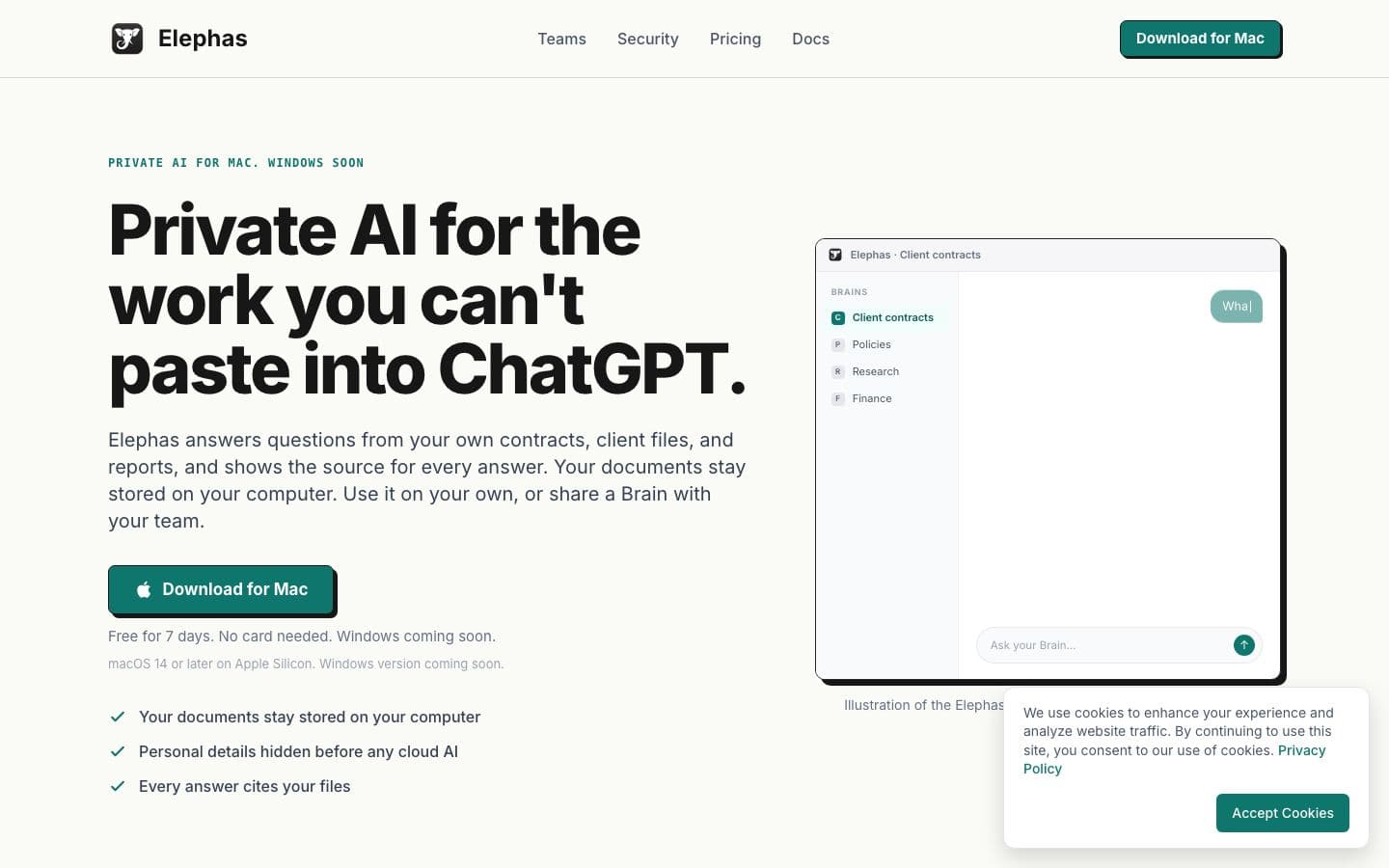
Elephas public homepage (it is a downloadable Mac app; the app itself was not captured). Best for: Researchers on a Mac who want to question a private stack of PDFs that stays on their Mac.
6. Thesify
Thesify is the one to pick if what you need is critique. Its Reviewer gives feedback on a draft's argument, clarity and methodology against rubrics for thesis strength, evidence and fit with the assignment, on documents of up to 100,000 words. Highlighting text also lets you search 200+ million references and add citations.
It says uploads are never shared, sold or used to train AI. Reviewer costs €14.95 for one review or €24.95 a month for three. Coauthor, the newer workspace whose agents can draft alongside you, is €7.50 a month billed yearly and comes with a 14-day trial. There's no free plan, and Reviewer itself has no trial.
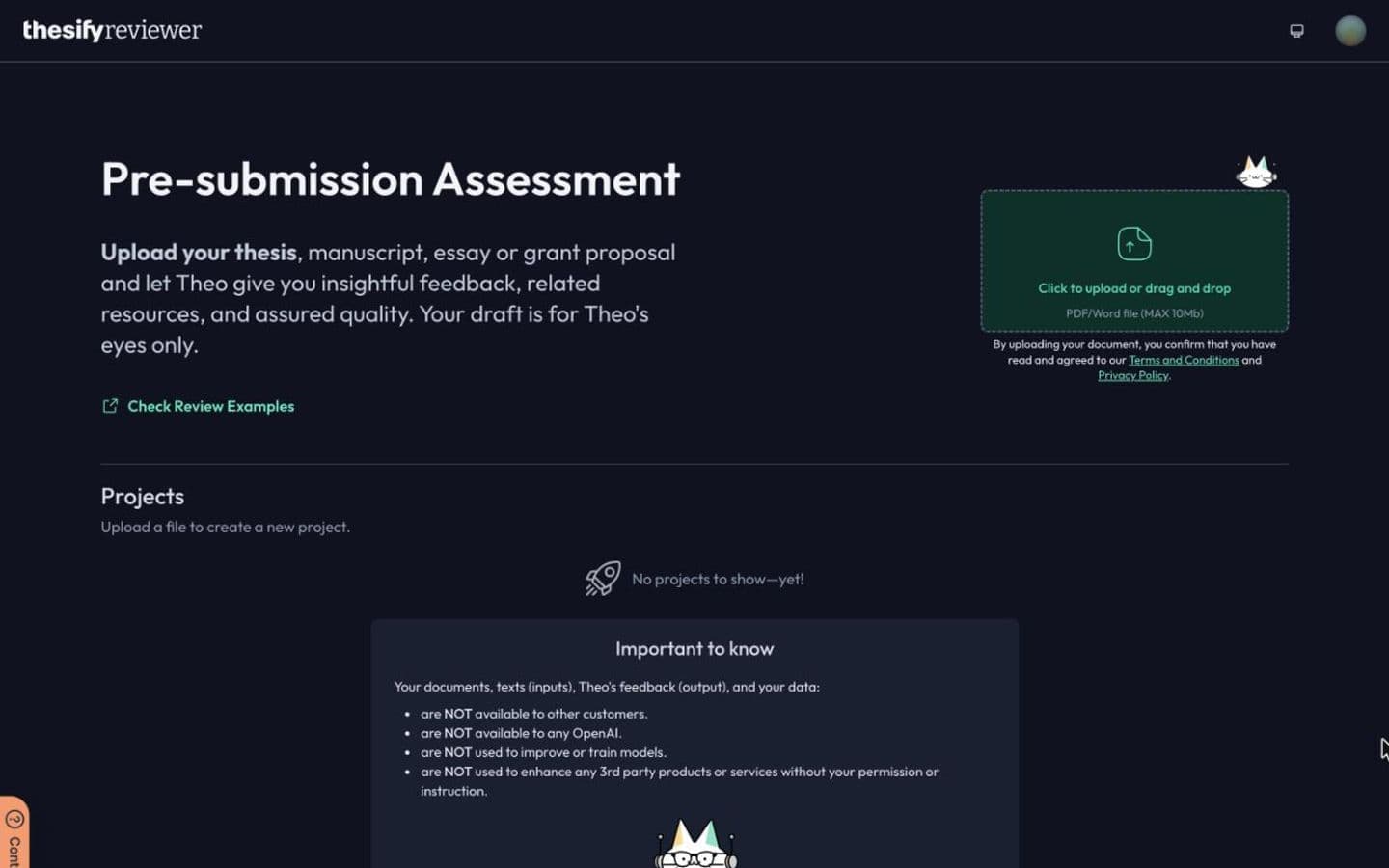
Thesify reviewer, signed in to a free account, before any document is uploaded. Best for: Graduate students who want rubric-based feedback on a thesis chapter before a supervisor sees it.
7. Paperpal
Paperpal is the editor of this group. It works in Word, Google Docs and Overleaf, runs 30+ pre-submission checks against journal language and formatting standards, and its Research and Cite search covers 250M+ articles, extracts insights from PDFs and formats citations in 10,000+ styles.
The free plan includes 200 grammar edits a month, 5 a day each of AI writing tools and research Q&A, and 5 files a month of chat with papers. Prime and Pro prices only appear once the page loads them for your region. It will draft with suggestions grounded in your sources, but it's mostly an editor of your own text.
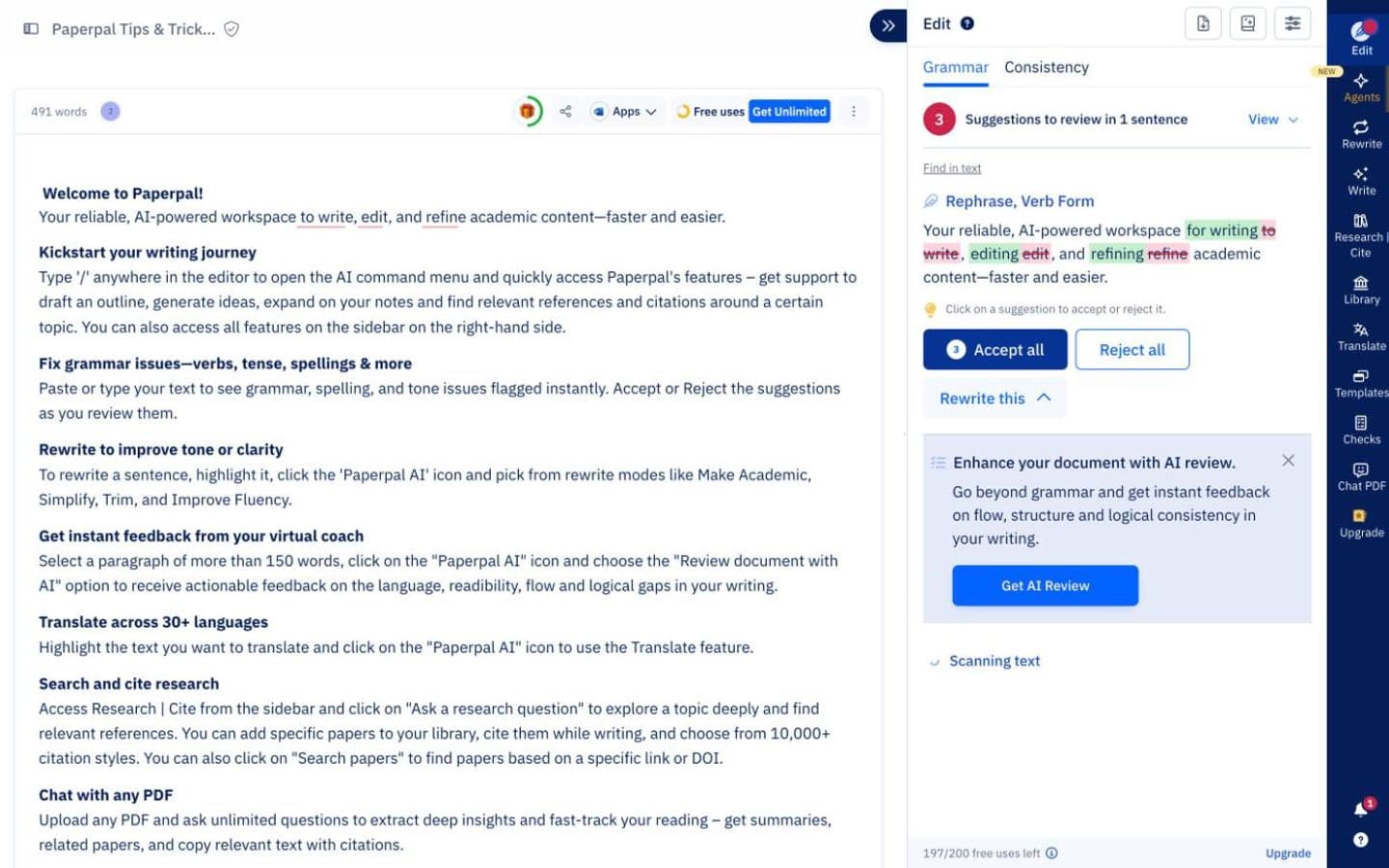
Paperpal editor on its built-in sample document, signed in to a free account. Best for: Researchers who want academic language checks and citation search inside Word or Overleaf.
At a glance
Every tool above, with CitedEvidence on the last row for reference. Writing assistants help you write; essay generators write the essay for you.
| Product | Type | Paid from | Free tier | Citations | Ghostwriting |
|---|---|---|---|---|---|
| EthiWrite | Writing assistant | $9 (billed every week) or $10/month ($120 billed annually) | Yes | Only from sources you added | Guides; you write |
| Paperguide | Writing assistant | $12/month | Yes | Your sources, or papers it finds for you | Drafts text when asked |
| Ponder | Writing assistant | $14/month | Yes | Your sources, or papers it finds for you | Drafts text when asked |
| Jenni AI | Writing assistant | $12/month | Yes | Your sources, or papers it finds for you | Drafts text when asked |
| Elephas | Writing assistant | $19/month | No | Only from sources you added | Guides; you write |
| Thesify | Writing assistant | €7.50/month | No | From its own paper database | Drafts text when asked |
| Paperpal | Writing assistant | See pricing page | Yes | Your sources, or papers it finds for you | Drafts text when asked |
| CitedEvidence | Writing assistant | $10/month | No | From its own paper database | Writes the essay |
The bottom line
CitedEvidence may grow into a strong suite, but today you'd be paying for conflicting credit numbers and no published accuracy check. For the same research tasks, try Paperguide or Ponder; for private PDFs, Elephas; for feedback on a draft you wrote, Thesify.
FAQ
- Does CitedEvidence have a free plan?
- None is listed. You can open the system in Explore mode without an account, but CitedEvidence doesn't say what that mode lets you do.
- Are CitedEvidence's citations accurate?
- No independent benchmark has been published, so there's no outside measure to go on. It cites from its own scholarly index, and Premium and Advanced let you choose up to 10 or 15 research sources per AI-generated document. Check every reference against the paper itself.
- Does CitedEvidence work with Zotero?
- Yes, on every plan, and your library can hold unlimited files. Among the alternatives, Paperguide's reference manager and Jenni AI also import from Zotero or Mendeley.
- Which alternative is best for a systematic review?
- Paperguide. It offers dual independent screening and a PRISMA diagram built from the review's own counts, with the final screening call left to a human. Plus handles systematic reviews of up to 1,000 papers and Pro up to 5,000.
- Can students use CitedEvidence for coursework?
- Searching papers and chatting with PDFs raise few questions. AI Thesis and the humanizer credits are another matter: generating thesis sections and humanizing them is exactly where your school's integrity policy applies, so read it first.