Compare
Rytr vs Yomu AI: which should a student pay for?
For a paper, Yomu AI. It's an academic editor with citation search, a source library and feedback on your draft. Rytr now pitches itself as an assistant that “remembers every client, conversation, and commitment”, and none of its writing use cases is about essays.
The real decision with Yomu is how much of the writing you want it to do. It will write a full, researched draft if you ask, which your course may not allow. Rytr's case rests on a free plan and a low price for everyday writing.
Prices and features checked on October 17, 2026.
At a glance
Writing assistants help you write; essay generators write the essay for you.
| Product | Type | Paid from | Free tier | Citations | Ghostwriting |
|---|---|---|---|---|---|
| Rytr | Essay generator | $9/month | Yes | Does not cite | Drafts text when asked |
| Yomu AI | Writing assistant | $10/month | No | Your sources, or papers it finds for you | Writes the essay |
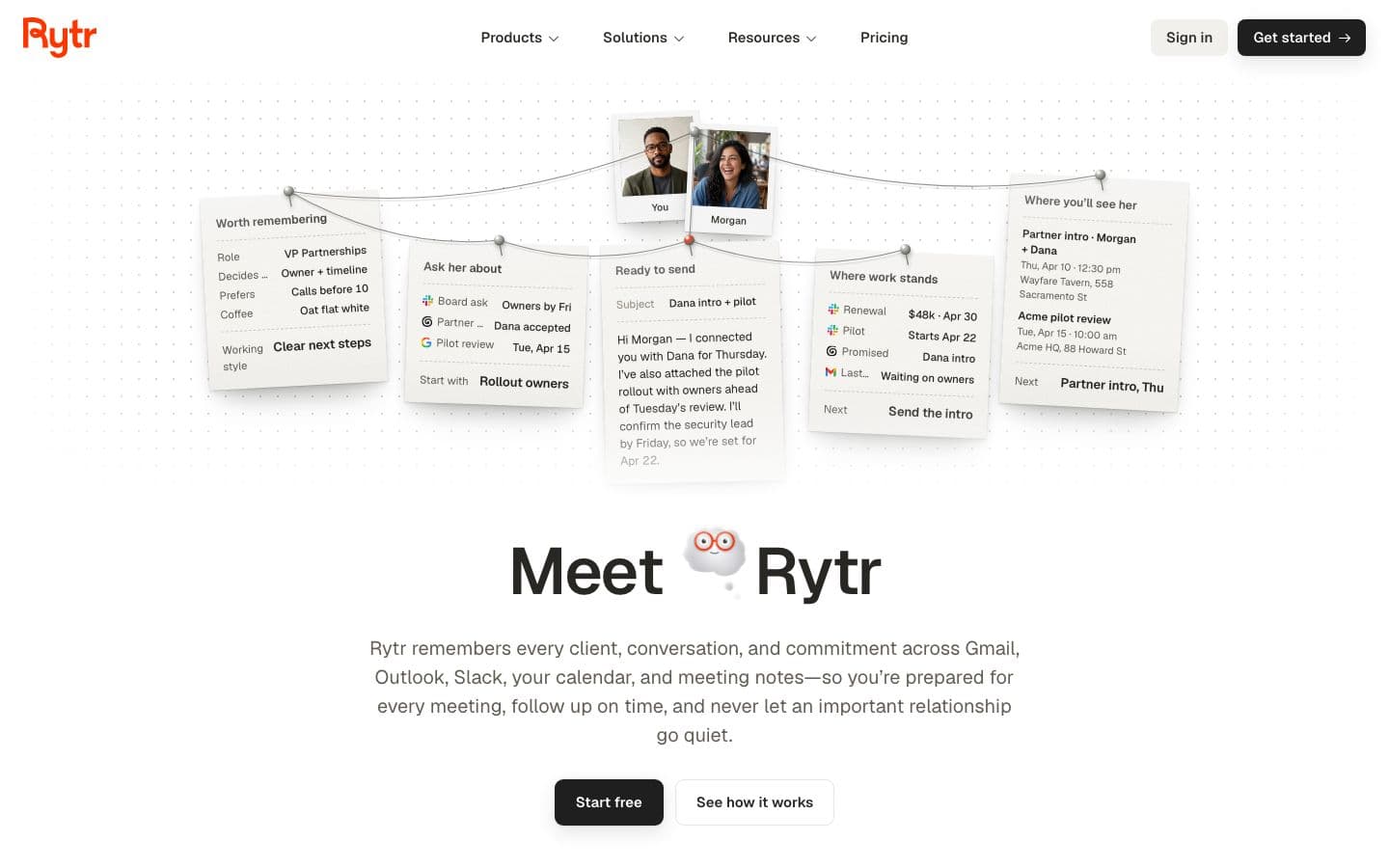
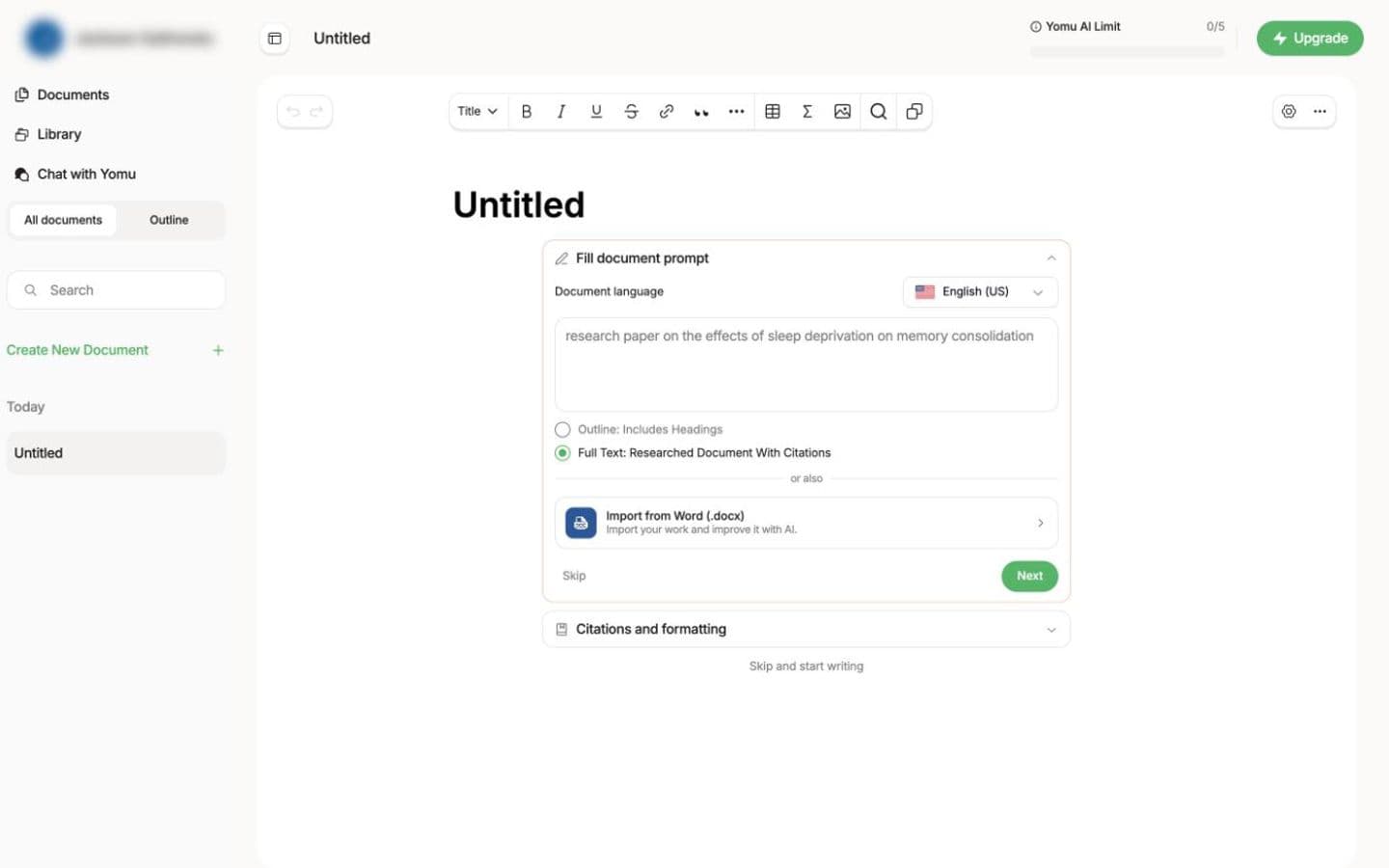
A paper workspace and an inbox assistant
Yomu AI is set up around a paper. You save sources to a personal library you reuse across documents, chat with PDFs, images and web search, and choose among models from several AI providers on the paid plans.
Rytr is set up around people. Its paid tiers are sized by active relationships and connected sources, and its writing side covers 40+ use cases such as emails, blog posts, ads and product pages, in 22 tones and 38 languages. Source-backed Ask Rytr answers questions from your email, Slack, calendar and notes.
Where the citations come from
Yomu cites from the sources saved in your library, or from sources its Sourcely-powered search finds for you, and formats them in 700+ styles. A review based on public information liked having drafting, citations and a library in one place, but warned that the citations still need checking against the sources. Read what you cite, especially the papers you didn't pick yourself.
Rytr has nothing to compare. Its site doesn't mention academic citations, references or paper search, and a review of its pre-relaunch version said it “cannot pull current facts, access SERP data, or verify claims”.
How much of the essay you hand over
Drafting sits at the centre of Yomu. Give it a description of the paper and you get back “a full, researched draft”, and its Document Assistant will help “write entire sections” on request. Yomu's ethics statement asks students to keep writing alongside it rather than let it replace them, which leaves the judgement with you and your course's AI policy.
Rytr also writes from a rough idea, including long-form blog posts, but it has no essay workflow and no academic-integrity policy on its homepage or pricing page. It's built for an email to a client, not a literature review.
Feedback before you submit
Yomu added Get Feedback in September 2026: focused academic reviews of your draft that you can preview and apply. Previewing matters, because applying a suggestion rewrites your text.
Rytr can improve, shorten, expand or continue text you wrote, which is rewriting on request rather than a review. Some Trustpilot reviewers found its output generic and in need of heavy editing.
What you'll pay
Compare them on monthly billing, the one basis both publish. Rytr Lite is $9 and Personal $19, both under Yomu Pro's $21, which caps you at 1,000 AI actions a month. Rytr Pro at $49 sits above Yomu Ultra's $35, which is unlimited. On annual billing Yomu drops to $10 and $17 a month; Rytr says yearly billing saves 20% but shows no yearly prices.
Rytr has a free-forever plan with 10,000 characters a month and no card. Yomu lists no free plan for its editor, though its pricing FAQ says you can start for free to try it, and it has separate free tools such as an essay outline generator and citation generators.
On billing, Rytr's terms say subscriptions “cannot be refunded” except case by case, and several of its Trustpilot reviewers describe refused refunds. Yomu has a single Trustpilot review, and it complains that the subscription renewed without notice.
Which should you choose?
Choose Rytr if what you need is quick everyday writing, emails, posts and client follow-ups, and a free plan that doesn't expire. It won't help with a paper's sources.
Choose Yomu AI if you're writing a paper and want citation search, a reusable source library and feedback inside one editor, and you're comfortable deciding how much of its drafting to use.
If Yomu writes more than your course allows and Rytr isn't built for academic work, EthiWrite, which we make, sits between them. Its autocomplete offers one sentence of about thirty words at a time, and nothing enters the essay unless you accept it. It formats citations in APA, MLA and Chicago only, far fewer styles than Yomu.
FAQ
- Does Yomu AI have a free plan?
- Its pricing page lists only paid plans, but its FAQ says you can start using Yomu for free to try the service. It also offers separate free tools, including a paraphrasing tool and citation generators.
- Can Rytr cite sources in an essay?
- Not academic ones. Its source-backed answers cite your own email, Slack, calendar and notes, and its site doesn't mention academic citations, references or paper search.
- Will Yomu AI write my paper for me?
- It will if you ask: describe the paper and it writes a full, researched draft. Its own ethics statement asks you to use it alongside your writing, not as a replacement, so check what your course permits.
- Can I choose the AI model in Yomu AI?
- On paid plans, yes: you pick among models from several AI providers for chat and editing. Ultra includes frontier models and unlimited AI actions.
- Is Rytr cheaper than Yomu AI?
- Its lower tiers are. On monthly billing Rytr Lite is $9 and Personal $19, against $21 for Yomu Pro, but Rytr Pro at $49 costs more than Yomu Ultra at $35.