Compare
Copy.ai vs Paperguide: a sales platform against a research workspace
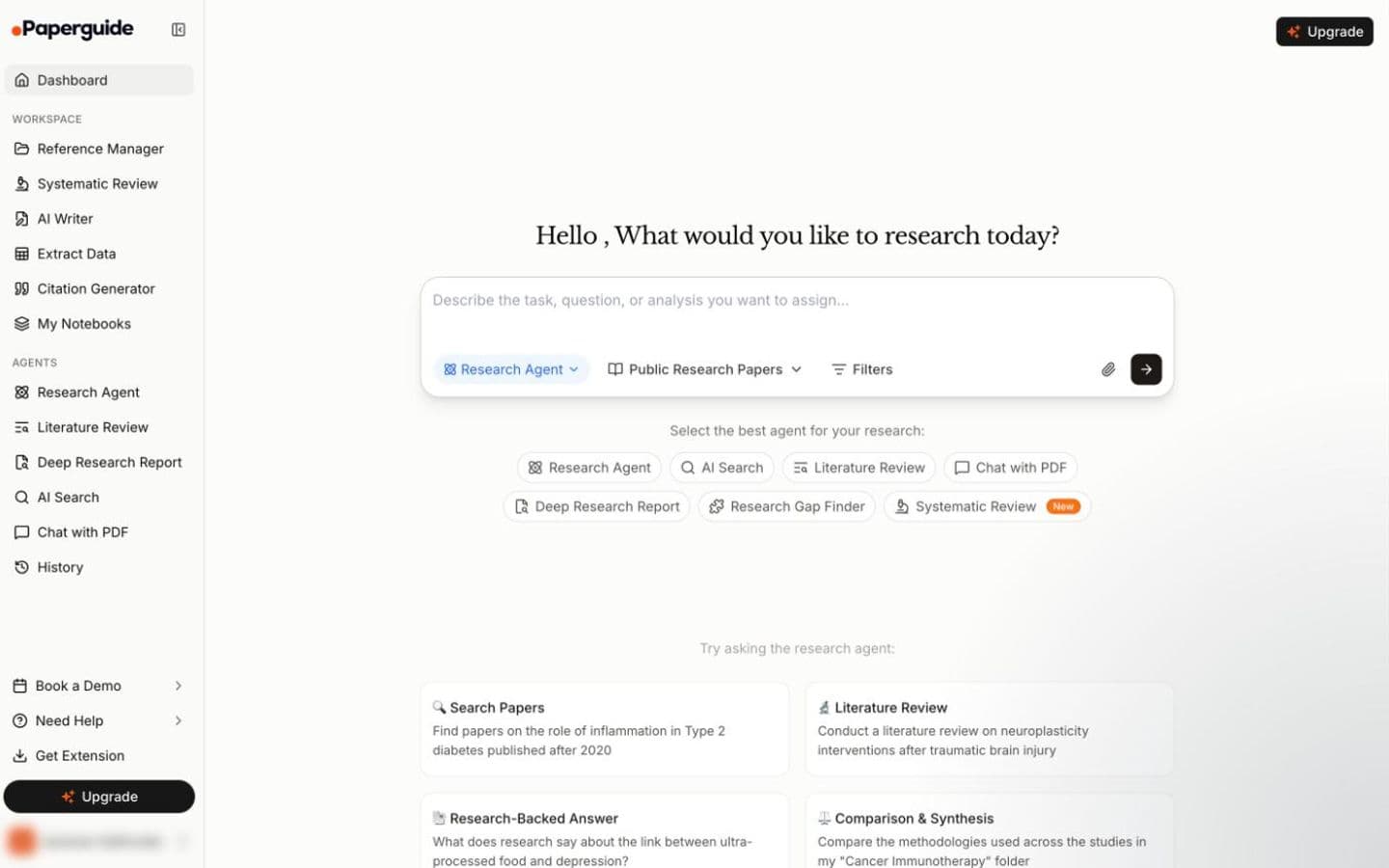
If your assignment runs on papers, Paperguide wins outright. It searches 200M+ papers across PubMed, arXiv, OpenAlex and Semantic Scholar, links every claim to the exact sentence in its source, and manages references in 1,000+ styles. Copy.ai's public pages don't describe finding, citing or formatting academic sources at all.
Where the two meet is drafting. Paperguide's AI Writer builds a citation-grounded draft from a research question, and Copy.ai writes whatever you ask it to. How much of that you let into your work is the decision that matters most here.
Prices and features checked on October 17, 2026.
At a glance
Writing assistants help you write; essay generators write the essay for you.
| Product | Type | Paid from | Free tier | Citations | Ghostwriting |
|---|---|---|---|---|---|
| Copy.ai | Essay generator | $29/month | Yes | Not verified | Drafts text when asked |
| Paperguide | Writing assistant | $12/month | Yes | Your sources, or papers it finds for you | Drafts text when asked |
Following a claim back to its source
Paperguide is built for checking. Every claim links to the exact sentence in the source paper, and Extract Data pulls chosen details from many papers into a table where each value links to the statement it came from. It cites from your own library and its index in the same document, and says AI-written passages are never given invented references.
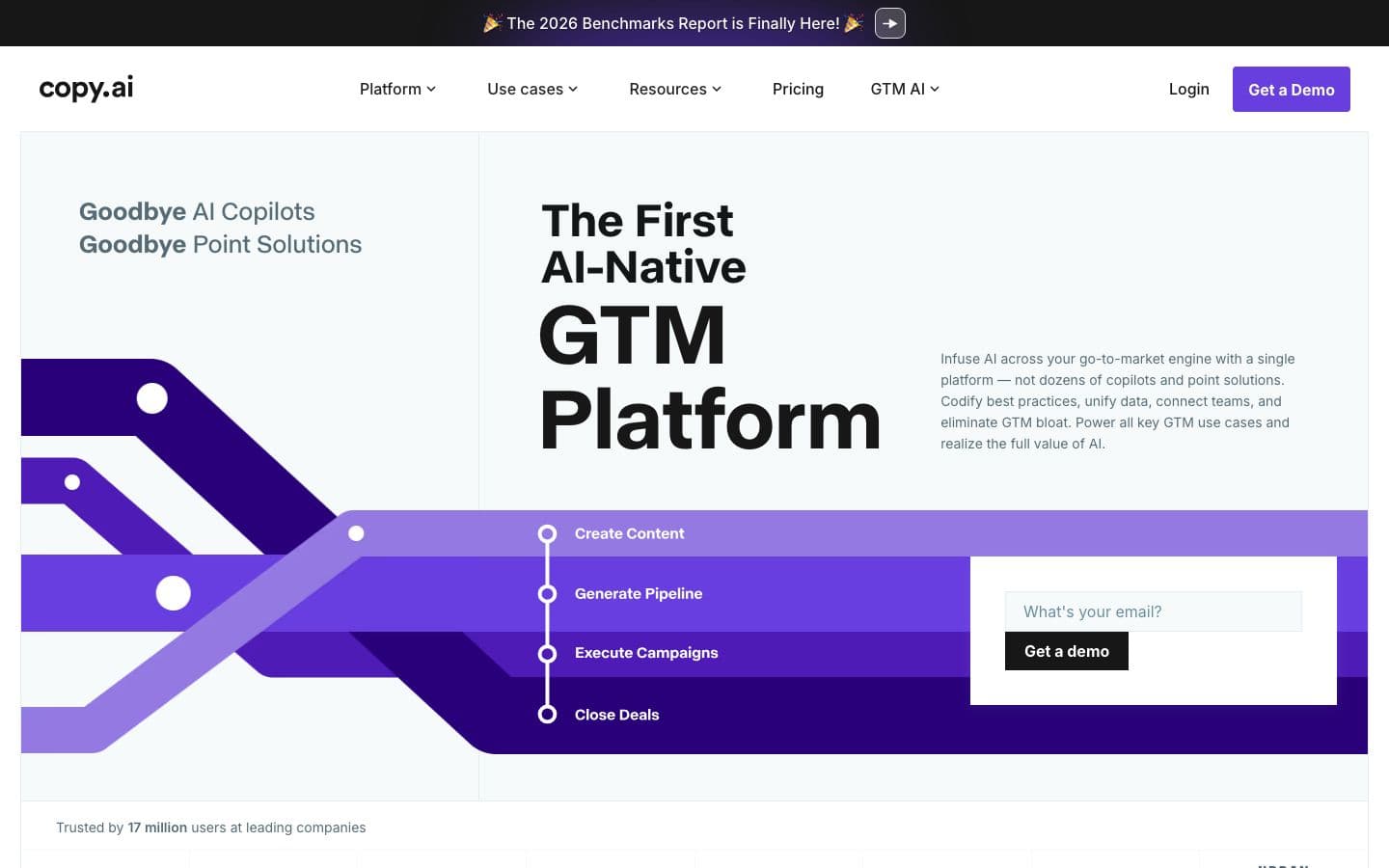
Copy.ai's story is thinner. Workflow credits can pay for “internet research”, but Copy.ai doesn't say whether or how that research is cited, and none of its pages describe academic sources. For an essay, every reference is on you.
Literature reviews versus marketing workflows
Paperguide's workflows centre on literature and systematic reviews, for researchers and labs more than coursework essays. Systematic reviews use dual independent screening and build a PRISMA diagram from the review's own counts, with the final screening call left to a human. Trustpilot reviewers praise the search, data extraction and systematic review features, and a support team that sorted out problems such as a Zotero connection quickly.
It doesn't suit everyone. Some reviewers found its results unhelpful for university assignments or unrelated to their research, and a doctoral student on an annual plan reports frequent errors and crashes.
Copy.ai's Workflows also chain research, content generation and tool integrations, but for go-to-market teams. Its homepage, pricing page and free tools index list nothing for essays, sources or citations.
Both will write the draft
Paperguide's AI Writer can “Generate a citation-grounded draft from a research question”, so it can produce the text for you. You can also write the piece yourself with the agent alongside.
Copy.ai writes whatever you ask for in chat or its generators. Its Paragraph Generator page even suggests using it to “draft literature reviews or discussion sections”, which is Paperguide's home ground, without saying where the sources for such a review would come from. Paperguide's draft is built on citations; Copy.ai doesn't describe citing anything. Either way, handing in generated text as your own is an academic-integrity risk.
Checking your work
Neither describes a feature that reads your essay and critiques its argument. Paperguide's free plan includes plagiarism checks on up to 4,000 words a month, and Copy.ai's free tools include a grammar checker. For a verdict on your reasoning, a tutor or a classmate still beats both.
Pricing: per seat or per team
Paperguide's free plan gives 2,000 AI credits a month, shared across the Research Agent, reports and AI Writer, with limited reference manager use and AI searches, plus Zotero and Mendeley import. Paid plans are priced per seat and billed annually: Plus is $12 a month, Pro $29 and Evidence Teams $89. Yearly billing is advertised as saving 41% over monthly.
Copy.ai's Chat plan is $24 a month billed annually ($288 a year) or $29 billed monthly, for five seats. On annual billing, a seat of Paperguide Plus costs half the Chat price, while Paperguide Pro costs more. Copy.ai's pricing page lists no free plan, though its free tools advertise 2,000 free words a month on sign-up, with limits that are unverified.
Read the reviews before you subscribe to either. Copy.ai's Trustpilot reviewers describe charges that kept coming after they cancelled, and one Paperguide reviewer found no way to remove a saved card short of deleting the account.
Which should you choose?
Choose Copy.ai if your writing is for a business and you want a chat workspace shared across five seats, running OpenAI, Anthropic and Gemini models. Keep it away from anything that needs a reference list.
Choose Paperguide if you're doing a literature or systematic review and want search, screening, extraction and writing in one place, with every claim linked to its sentence. Use the free plan's 2,000 credits before paying for a seat.
A coursework essay isn't a systematic review, and that gap is where our own tool, EthiWrite, sits. It cites only from sources in your Library and won't write paragraphs from a prompt, so it's slower than Paperguide's AI Writer if you want a draft. Its paper search covers one index, OpenAlex, where Paperguide searches several.
FAQ
- Is Paperguide free?
- Paperguide has a free plan: 2,000 AI credits a month, limited searches and reference manager use, and 4,000 words a month of plagiarism checks. Paid plans start with Plus at $12 a seat per month, billed annually.
- Can Copy.ai write a literature review?
- Its Paragraph Generator page suggests it can “draft literature reviews or discussion sections”, but Copy.ai doesn't describe finding or citing the papers a review rests on. Paperguide's AI Writer drafts from a research question, grounded in citations.
- Does Paperguide make up references?
- It says AI-written passages are never given invented references, and every claim links to its sentence in the source, so you can check. Do check: some reviewers found its results unrelated to their research.
- Does Paperguide work with Zotero?
- Yes. Its reference manager imports from Zotero or Mendeley, and that import is on the free plan too.