Compare
Jasper vs Paperguide: a marketing writer against a research platform
Both tools will hand you a draft. What you feed them is the difference. Paperguide's AI Writer starts from a research question and grounds the draft in citations. Jasper's Blog Post app starts from a target audience and writes marketing.
For anything with a reference list, Paperguide wins this outright, and its free plan lets you find out whether it suits you. Jasper is a tool for marketing teams that keeps getting listed next to academic writers.
Prices and features checked on October 17, 2026.
At a glance
Writing assistants help you write; essay generators write the essay for you.
| Product | Type | Paid from | Free tier | Citations | Ghostwriting |
|---|---|---|---|---|---|
| Jasper | Essay generator | $59/month | No | Not verified | Drafts text when asked |
| Paperguide | Writing assistant | $12/month | Yes | Your sources, or papers it finds for you | Drafts text when asked |
A research question or a target audience
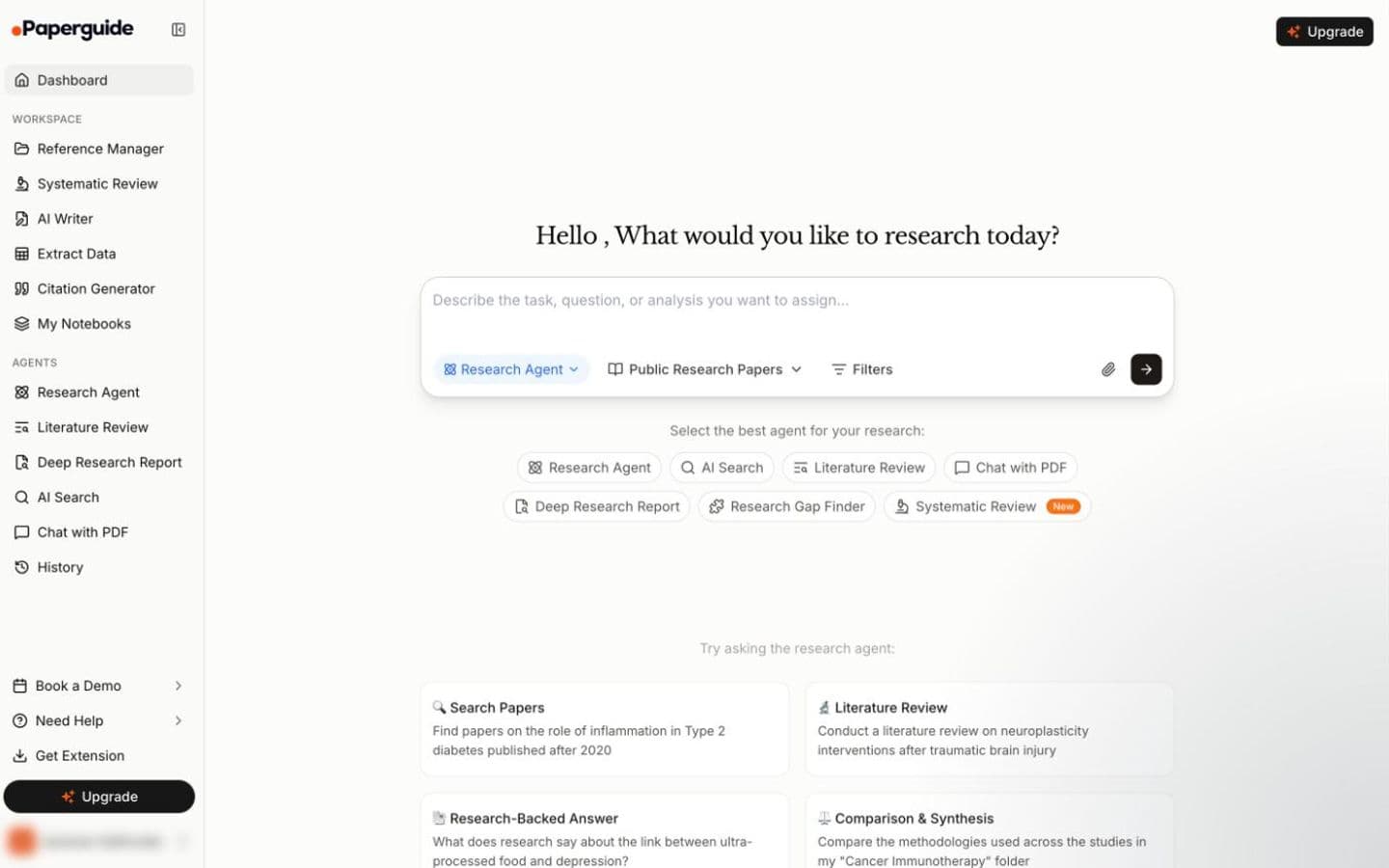
Paperguide's AI Writer will “Generate a citation-grounded draft from a research question”, or you can write yourself with its agent alongside you. Either way it can produce the text for you, so the choice of how much to let it write is yours to make and defend.
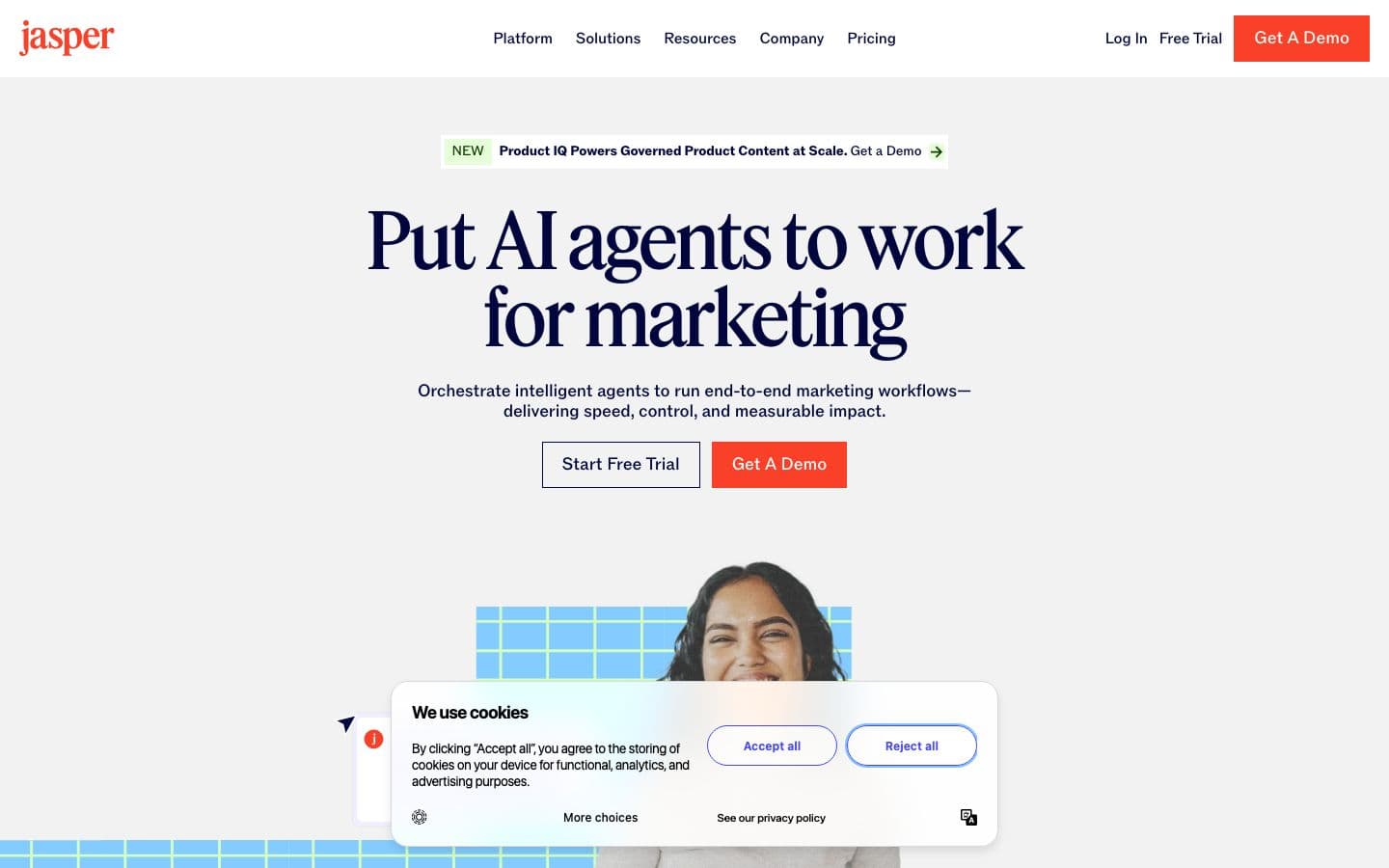
Jasper drafts whatever you prompt, with apps in its Canvas workspace and stored Brand Voices to keep the tone consistent. It bills itself as the place to “Put AI agents to work for marketing”. One guide for parents flags tools like it as a cheating risk, yet nothing on Jasper's own pages is aimed at coursework. AI Worth It, a review site written by an AI agent system, rates it for marketing teams and tells solo writers to skip it.
Evidence you can click through
This is Paperguide's strength. It searches 200M+ papers across PubMed, arXiv, OpenAlex and Semantic Scholar plus your own library, and every claim links to the exact sentence in the source paper. It says AI-written passages are never given invented references. The reference manager imports from Zotero or Mendeley and switches between 1,000+ citation styles.
Jasper advertises no academic citation support. On its site, citation means getting a brand mentioned by AI search engines, which won't help a bibliography.
Built for literature reviews
Paperguide's workflows centre on literature and systematic reviews for researchers and labs rather than coursework essays. Systematic reviews get dual independent screening and a PRISMA diagram built from the review's own counts, with the final screening call left to a human. Extract Data pulls chosen details from many papers into a table where every value links to its statement.
What neither describes is feedback on a finished draft: Paperguide's claims cover searching, screening and extracting, and Jasper's cover producing content. Trustpilot reviewers praise Paperguide's search, extraction and systematic reviews, while some found its results unhelpful for university assignments. That second group is worth hearing if you're an undergraduate with a 2,000-word essay.
Per-seat prices, side by side
Both price per seat. On annual billing, Paperguide Plus is $12 a month and Pro $29, with Plus covering systematic reviews of up to 1,000 papers and Pro up to 5,000. Evidence Teams, with dual-reviewer screening, is $89. Jasper Pro is $59 a month on a yearly, 12-month commitment, or $69 month to month. So Paperguide Plus and Pro cost less than Jasper Pro on the same basis, and Evidence Teams costs more.
Paperguide has a free plan with 2,000 AI credits a month shared across the Research Agent, reports and AI Writer, plus Zotero and Mendeley import and 4,000 words of plagiarism checks. Its listed prices are billed annually, and it advertises yearly billing as saving 41% over monthly. Jasper has no free plan, only a 7-day trial of Pro.
Complaints worth reading
Paperguide's Trustpilot complaints are mostly about reliability: a doctoral student on an annual plan reports frequent errors and crashes, another says PDF uploads are slow. One reviewer couldn't remove a saved card without deleting the account. Jasper's are mostly about money: billing and cancellation lead, with charges after cancelling or a free trial, and support that's slow and email-only.
Which should you choose?
Choose Jasper if your real work is marketing: campaign and blog content in a consistent brand voice, for a team with a business budget. Students writing graded work can skip it, and if you're curious, the 7-day trial costs nothing.
Choose Paperguide if you're running a literature or systematic review and want search, screening, extraction and linked citations in one place. Start on the free plan's 2,000 credits before you commit to a year.
For a coursework essay, where Paperguide's review machinery is more than you need and Jasper's marketing focus is beside the point, EthiWrite is our own option. It won't cite anything you haven't added to your Library, and its Examiner Mode critiques a draft without rewriting it. It won't write paragraphs from a prompt, which makes it slower than Paperguide's AI Writer if you want a draft handed to you.
FAQ
- Can Paperguide write my paper?
- It can draft one. The AI Writer generates a citation-grounded draft from a research question, so how much of the writing you hand over is up to you and your institution's AI policy.
- Is Jasper useful for research papers?
- Not really. Its pages say nothing about students or academic writing, and it advertises no academic citation support. Paperguide is the one built for papers.
- Which is cheaper, Jasper or Paperguide?
- On annual billing, Paperguide Plus ($12) and Pro ($29) are both below Jasper Pro ($59 a seat). Paperguide's Evidence Teams plan, at $89, is above it. Paperguide also has a free plan; Jasper has a 7-day trial.
- Which citation styles does Paperguide support?
- Its reference manager switches between 1,000+ styles and imports from Zotero or Mendeley. Jasper has no citation styles to compare, since it advertises no academic citation support.
- Does Paperguide make up references?
- It says AI-written passages are never given invented references, and every claim links to the exact sentence in the source paper. That makes each citation quick to check, so click through before you submit.