Compare
Copy.ai vs Grammarly: which one belongs in a student's toolkit?
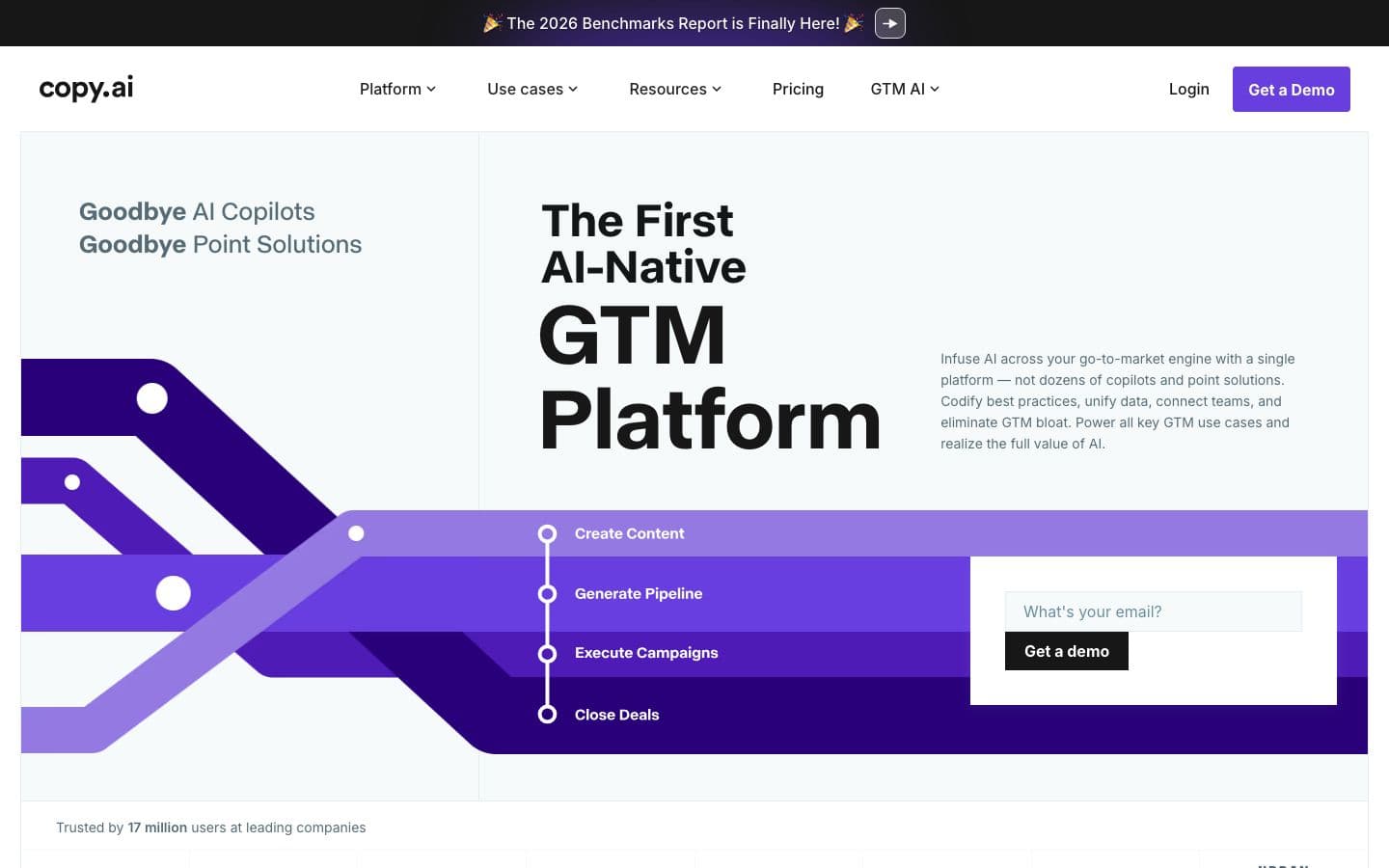
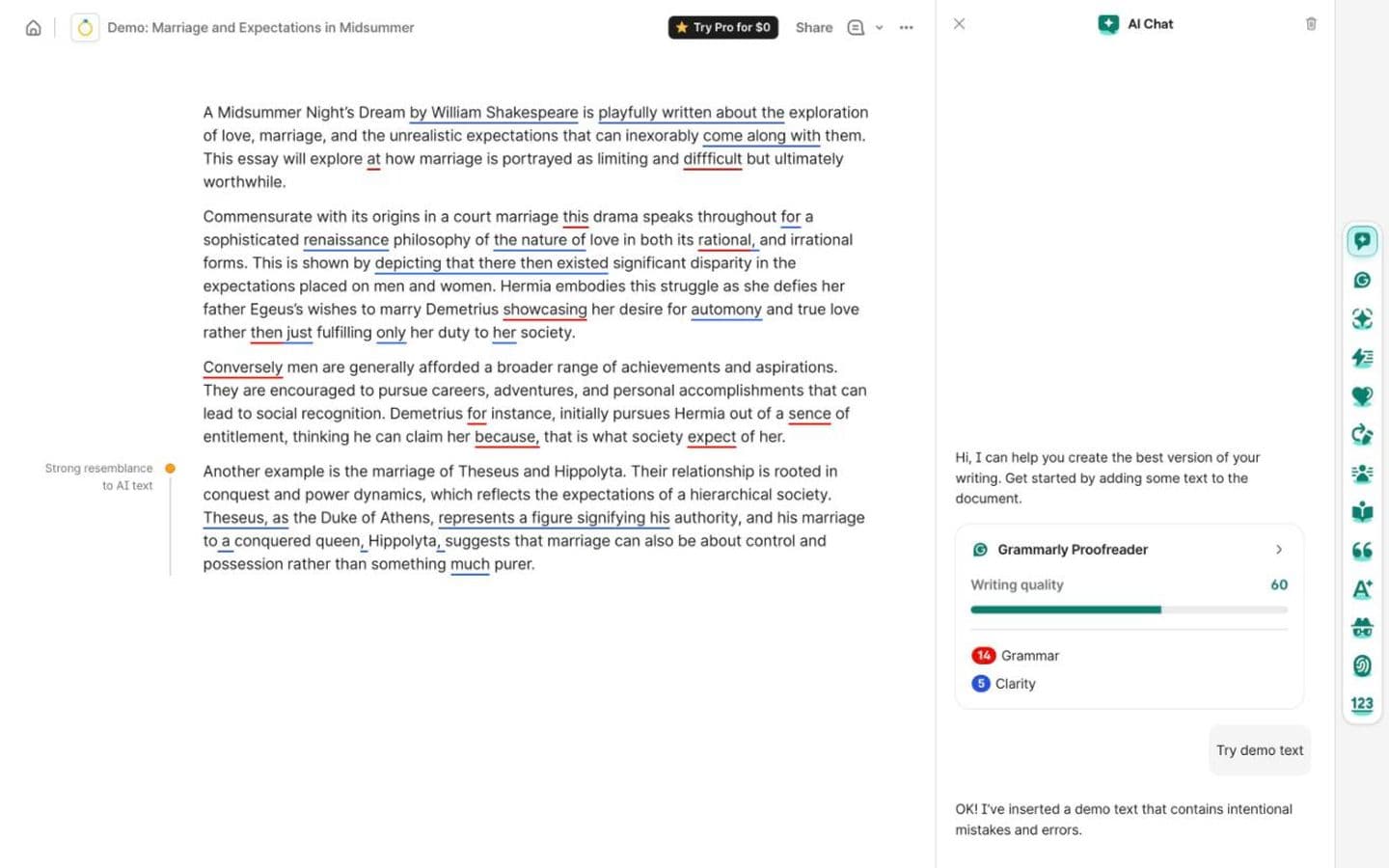
Grammarly, and it isn't a close call. Its newer agents are built around a draft you wrote: AI Grader scores it against your rubric, Reader Reactions shows where a reader could get lost, and Citation Finder suggests sources for the claims that need one. Copy.ai calls itself “The First AI-Native GTM Platform”, and nothing on its homepage or pricing page is about essays, sources or citations.
Copy.ai still has a small place on a student's laptop. Its free single-purpose tools include an outline generator, a summarizer, a paraphrasing tool and a grammar checker, which are fine for a quick job. The trouble starts when you ask it for the essay itself.
Prices and features checked on October 17, 2026.
At a glance
Writing assistants help you write; essay generators write the essay for you.
| Product | Type | Paid from | Free tier | Citations | Ghostwriting |
|---|---|---|---|---|---|
| Copy.ai | Essay generator | $29/month | Yes | Not verified | Drafts text when asked |
| Grammarly | Writing assistant | $12/month | Yes | Your sources, or papers it finds for you | Drafts text when asked |
Built for very different people
Copy.ai sells to go-to-market teams. Its cheapest paid plan, Chat, comes with five seats. The next step up is a team plan billed annually from $12,000 a year, with Workflows that chain research, content generation and tool integrations into repeatable processes. That's software for a sales department, and it turns up in “Jenni AI alternatives” lists anyway.
Grammarly's agents point at coursework. AI Grader estimates your grade from the assignment details and rubric and gives personalized feedback, and it has no instructor-facing side. Authorship records how a draft was written (typed, pasted or AI-assisted) and produces a replay and a report that you choose whether to share.
Where the citations come from
There's little to say about Copy.ai here. None of its public pages describe finding, citing or formatting academic sources. Workflow credits can pay for “internet research”, but Copy.ai doesn't say whether, or how, that research gets cited.
Grammarly's Citation Finder flags claims that need support, suggests web-based sources it finds, and formats and inserts the citation. Two catches: it formats in APA, MLA or Chicago only, and it doesn't name the databases it searches. Read each suggested source before it goes in your bibliography. The free plan allows five citations a day.
Who ends up writing the words
Copy.ai writes whatever you ask for, in chat or in a generator, and takes no position on student work. Its free Paragraph Generator suggests using it for “writing long-form essays” and to “draft literature reviews or discussion sections”. Hand that text in as your own and you're taking an academic-integrity risk.
Grammarly can write too. Agents in docs “can draft new text directly into the editor”, and AI Grader's suggestions include AI-generated rewrites. Grammarly warns that using those rewrites could get your work flagged for AI use. On Reddit, students describe high AI-detector scores on work they wrote themselves and only edited with Grammarly. Accept a rewrite only if you'd have written it that way.
A second opinion before the deadline
This is where Grammarly earns its place. A predicted grade tied to your rubric tells you more than a clean spell-check does, as long as you remember Grammarly's own line that the estimate “should not be taken as your actual grade”. Reader Reactions adds a different angle: what a reader will probably take away, and where they might get confused. On the free plan, AI Grader gives three pieces of feedback once a day and Reader Reactions five reactions a day.
Copy.ai doesn't describe any feature that reviews a draft. Its tools list has a grammar checker, but the list, like its homepage, has nothing for essays.
What you pay, and what's free
Grammarly's free plan is usable on its own: docs, Authorship and most agents cost nothing, within daily limits and 100 AI prompts a month. It leaves out full-sentence rewrites, plagiarism detection and AI-text detection. Pro adds the two detectors and 2,000 prompts a month, and there's a free trial. The plans page shows Pro at $12 a month, which matches its $144 annual price spread over twelve months; month to month it's $30.
Copy.ai's pricing page lists no free plan. Its free tools carry a sign-up prompt advertising 2,000 free words a month with no credit card, but the current free account's limits are unverified. Chat costs $29 billed monthly or $288 billed yearly, with unlimited words in chat and models from OpenAI, Anthropic and Gemini. On annual billing that's twice Grammarly Pro's $144. Month to month the order flips by a dollar: $29 against $30.
Both draw billing complaints. Copy.ai's Trustpilot reviewers describe charges that kept coming after they cancelled, lost logins and slow support. Grammarly's reviewers are split: some describe renewals without warning and refused refunds, while others, including a student charged after a free trial, got their money back quickly.
Which should you choose?
Choose Copy.ai if the writing is for a business rather than a course: marketing copy, sales emails, or a shared chat workspace running OpenAI, Anthropic and Gemini models. Nothing on its site describes finding or citing sources, so keep it away from essays.
Choose Grammarly if you write your own essays and want a check before they're due: a predicted grade against your rubric, reader reactions, citation suggestions and a record of how you wrote. The free plan covers all four, within daily limits.
If neither fits because you want every citation to come from papers you chose, EthiWrite is the tool we built for that. It cites only from sources in your Library, and Examiner Mode flags thin evidence without rewriting your text. The trade-off is reach: its paper search covers a single index, OpenAlex.
FAQ
- Is Copy.ai good for writing essays?
- It isn't built for them. Copy.ai markets itself to marketing, sales and operations teams, and none of its public pages describe finding or citing academic sources. Its Paragraph Generator will draft essay text if you ask, which is exactly the text you shouldn't submit as your own.
- Is Grammarly's Humanizer the same as Copy.ai's?
- They're pitched differently. Copy.ai's free AI Humanizer aims to make AI text “indistinguishable from human-written text”. Grammarly's Humanizer makes AI-assisted writing “sound more natural”, and Grammarly says it “is not intended to bypass AI detectors”, which sits oddly beside the AI Detector it also sells. Either way, AI text you submit as your own is still AI text.
- Can Grammarly make my essay look AI-written?
- It can if you lean on its rewrites, and Grammarly says as much about AI Grader's suggestions. Students on Reddit also report high detector scores after only editing with it. Authorship, which is on the free plan, records how you actually wrote the draft and gives you a report you can choose to share.
- Do Copy.ai or Grammarly have a free plan?
- Grammarly does, with daily limits on its agents and 100 AI prompts a month. Copy.ai's pricing page lists none; its free tools are labelled free, and a sign-up prompt advertises 2,000 free words a month, but those limits are unverified.