Compare
Grammarly vs Paperguide: same price, very different jobs
On annual billing, Grammarly Pro and Paperguide Plus both come to $12 a month. That's where the resemblance ends. Grammarly's agents work on an essay you've written; Paperguide's workflows centre on literature and systematic reviews for researchers and labs.
For a coursework essay, Grammarly is the better fit. For a dissertation literature review, Paperguide offers what none of Grammarly's agents describe: screening, data extraction, and claims linked to the exact sentence they came from.
Prices and features checked on October 17, 2026.
At a glance
Writing assistants help you write; essay generators write the essay for you.
| Product | Type | Paid from | Free tier | Citations | Ghostwriting |
|---|---|---|---|---|---|
| Grammarly | Writing assistant | $12/month | Yes | Your sources, or papers it finds for you | Drafts text when asked |
| Paperguide | Writing assistant | $12/month | Yes | Your sources, or papers it finds for you | Drafts text when asked |
An essay checker and a review workbench
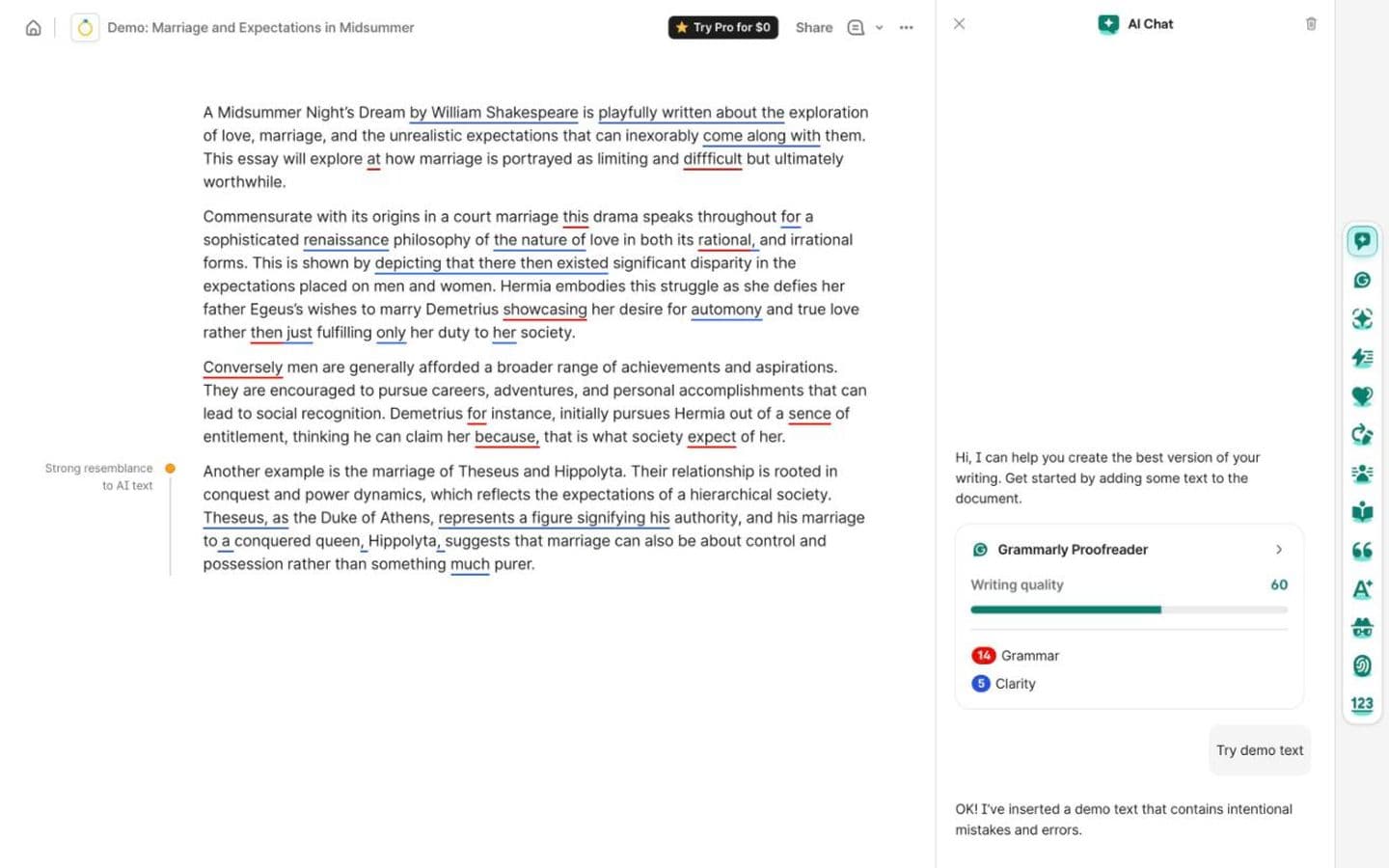
Grammarly's tools are about one draft and one reader. AI Grader estimates your grade from the assignment details and rubric, Reader Reactions shows where readers could get confused, and Authorship records how the draft was written. Authorship can be turned on in Microsoft Word, Google Docs and Canvas LMS submissions.
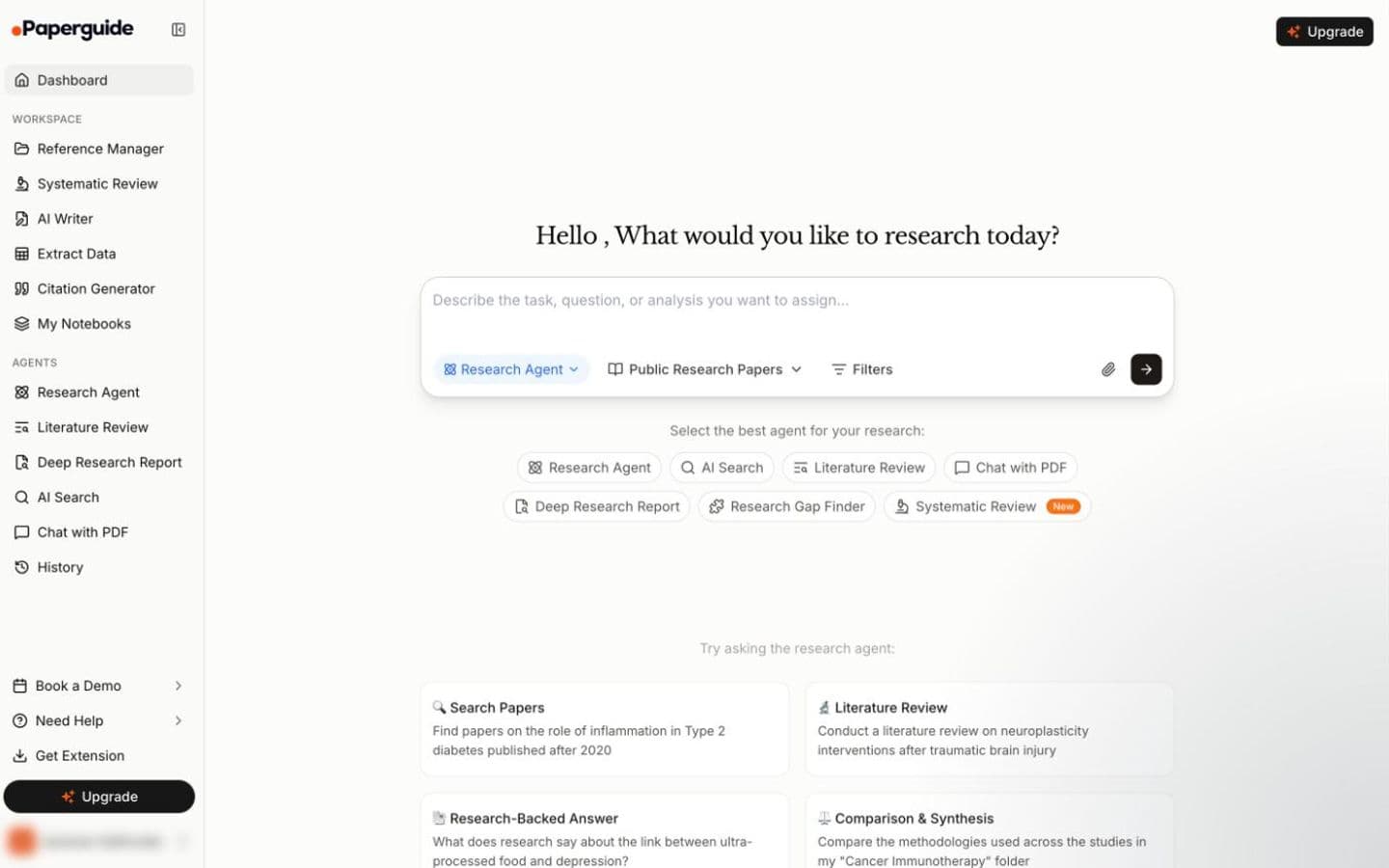
Paperguide is about many papers at once. Systematic reviews use dual independent screening and draw a PRISMA diagram from the review's own counts, with the final screening call left to a human, and Extract Data pulls chosen details from many papers into a table where every value links to its statement. Reviewers praise the literature search and extraction, though some found its results unhelpful for university assignments.
Where the citations come from
Paperguide cites from your own library and from its index of 200M+ papers across PubMed, arXiv, OpenAlex and Semantic Scholar, in the same document. Every claim links to the exact sentence in its source, the reference manager imports from Zotero or Mendeley and switches between 1,000+ styles, and Paperguide says AI-written passages are never given invented references.
Grammarly's Citation Finder flags claims that need support and suggests web-based sources it finds, then formats and inserts the citation. It doesn't name the databases it searches, and it formats in APA, MLA or Chicago only. For a short essay that may be all you need; for a literature review, it's thin.
What they'll write for you
Paperguide's AI Writer can “Generate a citation-grounded draft from a research question”, so it can produce the text for you. You can also write it yourself, with the agent alongside.
On Grammarly's side, AI Grader doesn't stop at comments: its suggestions include AI-generated rewrites, and agents can write new text straight into your draft. Grammarly warns that using those rewrites could get your work flagged for AI use, and students on Reddit describe high detector scores on work they only edited with Grammarly. Either tool can put words in your draft that you didn't write, so decide your limits before you start.
Feedback on your draft
Grammarly is the one that describes draft feedback. AI Grader's estimate comes with personalized feedback, and Grammarly's own warning that it “should not be taken as your actual grade”. On the free plan you get three pieces of AI Grader feedback once a day and five Reader Reactions a day. Long-time users grumble that the AI prompts and upgrade pop-ups get in the way, and that the suggestions flatten a writer's voice.
Paperguide's claims describe research tools, not an essay review. The nearest check on its free plan is plagiarism checking of up to 4,000 words a month.
Free plans and the fine print
Grammarly's free plan covers docs, Authorship and most agents within daily limits, plus 100 AI prompts a month, but no full-sentence rewrites, plagiarism detection or AI-text detection. Pro adds the detectors and 2,000 prompts a month, with a free trial, at $144 a year or $30 month to month.
Paperguide's free plan gives 2,000 AI credits a month, shared across the Research Agent, reports and AI Writer, with limited reference manager use and AI searches. Paid plans are per seat and billed annually: Plus at $12 a month, Pro at $29 and Evidence Teams at $89. Yearly billing is advertised as saving 41% over monthly.
Read the complaints too. A doctoral student on an annual Paperguide plan reports frequent errors and crashes, and another reviewer says PDF uploads are slow. Grammarly's billing reviews are split between renewals charged without warning and refunds that came quickly.
Which should you choose?
Choose Grammarly if you're writing essays for courses and want a predicted grade, reader reactions and citation suggestions on a draft you wrote, starting free within daily limits.
Choose Paperguide if you're doing a literature or systematic review and need search, screening, extraction and source-linked writing in one workspace. The free plan's 2,000 credits will show you whether it suits your field.
Arguing a case from a handful of sources is a different job from screening hundreds, and it's the one we make EthiWrite for. It cites only from your Library, and Examiner Mode maps your argument without rewriting it. It formats APA, MLA and Chicago only, the same three as Grammarly's Citation Finder and far short of Paperguide's 1,000+.
FAQ
- Is Paperguide good for undergraduate essays?
- It can help, but its workflows centre on literature and systematic reviews for researchers and labs, and some reviewers found its results unhelpful for university assignments.
- Does Grammarly search academic papers?
- Citation Finder suggests web-based sources and doesn't name the databases it searches. Paperguide searches 200M+ papers across PubMed, arXiv, OpenAlex and Semantic Scholar.
- Can Paperguide write my literature review?
- Its AI Writer can generate a citation-grounded draft from a research question. Whether you may submit that is your institution's call. If you use it, follow each claim's link back to the source sentence and check it.
- Which one checks for plagiarism?
- Paperguide's free plan includes plagiarism checks of up to 4,000 words a month. Grammarly's plagiarism detection comes with Pro; the free plan leaves it out.