Compare
Paperguide vs Writesonic: which is the right tool for a student?
Start with the price, because it tells you who each tool is for. Writesonic's cheapest plan is $79 a month on annual billing. On the same basis, Paperguide's Plus is $12 a month per seat and Pro $29. One is priced for businesses. The other you could fit into a student budget.
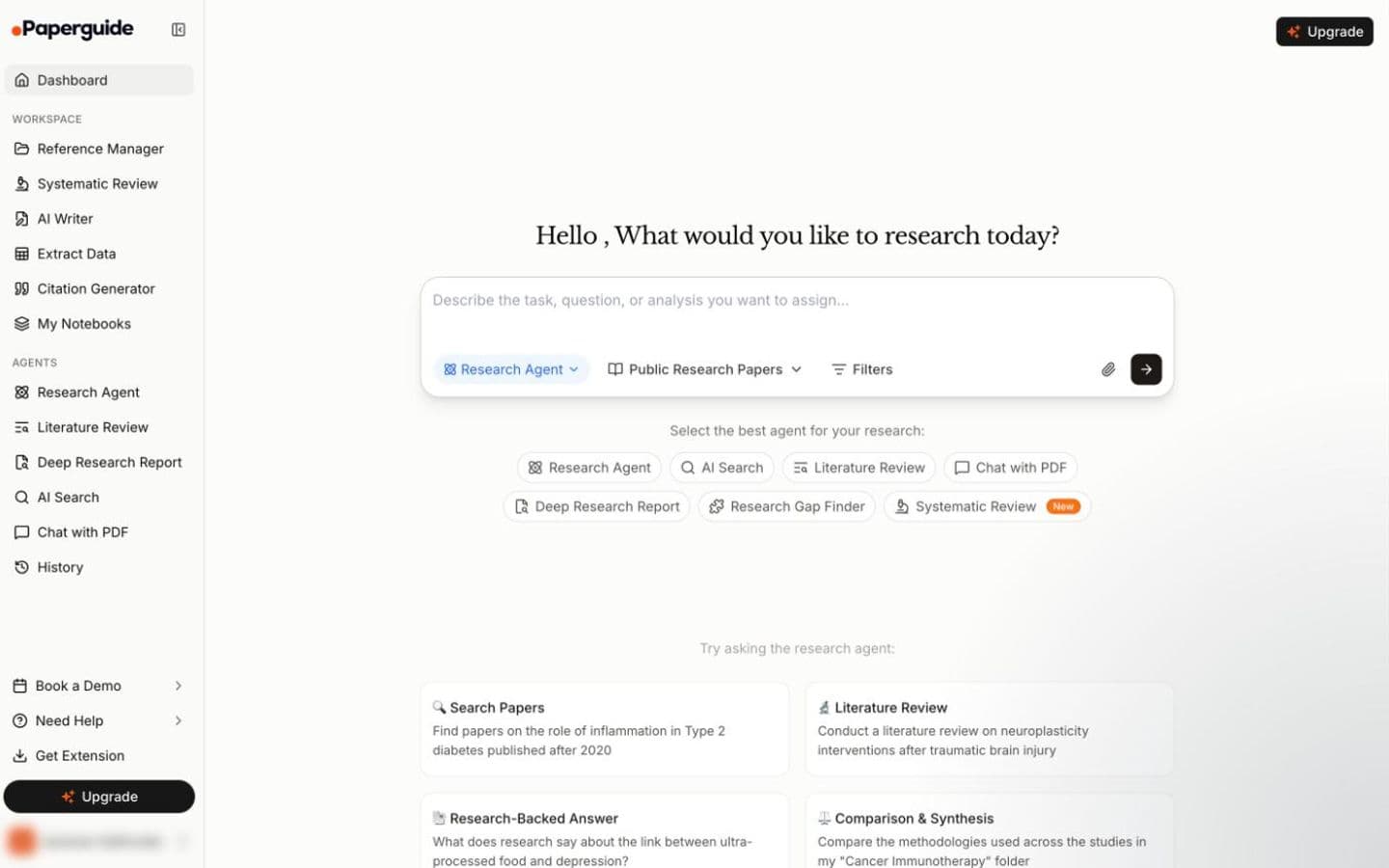
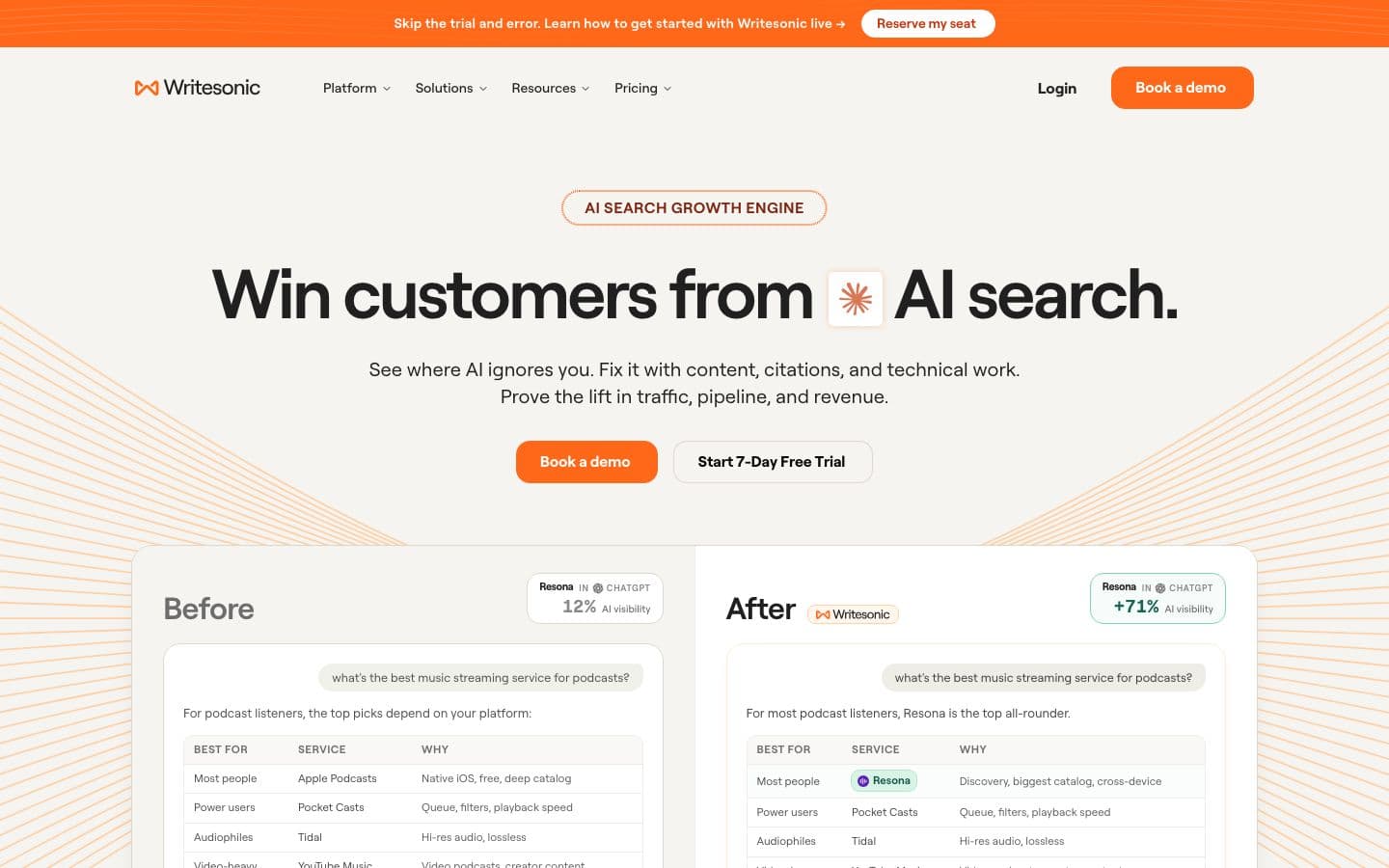
The features follow the price. Paperguide searches research papers, runs systematic reviews and drafts from a research question. Writesonic writes long SEO articles and tracks how brands show up in AI search; its homepage and article writer page don't mention essays, students or academic use. For coursework, Paperguide.
Prices and features checked on October 16, 2026.
At a glance
Writing assistants help you write; essay generators write the essay for you.
| Product | Type | Paid from | Free tier | Citations | Ghostwriting |
|---|---|---|---|---|---|
| Paperguide | Writing assistant | $12/month | Yes | Your sources, or papers it finds for you | Drafts text when asked |
| Writesonic | Essay generator | $79/month | No | Not verified | Writes the essay |
Papers, or first-party web pages
Paperguide cites from two places in the same document: your library, and an index of 200M+ papers built from PubMed, arXiv, OpenAlex and Semantic Scholar. Each claim carries a link to its sentence in the paper, and its reference manager handles 1,000+ citation styles.
Writesonic says each claim in an article is “backed by a first-party source before publish”, from a bank that excludes competitor blogs and SEO-spam aggregators. Those are web pages chosen for marketing, not scholarly papers. It lists no academic citation styles and doesn't cite from your library or a scholarly database.
A draft for a reviewer, or an article for Google
Paperguide's AI Writer builds a draft with citations from a research question, or you can write yourself with its agent alongside you. It says the AI never gives its passages invented references. Only the second leaves the prose yours.
Writesonic's AI Article Writer analyses search results and competitor pages, then produces articles of “3,000 to 8,000 words” meant “to rank on Google AND get cited in AI search”. It writes complete pieces end to end, aimed at marketing content. A SoftwareReviews user says it “isn't very good at writing academic essays/articles”.
Feedback, of a sort
Neither tool lists feedback on a student draft. Paperguide's review tools look at evidence: dual independent screening, a PRISMA diagram built from a review's own counts, and Extract Data, which puts details from many papers in a table where each value links to its statement.
Writesonic's audits look at websites. Every paid plan includes AI-visibility tracking and site audits alongside the article writer. A marketing agency's review calls the output uneven and generic without detailed prompts and its factual accuracy inconsistent.
What reviewers say
Writesonic's reviews split on value. Trustpilot reviewers praise how fast it makes content, and others call it overpriced next to general chatbots. A user reviewer recommends it for business content but not for academic essays, citing weak citation support.
Paperguide's reviewers praise its literature search, data extraction and Systematic Review features, and a support team that fixed a Zotero connection quickly. Its critics found results unhelpful for university assignments or unrelated to their research, which fits its focus on literature reviews for researchers and labs.
Plans side by side
Both publish annual prices. Paperguide's Plus ($12 per seat a month) and Pro ($29) sit below Writesonic's Starter at $79, which buys 15 AI articles a month for one user. Paperguide's Evidence Teams is the exception at $89 per seat, above Writesonic Starter, and Writesonic's Growth plan reaches $399. Writesonic doesn't show monthly-billed prices; Paperguide's own figure is that paying yearly saves 41% against monthly.
For trying before buying, Paperguide has a free plan with 2,000 AI credits a month and a 4,000-word monthly plagiarism allowance. Writesonic lists no free plan, only a 7-day free trial with no credit card needed.
The team tiers show the same split. Writesonic Basic is $199 a month billed annually for 25 articles and two users. Paperguide's Evidence Teams, at $89 per seat, buys 150,000 AI credits a month and dual-reviewer screening, and Enterprise is priced on request. One set of features serves a content team, the other a review team.
Watch the renewals on Writesonic: billing is a frequent Trustpilot complaint, with reviewers describing charges after cancelling and refused refunds, especially on annual plans.
Which should you choose?
Choose Paperguide if you're a student or researcher working from papers. It covers search, systematic reviews, extraction and citation, and its free plan is enough to test it on a real review.
Choose Writesonic only if your job is marketing content, such as SEO articles for a company that pays for it. It isn't built for essays, and its cheapest plan is priced for businesses.
If neither fits because you need help with an essay you'll write yourself, EthiWrite is our tool for that. It cites only from the sources in your Library, and its paper search covers one index, OpenAlex, rather than the several Paperguide searches.
FAQ
- Can Writesonic write a research paper?
- It writes long-form marketing articles from web sources, with no academic citation styles listed. A user review says it isn't very good at academic essays and asks for a citation generator.
- Is there a free version of Writesonic or Paperguide?
- Paperguide has a free plan with 2,000 AI credits a month. Writesonic lists no free plan but offers a 7-day free trial without a credit card.
- Why does Writesonic cost so much more?
- It's priced for businesses. Even Starter, at $79 a month billed annually, includes AI-visibility tracking and site audits, features meant for a company website.
- Are Writesonic's sources academic?
- No. They're web pages chosen for marketing articles, not scholarly papers, and it doesn't cite from your own library or a scholarly database.
- Does Paperguide invent references?
- Its stated policy is no invented references in AI-written passages, and the sentence-level links let you test that. Reviewers report other problems, such as frequent errors and crashes for one doctoral student.