Alternatives
Writesonic alternatives for academic writing, and for leaner content teams
Writesonic now leads with one line: “Win customers from AI search.” Its AI Article Writer analyses search results and competitor pages and produces articles of 3,000 to 8,000 words, and the vendor says every claim is backed by a first-party source before publish. Those sources are web pages chosen for marketing articles, though, not scholarly papers.
If you're a student, the closest academic idea is Paperguide, where every claim links to the exact sentence in a paper; Jenni AI, Grammarly and Paperpal cover writing, feedback and polish. EthiWrite, which we make, is the guided option. For content teams, Jasper and Copy.ai cost less to start.
Prices and features checked on October 17, 2026.
Why Writesonic doesn't fit everyone
For coursework, it's the wrong shape. Its homepage and article writer page don't mention essays, students or academic use, its article writer page lists no academic citation styles, and it writes complete articles end to end through what it calls “The Agentic Content Pipeline”. A user on SoftwareReviews put it plainly: it “isn't very good at writing academic essays/articles”, and they asked for a citation generator for “facts validation”.
For individuals, it's expensive: the cheapest plan is $79 a month billed annually. Trustpilot reviewers describe charges after cancelling and refused refunds, especially on annual plans.
Reviews split. Trustpilot reviewers praise how fast it makes content, while others call it overpriced next to general chatbots. That second complaint matters more for one person paying an annual business price than for a team splitting it.
For a content team chasing search traffic, the package makes sense: long articles built “to rank on Google AND get cited in AI search”, a source bank that leaves out competitor blogs and SEO-spam aggregators, and AI-visibility tracking and site audits on every paid plan.
What to look for in a Writesonic alternative
Scholarly sources, not web pages
A marketing article can rest on a well-chosen web page. An essay needs papers, cited in the style your department uses, and a way to open each one.
Meters that match the work
Writesonic meters whole articles, 15 a month on Starter. Tools for students ration suggestions, searches or reviews instead; work out which of those you'd run out of first.
Help that stops before the essay
Tools range from feedback only to full drafts. For graded work, choose one that stops short of writing it for you, and treat what it gives you as advice rather than text.
The best Writesonic alternatives
1. EthiWrite
Full disclosure: this is our tool.
EthiWrite is the opposite of an article pipeline. Guided mode writes nothing, and Autocomplete offers a sentence at a time, up to about thirty words, which you accept or ignore. Every citation label is generated from the record of a source in your Library, never written by the model.
Examiner Mode reads the argument and points to unsupported claims and thin evidence without rewriting anything, and there's a free plan. The cost of that design: it won't write paragraphs from a prompt or rewrite your essay to sound better, so if you want a draft made for you, it's the slower choice.
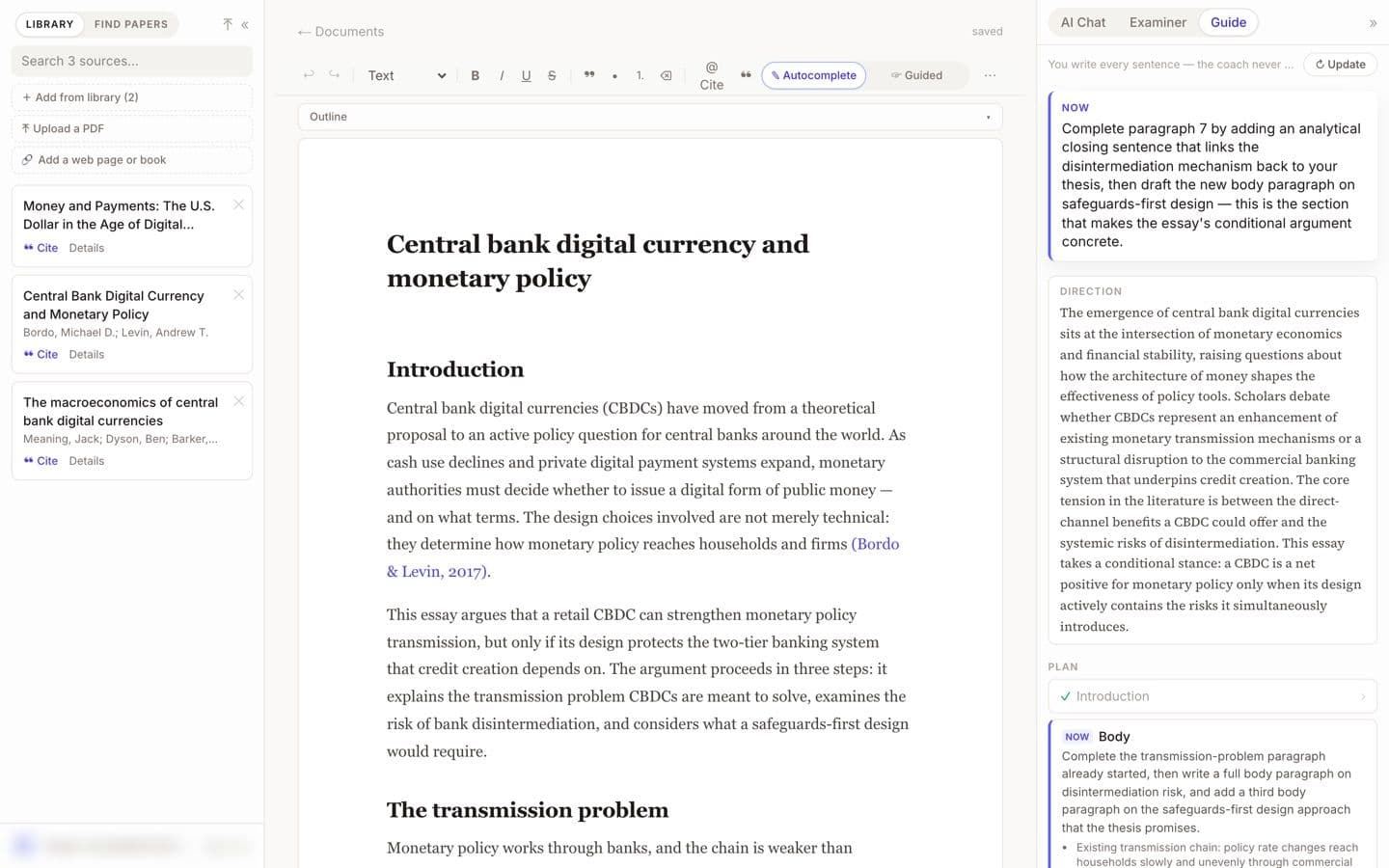
EthiWrite editor with the Guide panel open (demo account, email blurred). Best for: Students who want to write their own essay from sources they chose.
2. Paperguide
Paperguide is the academic version of Writesonic's promise that every claim is sourced. Each claim links to the exact sentence in a source paper, drawn from 200M+ papers across PubMed, arXiv, OpenAlex and Semantic Scholar plus your own library, and the reference manager switches between 1,000+ citation styles.
Free gives 2,000 AI credits a month; Plus is $12 a month per seat billed annually, below Writesonic Starter on the same basis. Its AI Writer can generate a cited draft from a research question, so it writes too, and its workflows are built for researchers more than coursework.
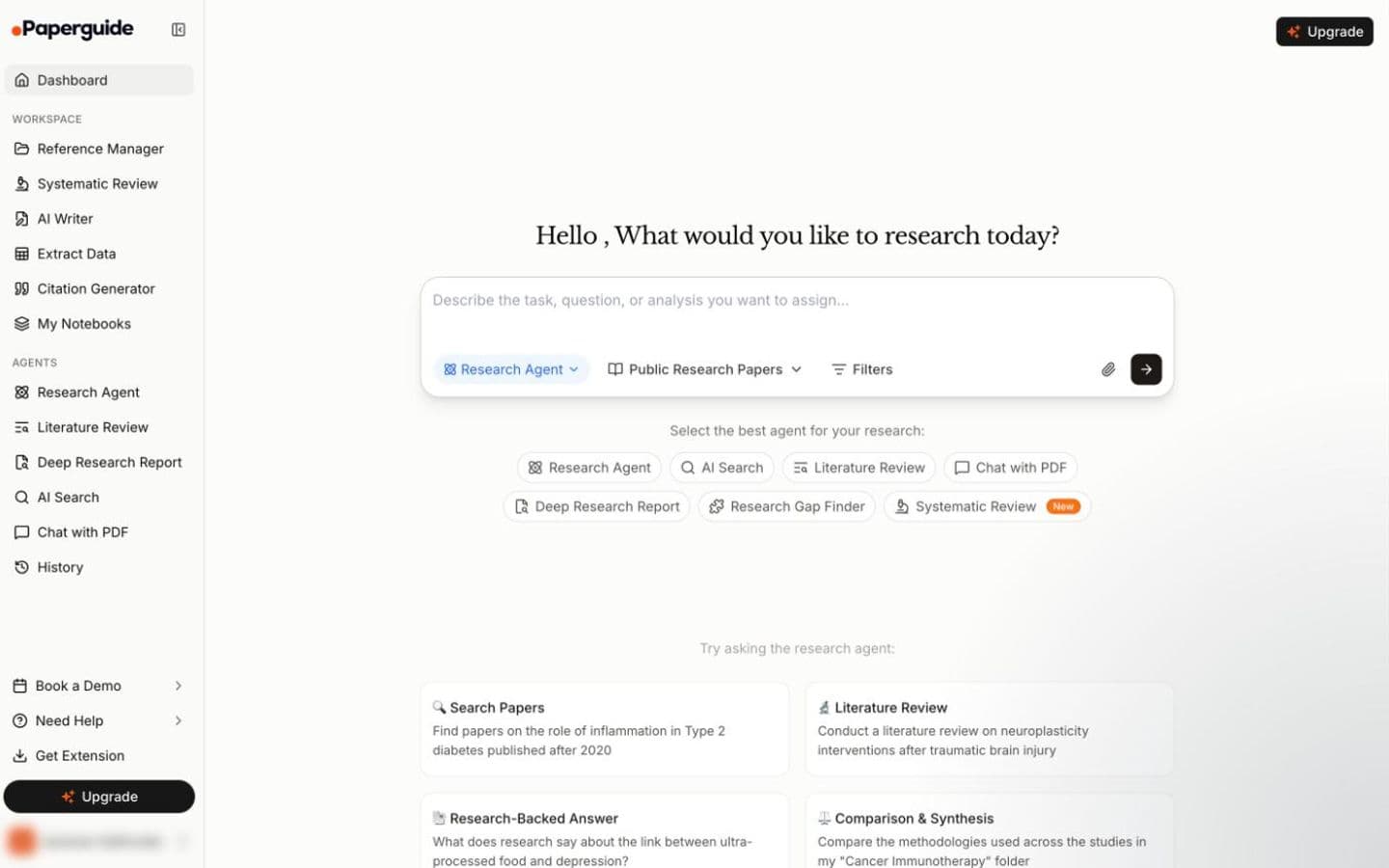
Paperguide dashboard, signed in to a free account (the account name is removed). Best for: Students and researchers who need every claim tied to a paper.
3. Jenni AI
Jenni AI is an editor for academic writing, with a 200M+ paper search, PDF uploads and Zotero or Mendeley import. Each AI-suggested sentence links to its spot in the source PDF, citations format in 10,000+ styles, and Trustpilot reviewers praise the citation and bibliography tools.
Autocomplete writes sentence by sentence, so a passage can end up mostly the AI's; you can limit it to your own library. Free gives 10 autocompletes a day; Plus is $12 a month and Pro $29. Several Trustpilot reviewers report renewal charges without notice.
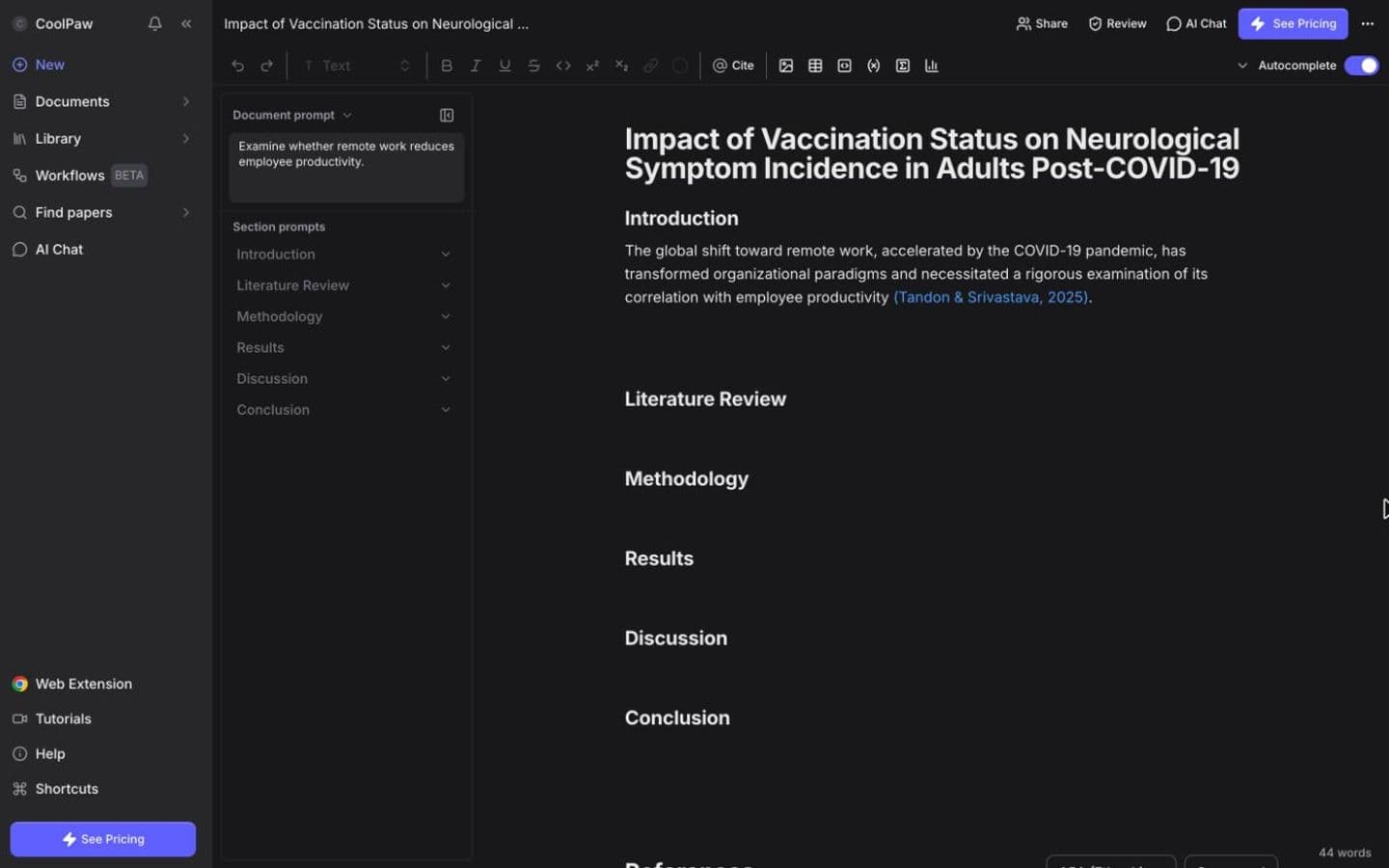
Jenni AI editor, signed in to a free account. Best for: Students who want academic citations while they write.
4. Grammarly
Grammarly is free to start and works on writing you did. AI Grader gives a grade estimate from your rubric, with feedback; Reader Reactions shows what a reader is likely to take away, and Citation Finder flags claims that need support and suggests web sources in APA, MLA or Chicago.
Authorship records whether text was typed, pasted or AI-assisted, which helps if anyone asks how you wrote it. Pro works out at $144 a year; month to month it's $30. Its agents can draft new text into the editor, and Grammarly says AI Grader's estimate “should not be taken as your actual grade”.
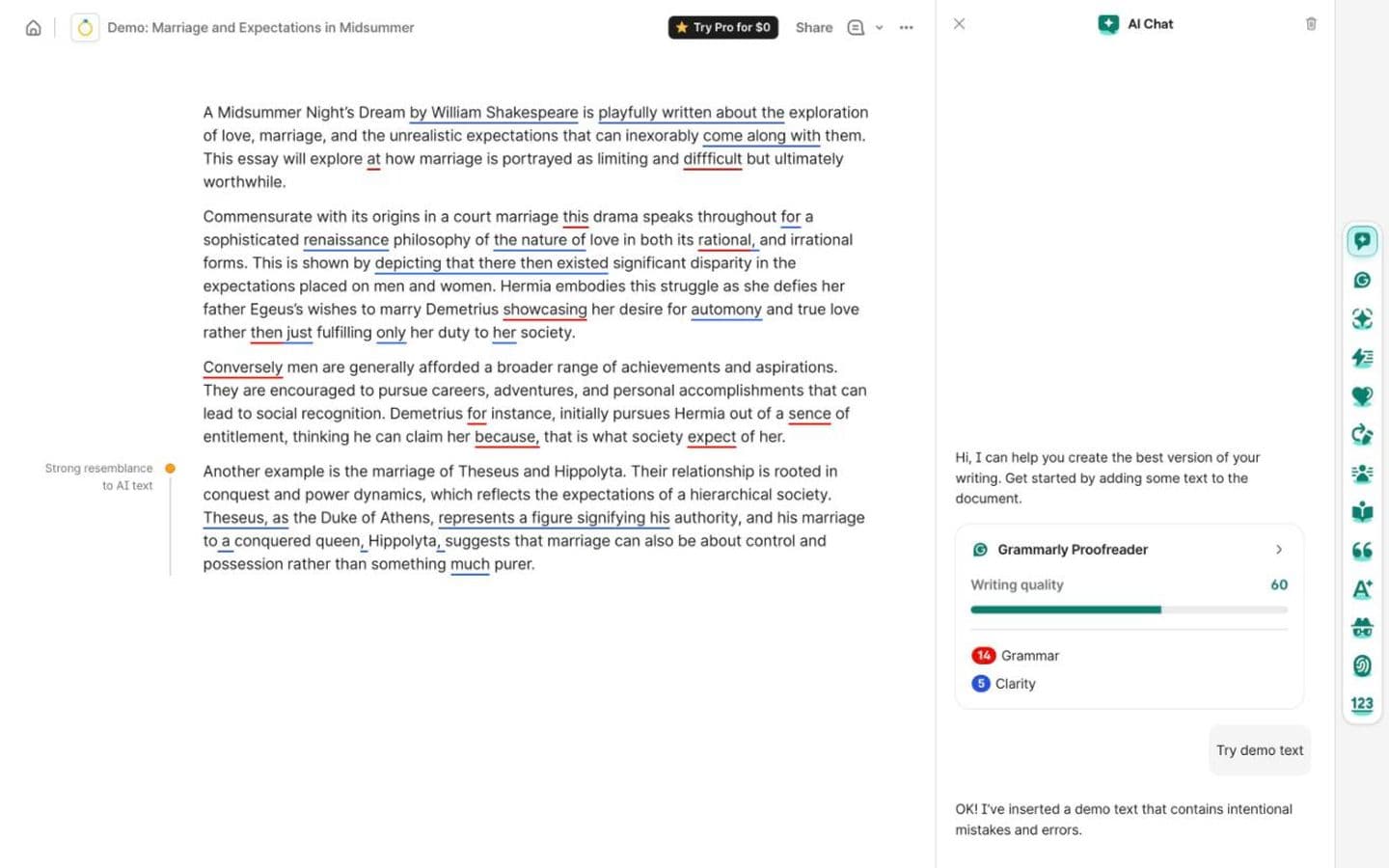
Grammarly doc with Grammarly's built-in demo essay, signed in to a free account. Best for: Students who want feedback on a draft before they submit it.
5. Paperpal
Paperpal is an academic language editor for Word, Google Docs and Overleaf. Its suggestions are trained on scholarly edits, it runs 30+ pre-submission checks, plagiarism checks compare your text against 99B+ sources, and Research and Cite searches 250M+ articles.
The free plan has 200 grammar edits a month and a lite plagiarism report. Prime and Pro are billed monthly or annually, at prices that load by region. It drafts “with suggestions grounded in your sources” on request. Asked about it on r/research, commenters were sceptical of AI editing for research writing, warning that it can blur what you meant.
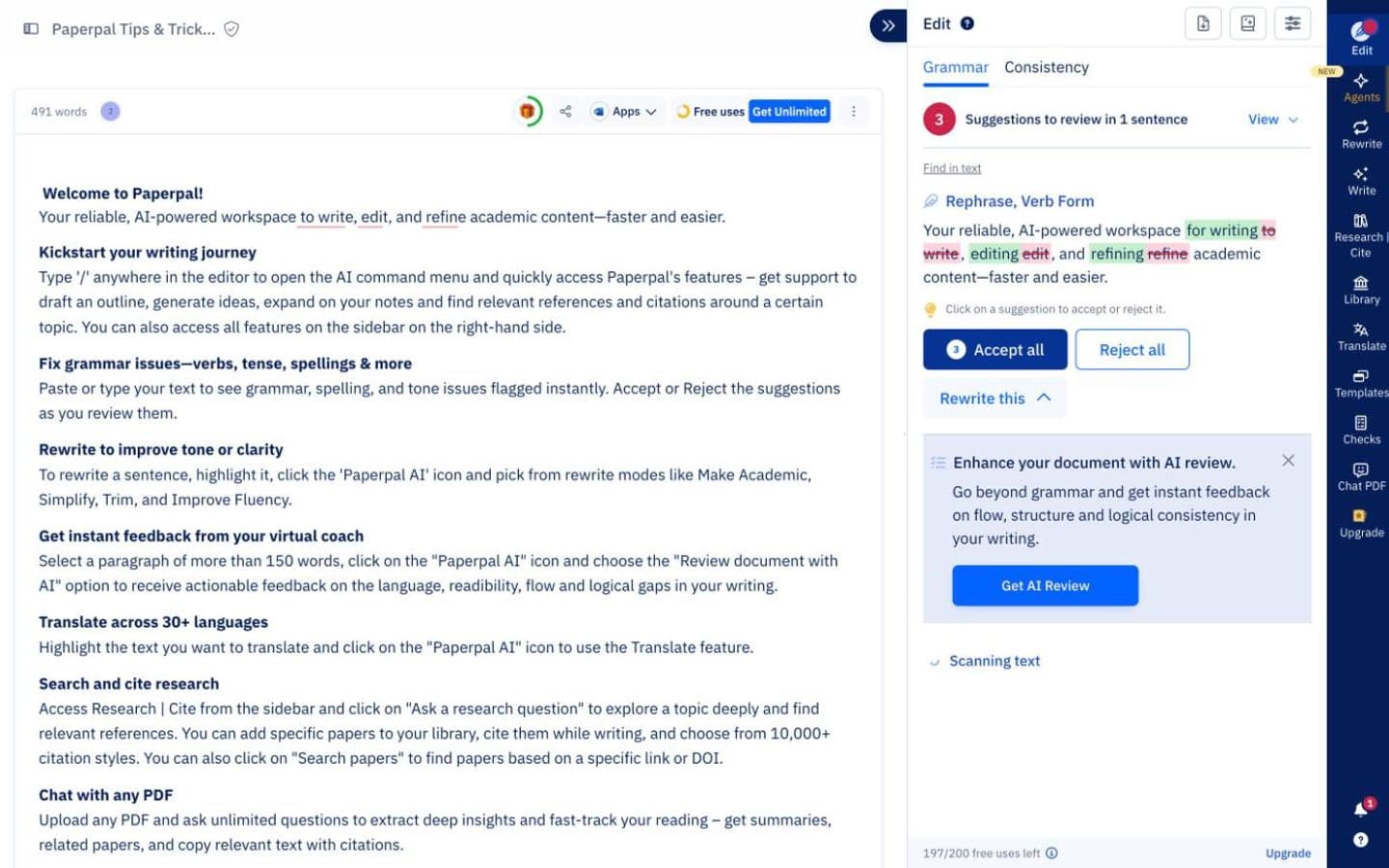
Paperpal editor on its built-in sample document, signed in to a free account. Best for: Students polishing a paper they wrote, with checks before submission.
6. Jasper
For a marketing team leaving Writesonic, Jasper is the nearest general option. Agents “run end-to-end marketing workflows”, Brand Voices, Knowledge assets and Audiences keep output consistent, and Canvas apps such as the Blog Post app draft for a target audience.
Pro is $59 a month per seat billed yearly, below Writesonic Starter on annual billing, or $69 month to month. A 7-day trial stands in for a free plan, and AI Worth It, a review site written by an AI agent system, says solo writers should skip it. Trustpilot complaints centre on billing and cancellation.
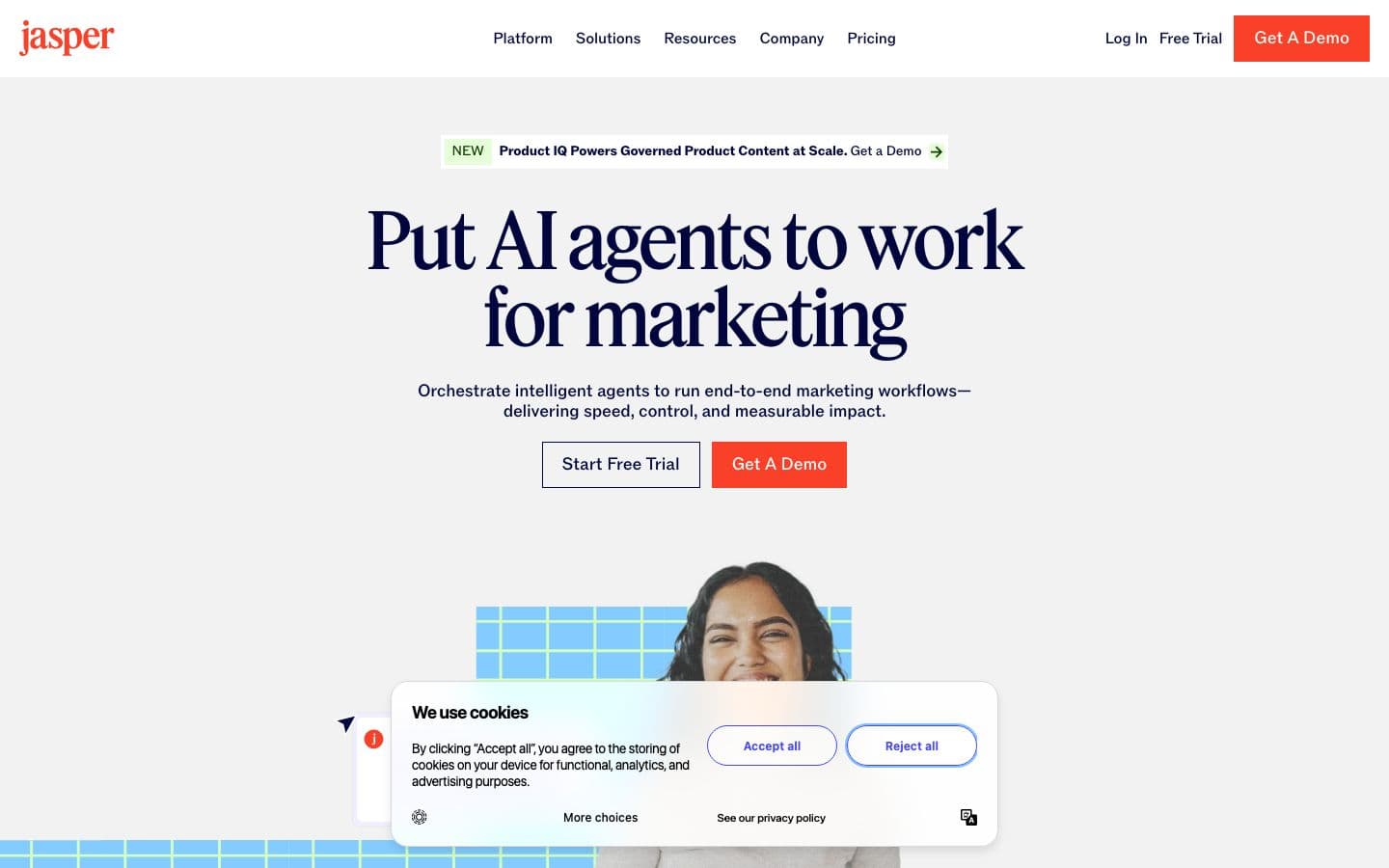
Jasper public homepage, signed out (the app needs an account). Best for: Marketing teams who want brand controls more than SEO tooling.
7. Copy.ai
Copy.ai is the lower-cost team option. The Chat plan gives five seats unlimited words in chat with OpenAI, Anthropic and Gemini models, for $29 a month, or $24 a month billed $288 a year. Workflows chain research and content generation into repeatable processes.
Above Chat, the self-serve plans jump to $12,000 a year. Trustpilot reviewers report charges after cancelling, saved work vanishing after updates, and slow replies from support. Several long-time users also say its output quality and value have slipped compared with general chatbots such as ChatGPT.
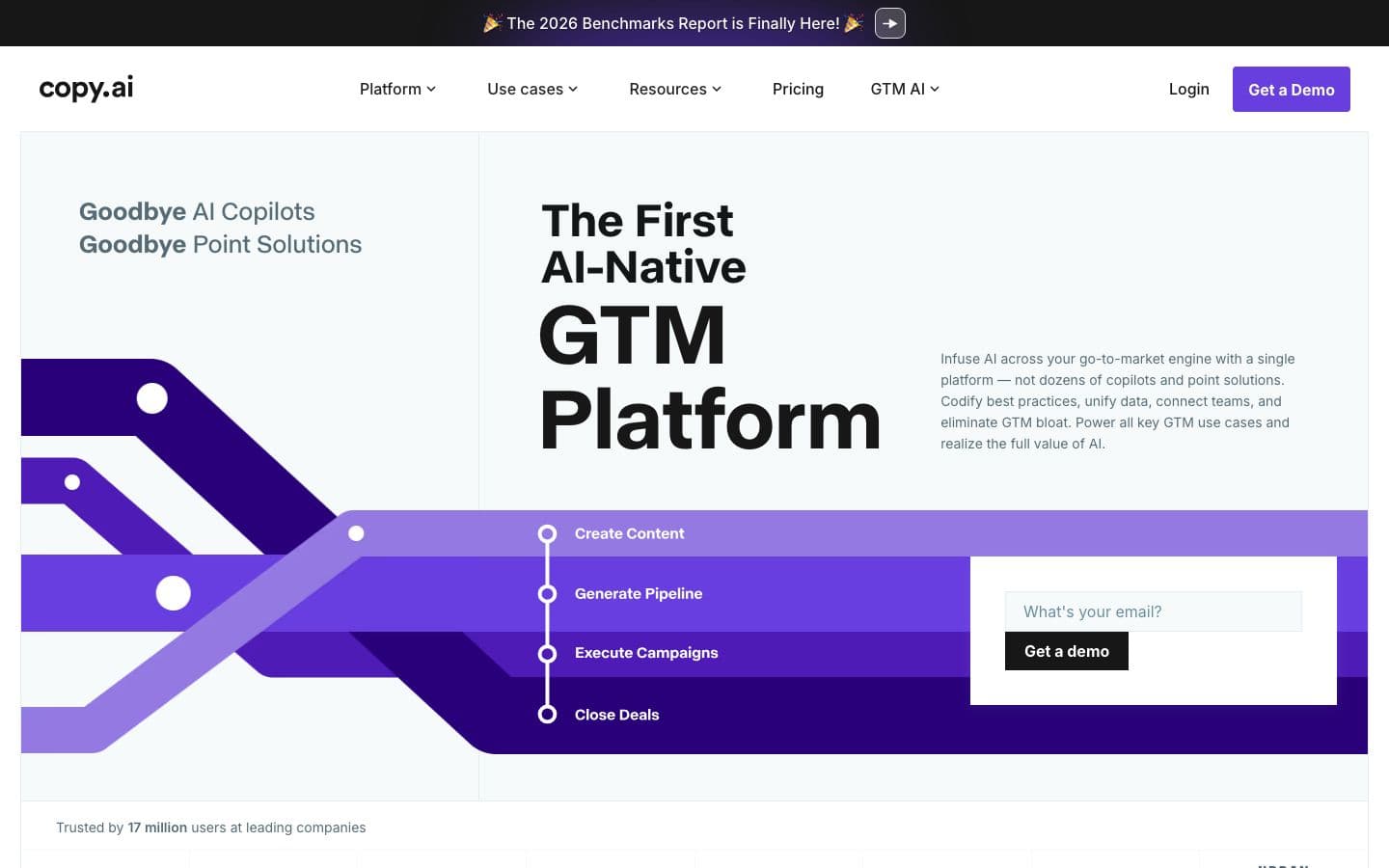
Copy.ai public homepage, signed out. Best for: Small teams that want shared AI chat for drafting at a lower price.
At a glance
Every tool above, with Writesonic on the last row for reference. Writing assistants help you write; essay generators write the essay for you.
| Product | Type | Paid from | Free tier | Citations | Ghostwriting |
|---|---|---|---|---|---|
| EthiWrite | Writing assistant | $9 (billed every week) or $10/month ($120 billed annually) | Yes | Only from sources you added | Guides; you write |
| Paperguide | Writing assistant | $12/month | Yes | Your sources, or papers it finds for you | Drafts text when asked |
| Jenni AI | Writing assistant | $12/month | Yes | Your sources, or papers it finds for you | Drafts text when asked |
| Grammarly | Writing assistant | $12/month | Yes | Your sources, or papers it finds for you | Drafts text when asked |
| Paperpal | Writing assistant | See pricing page | Yes | Your sources, or papers it finds for you | Drafts text when asked |
| Jasper | Essay generator | $59/month | No | Not verified | Drafts text when asked |
| Copy.ai | Essay generator | $29/month | Yes | Not verified | Drafts text when asked |
| Writesonic | Essay generator | $79/month | No | Not verified | Writes the essay |
The bottom line
Writesonic is an SEO engine for brands and an expensive mismatch for a student. If you write for a grade, Paperguide or Jenni AI give you scholarly sources and Grammarly gives you feedback. If you write for a brand on a smaller budget, Jasper or Copy.ai cost less to start.
FAQ
- Does Writesonic have a free plan?
- No free plan is listed. There's a 7-day free trial, offered from the homepage, with no credit card needed.
- What does Writesonic cost?
- Starter is $79 a month for 15 AI articles, Basic $199 for 25 and Growth $399 for 50, all billed annually; Growth charges $100 a month for 20 more articles. Monthly-billed prices aren't shown, and Enterprise is custom.
- Does Writesonic cite its sources?
- The vendor says its articles cite first-party web sources it verifies. It doesn't cite from your own library or a scholarly database, and its citations couldn't be checked without an account.
- Can Writesonic check facts for me?
- Its sourcing promise helps, but don't lean on it. A review by NoGood, an agency that recommends a rival AI-visibility tool, found its factual accuracy inconsistent and its output uneven without detailed prompts, and judged it better for bulk drafts than precise writing. Check the facts yourself.