Alternatives
Textero alternatives: tools that help you write instead of writing for you
Textero's own Academic Integrity Statement says “Never submit AI-generated content as your own original work.” Its homepage offers to “generate a fresh, original essay tailored to your topic in seconds” and advertises “undetectable AI essay writing”. Hold both in mind and the real question is what you want a tool to do for you.
For feedback against a rubric, Grammarly's AI Grader and Thesify's Reviewer read a draft you wrote. If Textero's references were the draw, Jenni AI and Paperpal both search large paper indexes and format citations in 10,000+ styles. Yomu AI is the closest in shape: a cited editor that will also write a full draft. EthiWrite, which we make, sits at the guided end.
Prices and features checked on October 17, 2026.
Why students look past Textero
Textero's integrity pages tell you to treat its output as “a starting point, not a final product”. That's fair, and it also tells you where the work is. Once the essay appears, you check every reference, then rewrite the text until it sounds like you and says what you mean. By then you've done most of the work of writing it, on someone else's structure.
The trust signals don't line up either. The homepage shows a “Trustpilot 4.1/5” badge, while Textero's Trustpilot page shows a TrustScore of 3.7 from a single review. That one review praises the sources it found and its APA citations, and says plainly that you still have to work on the text yourself.
Some students also question the premise. In an r/studytips thread, the poster recommended Textero for citations but said the output still needs editing, and another commenter asked why you'd risk an essay on AI at all.
Credit where it's due. Textero says it works “with real research papers through Semantic Scholar” and formats references in MLA, APA, Chicago and other styles. You can upload your professor's guidelines, rubric or readings to shape a draft, and an AI detector, essay grader, paraphraser, summarizers and an outline generator come with it. And its documentation is candid about what it can't do.
What to look for in a Textero alternative
Use the rubric on your own draft
Textero lets you feed a rubric to its generator. A rubric does more good as a test of a draft you wrote, and Grammarly and Thesify are both built to read a draft that way.
A link from the citation to the passage
Real papers are a start. You also want to see the passage a citation rests on, so you can tell whether the paper says what your sentence claims it says.
Limits stated as plainly as Textero's
Textero publishes what it doesn't do, including checking its own facts. Hold every tool to that standard. When a site promises perfect citations or text no detector can spot, read the promise as the warning.
The best Textero alternatives
1. EthiWrite
Full disclosure: this is our tool.
EthiWrite takes the opposite route to Textero: it helps you write the essay and won't produce one from a prompt. Its Autocomplete suggests at most a sentence, about thirty words, as ghost text you can ignore. Citations come only from your Library, and if nothing in it supports a claim you get an empty result instead of a made-up reference.
Examiner Mode is the pre-submission read. It maps your argument and flags unsupported claims, thin evidence and structural gaps, without editing anything. There's a free plan, and uploading sources, searching papers, citing and export are never metered. Next to Textero, the gap is style choice: citations format in APA, MLA and Chicago only.
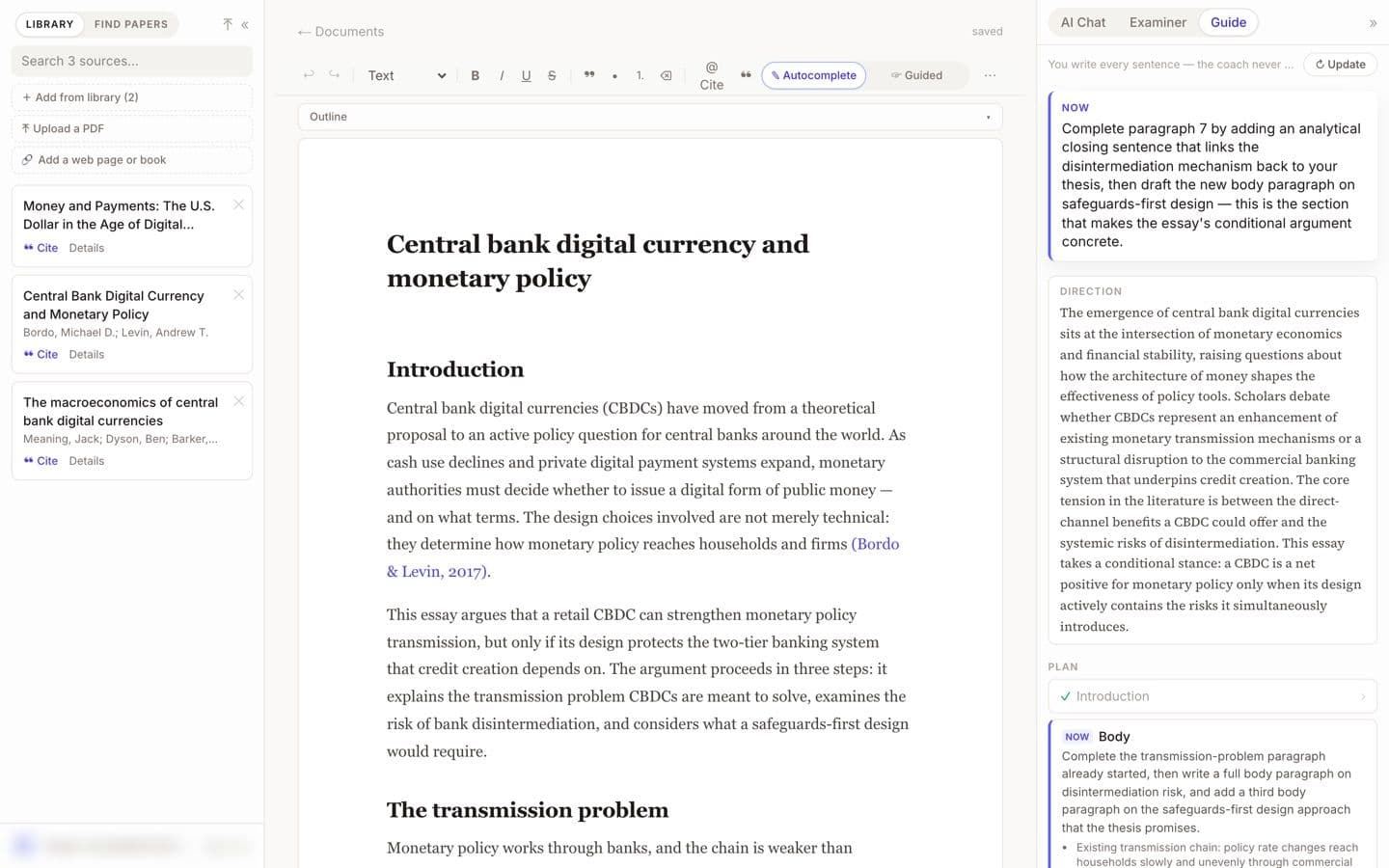
EthiWrite editor with the Guide panel open (demo account, email blurred). Best for: Students who'd rather write the essay than rework a generated one.
2. Grammarly
Grammarly's AI Grader flips Textero's rubric upload around. You give it the assignment details and rubric, and it estimates a grade for the draft you wrote, with personalized feedback. Reader Reactions shows what a reader is likely to take away and where they could get confused. Both sit in the docs editor, which is free to use with daily limits.
Grammarly says the estimate “should not be taken as your actual grade”. Its Citation Finder sticks to web sources and three styles: APA, MLA and Chicago. Pro costs $144 for a year, or $30 if you pay monthly. Students on Reddit describe high AI-detector scores on work they wrote and only edited with Grammarly, so go easy on its rewrites.
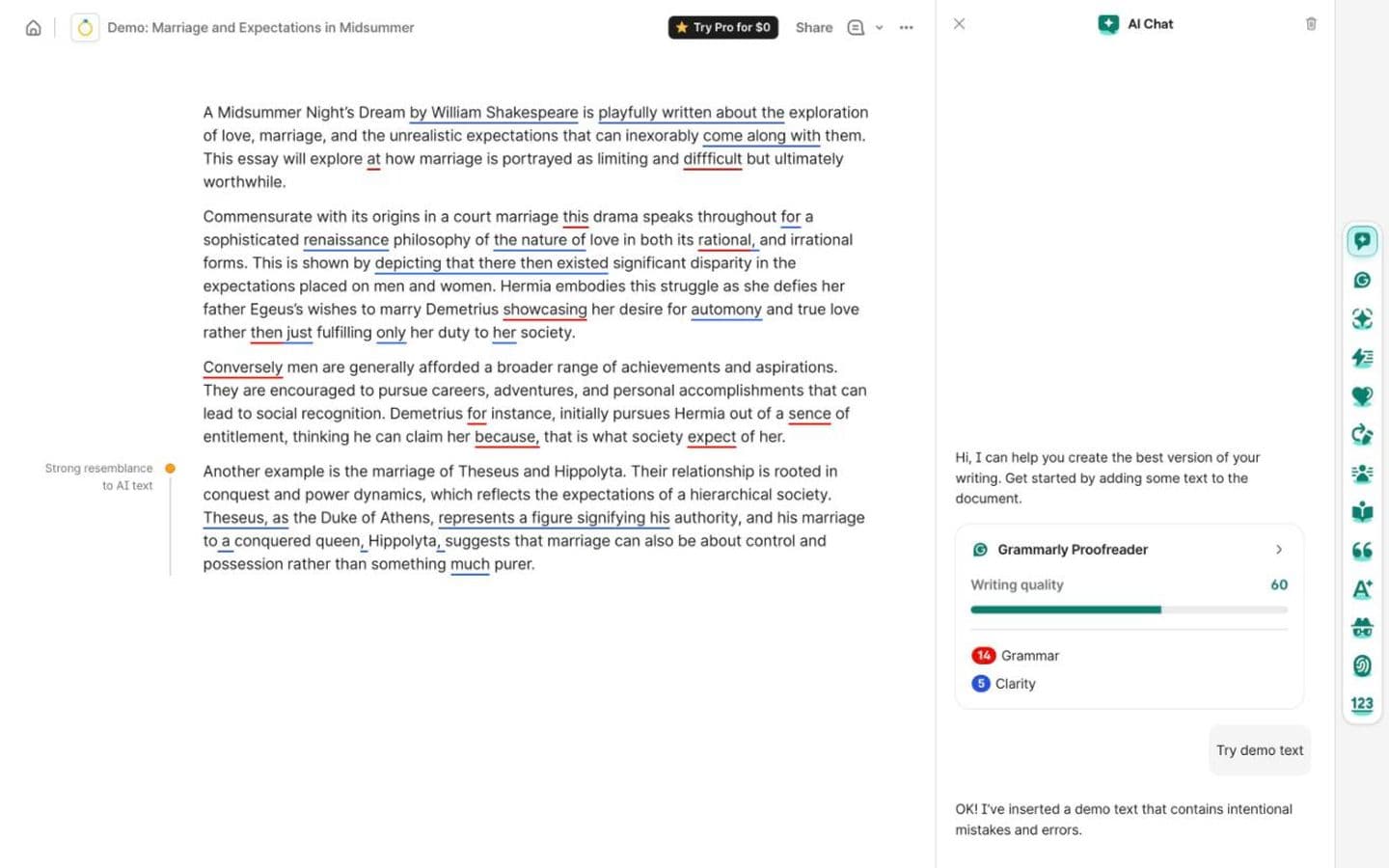
Grammarly doc with Grammarly's built-in demo essay, signed in to a free account. Best for: Students who want a grade estimate against their rubric before they hand in.
3. Thesify
Thesify's Reviewer does the same job for anything up to thesis length. Its structured feedback covers argument, clarity and methodology, using rubrics for thesis strength, evidence, clarity and alignment with the assignment, and it returns a downloadable report on documents of up to 100 pages. You can also highlight text and search 200+ million references to cite.
Thesify has no free plan, and Reviewer has no trial: one review is €14.95, three are €39.95 and ten are €99.95. Manusights, which sells competing manuscript checks, judged it useful for thesis feedback but noted it doesn't verify citations.
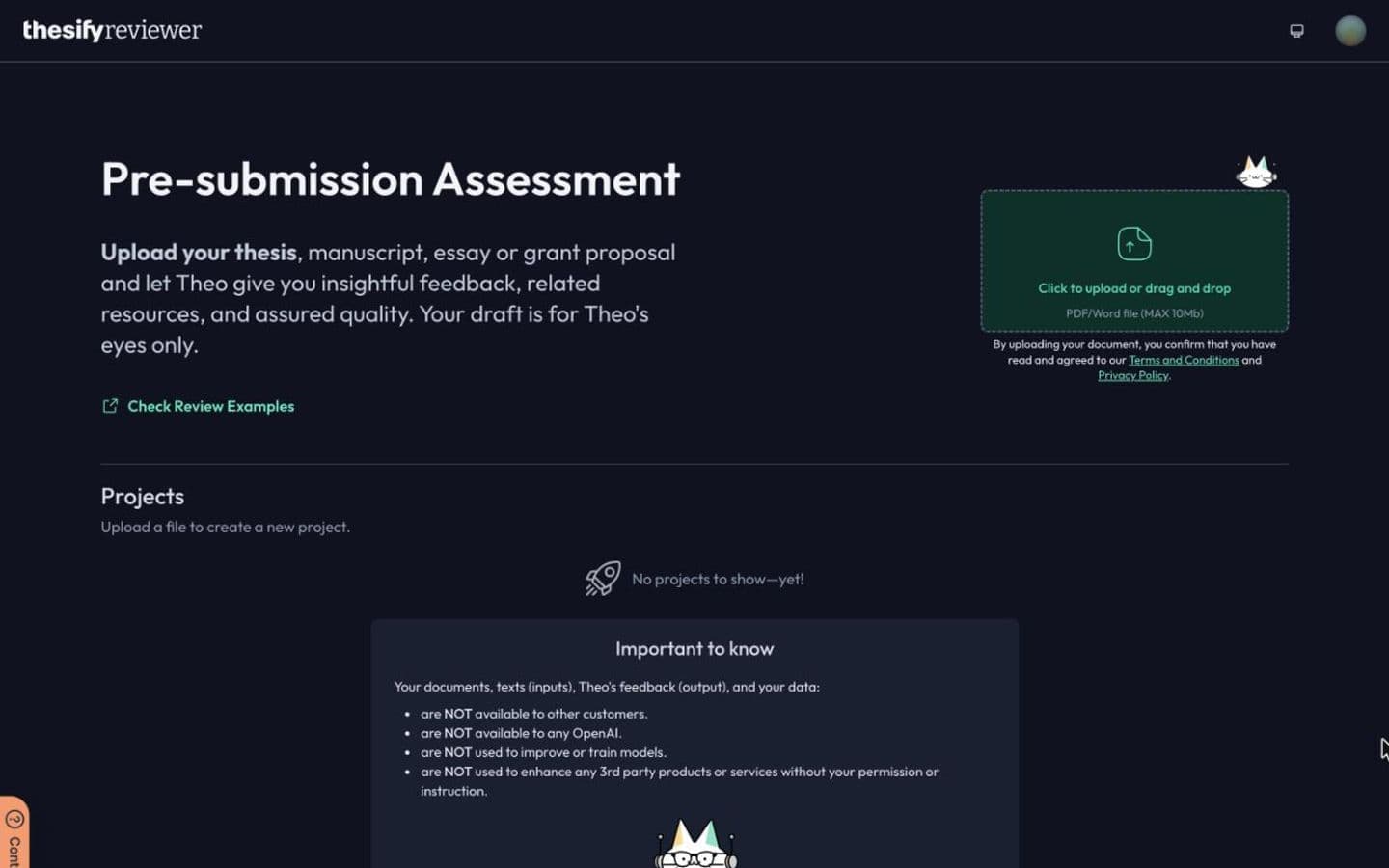
Thesify reviewer, signed in to a free account, before any document is uploaded. Best for: Long essays and theses that need a structured critique rather than a rewrite.
4. Jenni AI
Jenni AI keeps the real-paper references and adds a link back to the passage. Its search covers 200M+ papers, it also reads your PDFs and Zotero or Mendeley libraries, and it connects each suggested sentence to its place in the source PDF. Citations format in 10,000+ styles, and you can limit autocomplete to your own library so its suggestions draw only on papers you chose.
Autocomplete is still AI writing, offered one sentence after another, and GPTZero's review (GPTZero sells a detector) found the output read as AI-written and needed heavy rewriting. The free plan is small: 10 autocompletes a day and 5 chat messages. Plus is $12 a month, and the annual price isn't shown.
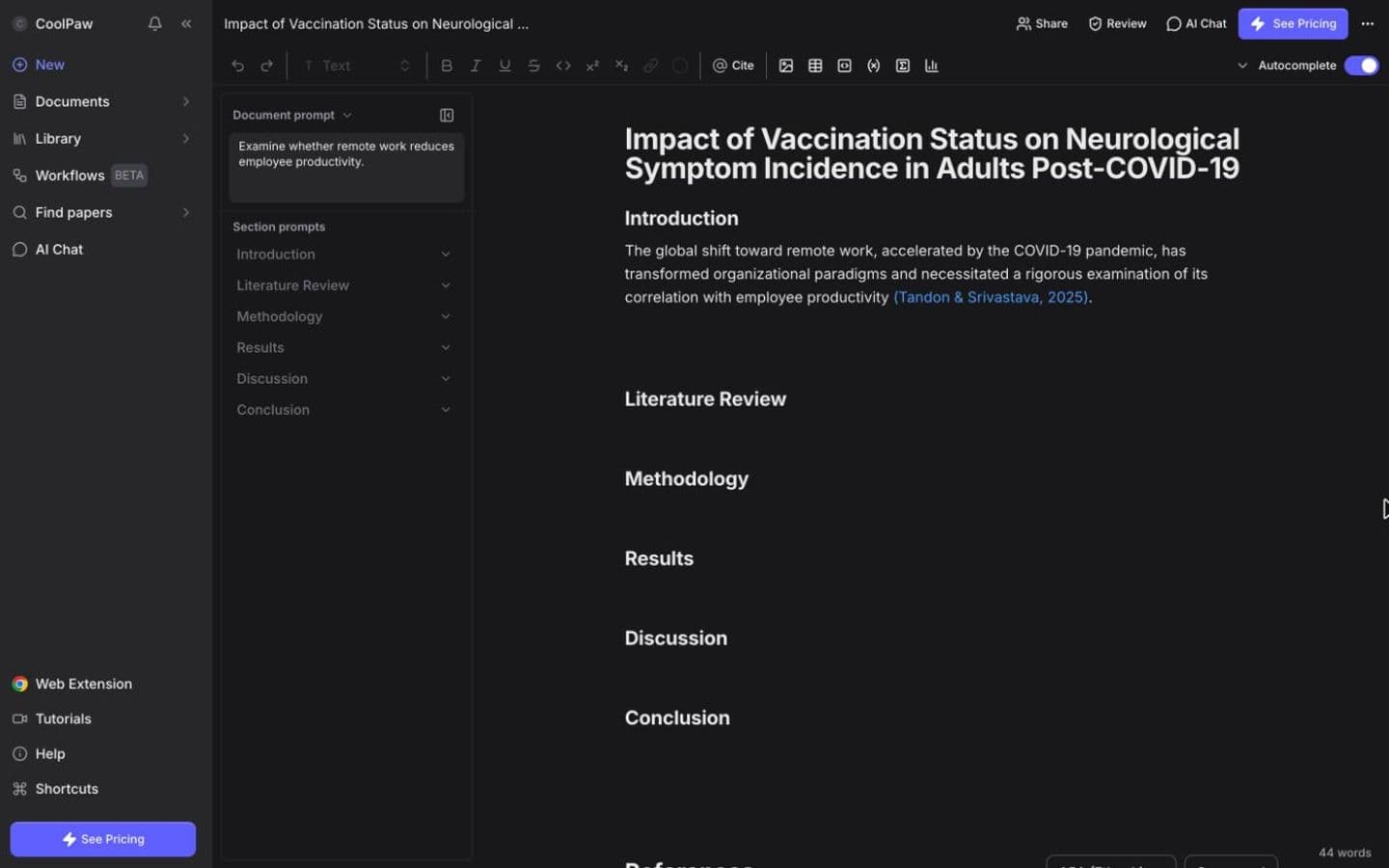
Jenni AI editor, signed in to a free account. Best for: Students who want citations tied to the passage, with AI suggestions they can restrict to their own library.
5. Paperpal
Paperpal stands in for Textero's side tools more than its generator. It checks grammar and tone with suggestions trained on scholarly edits, runs plagiarism checks against 99B+ sources, and works inside Word, Google Docs and Overleaf. Research and Cite searches 250M+ articles and generates citations in 10,000+ styles.
On the free plan you get 200 grammar edits a month and five a day of the AI writing tools; paid prices only appear once the pricing page loads them for your region. It also offers to “Draft with suggestions grounded in your sources”. Commenters on r/research warned that AI editing can blur what you meant.
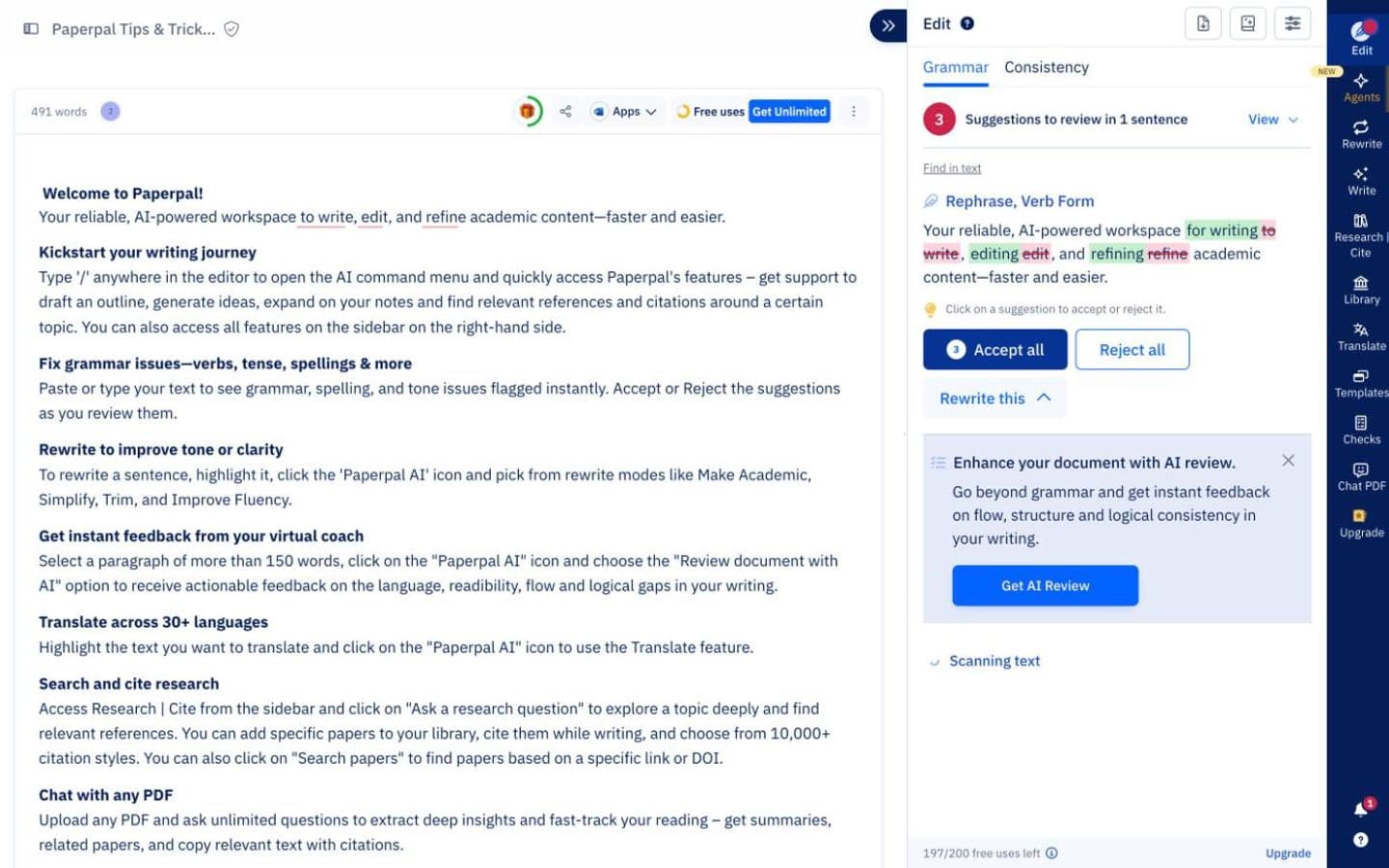
Paperpal editor on its built-in sample document, signed in to a free account. Best for: Students with their own draft who want academic polish and a plagiarism check before submitting.
6. Yomu AI
Yomu AI is the closest thing to Textero inside a full editor, and it doesn't hide it: the new-document flow “writes a full, researched draft”. Around that you get a reusable source library, citations in 700+ styles through a tool powered by Sourcely, chat with PDFs, and a Get Feedback button that reviews your draft.
Its ethics statement asks students to use it alongside their own writing, “not as a replacement for” it. No free plan is listed for the editor. Pro is $10 a month billed annually or $21 month to month, capped at 1,000 AI actions. The only Trustpilot review complains of a renewal without notice.
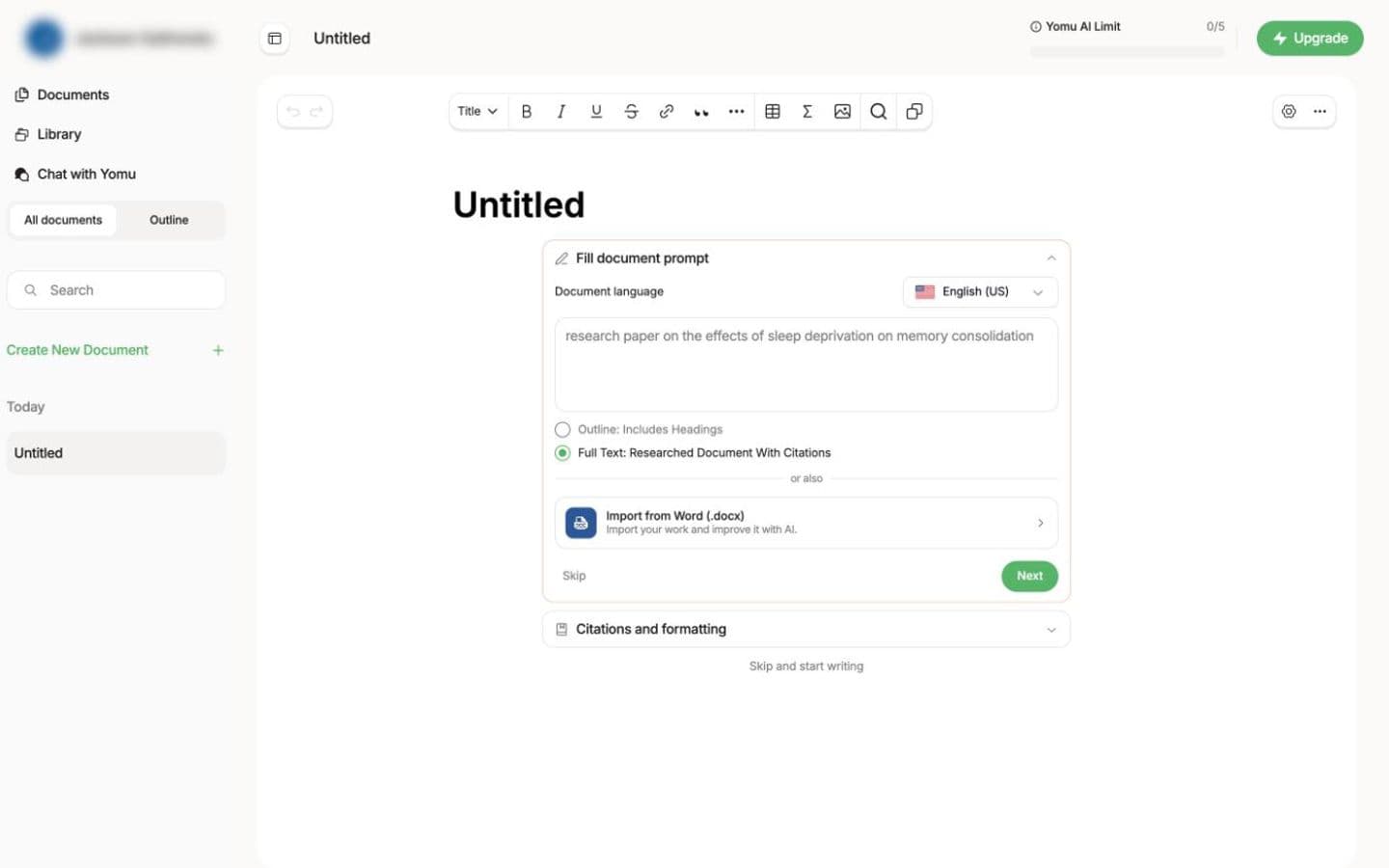
Yomu AI new-document screen, signed in to an unpaid account (its pricing FAQ says you can start for free to try it; the account name is blurred). Best for: Students who want Textero's approach in a fuller editor and will treat its drafts as drafts.
7. Ponder
Ponder belongs to the research stage, before any essay exists. Its search spans 320M+ scholarly works mixed with your own files; it lays the material out as mind maps, paper lists and documents in one project, and opens the exact paragraph when you click a citation. It flags citations that rest only on an abstract, and re-checks for retracted sources before export.
Credits run everything: 50 a day free, and Casual is $16 a month or $14 a month billed yearly. Its Draft stage will write literature reviews and papers from your sources if asked. A detailed review sponsored by Ponder still warned that credits go faster than you'd expect.
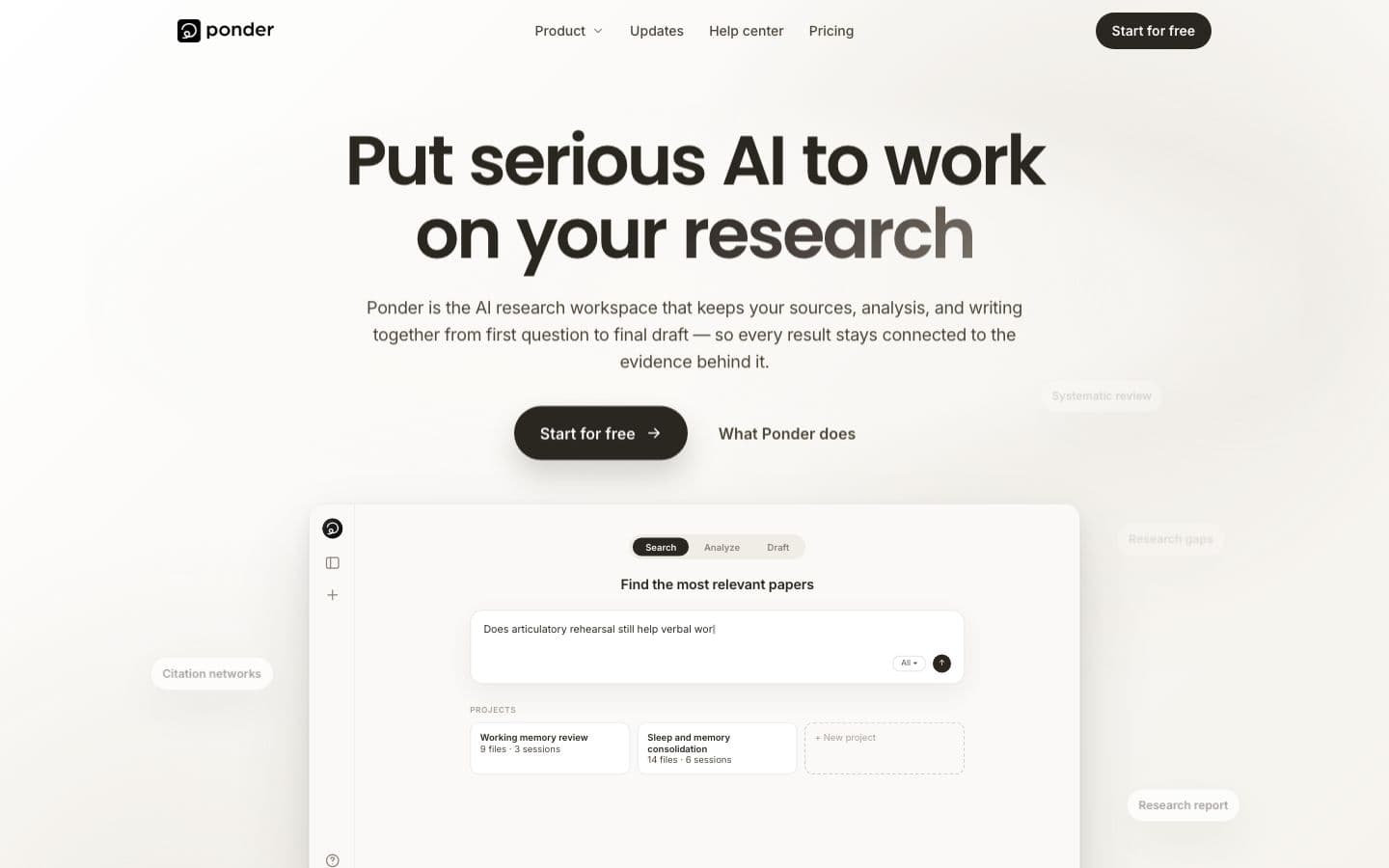
Ponder public homepage, signed out (the workspace needs an account). Best for: Students who think visually and want to understand their sources before writing a word.
At a glance
Every tool above, with Textero on the last row for reference. Writing assistants help you write; essay generators write the essay for you.
| Product | Type | Paid from | Free tier | Citations | Ghostwriting |
|---|---|---|---|---|---|
| EthiWrite | Writing assistant | $9 (billed every week) or $10/month ($120 billed annually) | Yes | Only from sources you added | Guides; you write |
| Grammarly | Writing assistant | $12/month | Yes | Your sources, or papers it finds for you | Drafts text when asked |
| Thesify | Writing assistant | €7.50/month | No | From its own paper database | Drafts text when asked |
| Jenni AI | Writing assistant | $12/month | Yes | Your sources, or papers it finds for you | Drafts text when asked |
| Paperpal | Writing assistant | See pricing page | Yes | Your sources, or papers it finds for you | Drafts text when asked |
| Yomu AI | Writing assistant | $10/month | No | Your sources, or papers it finds for you | Writes the essay |
| Ponder | Writing assistant | $14/month | Yes | Your sources, or papers it finds for you | Drafts text when asked |
| Textero | Essay generator | $8.25/month | Yes | From its own paper database | Writes the essay |
The bottom line
Textero is candid that its essays are a starting point. If you'll rewrite one anyway, start from your own outline instead: test the draft against your rubric with Grammarly or Thesify, and find and cite the papers with Jenni AI or Paperpal.
FAQ
- Is Textero free?
- Partly. The free plan gives 5 AI credits and 5 AI commands a day with unlimited PDF uploads, and a generated essay costs one credit per page, so a five-page essay uses the day's allowance. The AI Detector and Essay Grader take credits too. Premium removes the limits.
- Does Textero use real sources?
- It draws references from research papers through Semantic Scholar, and you can upload your own materials. It also says it does not independently verify accuracy and that checking citations is your job. An older post on DEV Community, by a self-described freelance essay writer, claimed its output can closely resemble existing sources, without giving examples.
- Can I get my money back from Textero?
- The quarterly ($44.99) and yearly ($99) Premium plans include a 14-day money-back guarantee and a subscription freeze. The $19.99 monthly plan's card says “No subscription freeze” and lists no money-back guarantee, so read the terms before choosing it.
- Which Textero alternatives have a free plan?
- Grammarly, Jenni AI, Paperpal and Ponder all have free plans, each metered differently: Ponder gives 50 credits a day, Paperpal 200 grammar edits a month. EthiWrite has one as well. Thesify has no free plan, and Yomu AI lists none for its editor.