Compare
Paperguide vs Paperpal: which should a student use?
Paperguide is for the weeks you spend reading. Paperpal is for the days before you submit. Paperguide's workflows centre on literature and systematic reviews, with search, screening and data extraction. Paperpal is an academic language editor that sits inside Word, Google Docs or Overleaf and checks your draft against journal standards.
If you're writing a literature review or a dissertation chapter from a stack of papers, start with Paperguide. If the draft exists and you want it cleaner and checked, Paperpal.
Prices and features checked on October 16, 2026.
At a glance
Writing assistants help you write; essay generators write the essay for you.
| Product | Type | Paid from | Free tier | Citations | Ghostwriting |
|---|---|---|---|---|---|
| Paperguide | Writing assistant | $12/month | Yes | Your sources, or papers it finds for you | Drafts text when asked |
| Paperpal | Writing assistant | See pricing page | Yes | Your sources, or papers it finds for you | Drafts text when asked |
Both search for papers, differently
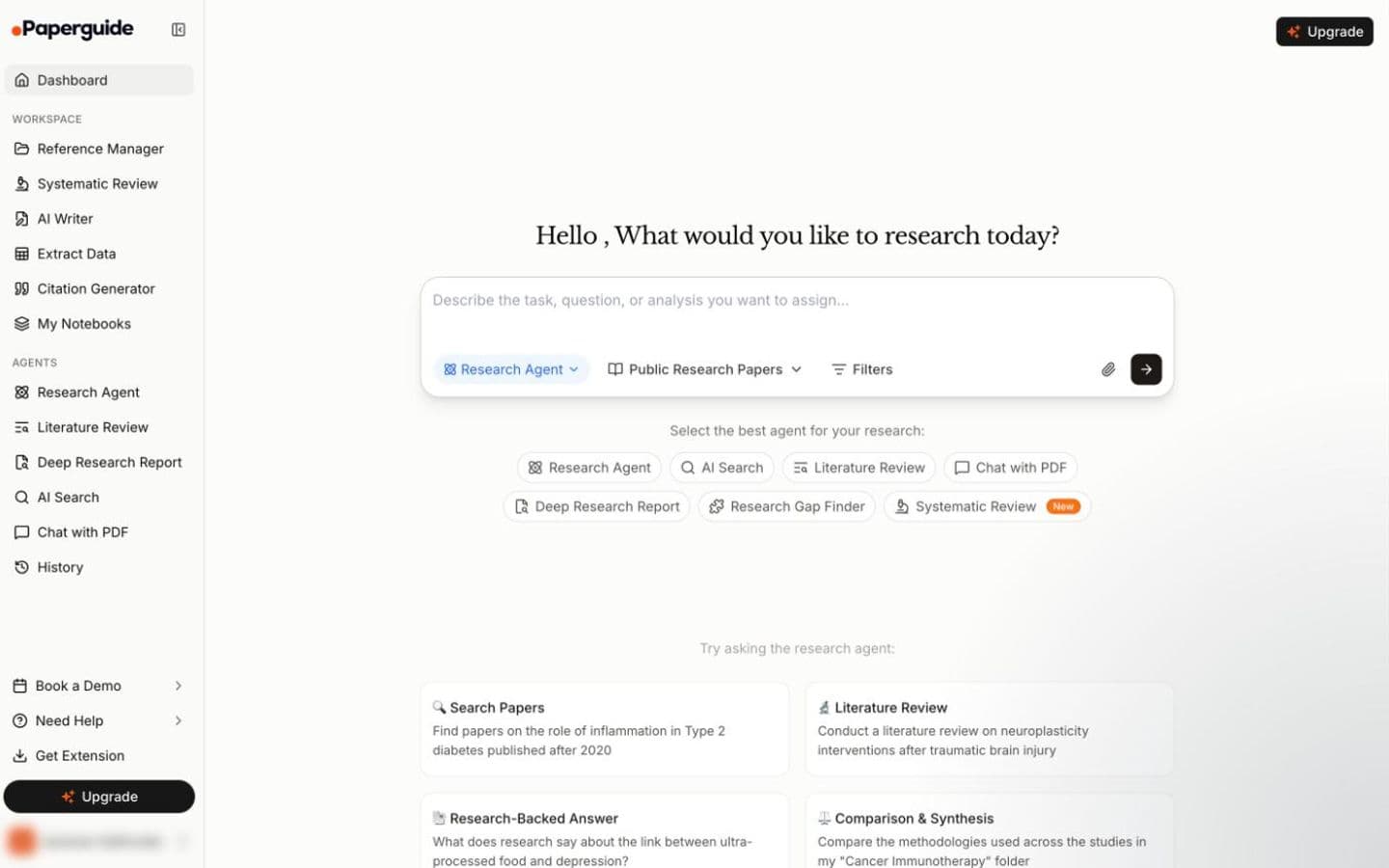
Here they overlap more than you'd expect. Paperguide searches 200M+ papers across PubMed, arXiv, OpenAlex and Semantic Scholar plus your own library, and every claim links to the exact sentence in the paper it came from. Its reference manager imports from Zotero or Mendeley and switches between 1,000+ citation styles.
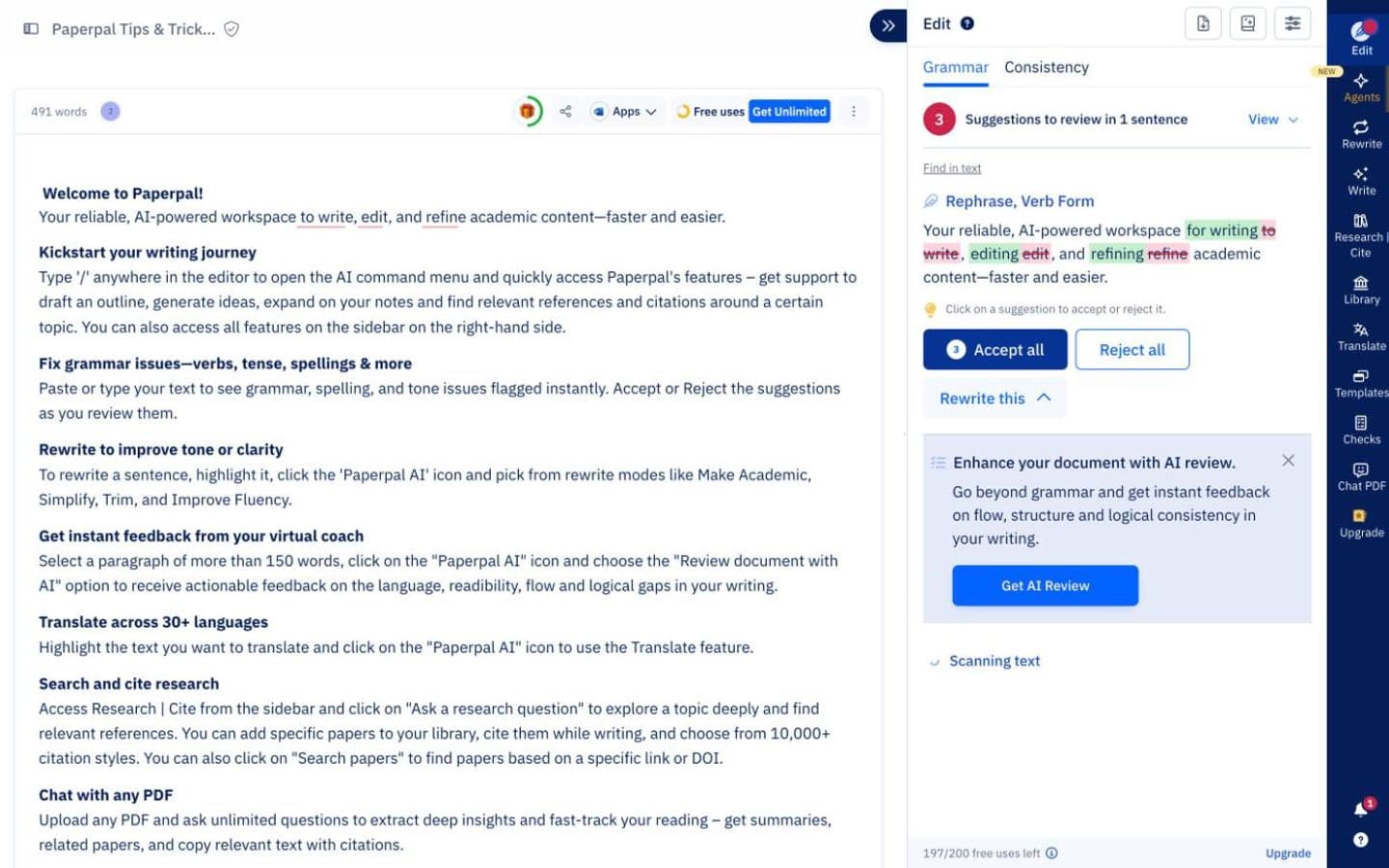
Paperpal's Research and Cite searches 250M+ research articles, pulls insights out of PDFs and generates citations in 10,000+ styles. It also cites from references and PDFs you upload. Paperpal states the higher count for both articles and styles, but both counts end in a plus, so neither proves whose search is bigger. The clearer difference is Paperguide's sentence-level link back to the source, which nothing on this page says Paperpal offers.
How each one handles the writing
Paperguide's AI Writer will generate a citation-grounded draft from a research question, or you can write yourself with its agent alongside. It says AI-written passages are never given invented references. That's a promise about the references, not about whether you should hand in the prose.
Paperpal is mostly an editor of text you wrote, but not only that. Its homepage offers to “Draft with suggestions grounded in your sources”, and its paraphraser restructures your sentences. Both tools will produce text if you ask. Neither forces you to.
Checks before you submit
This is Paperpal's ground. Its grammar and tone suggestions are trained on scholarly edits, it runs 30+ pre-submission checks against journal language and formatting standards, and its plagiarism check compares your text against 99B+ sources before your institution's own review. On Trustpilot, where Paperpal invited most of the reviewers, the AI-detection checks get the praise.
Paperguide's free plan includes plagiarism checks up to 4,000 words a month, but nothing on this page describes grammar or language feedback from it. Its strengths are earlier in the process: screening papers, extracting data into a table where each value links to its source statement, and building a PRISMA diagram from a systematic review's own counts.
One caution on Paperpal from r/research: commenters were sceptical of AI editing for research writing, warning it can blur what you meant. Read each suggestion before you accept it.
Prices you can see, and prices you can't
Paperguide publishes its prices: Plus is $12 a month per seat and Pro $29, both billed annually, and Evidence Teams is $89 per seat. Yearly billing is advertised as saving 41% over monthly. The free plan gives 2,000 AI credits a month across the Research Agent, reports and AI Writer, with limited searches and reference manager.
Paperpal's Prime and Pro are billed monthly or annually, but the pricing page loads prices for your region, and it showed none when checked. So you can't compare costs until you open the page yourself. The free plan is small: 200 grammar edits a month, five uses a day of the paraphraser and AI review, and lite plagiarism and AI-detection reports.
What reviewers grumble about
Paperguide's complaints are about fit and stability. Some reviewers found its results unhelpful for university assignments, a doctoral student on an annual plan reports frequent errors and crashes, and another says PDF uploads are slow. On the positive side, reviewers praise its literature search, data extraction and a support team that fixed a Zotero connection quickly.
Which should you choose?
Choose Paperguide if you're doing a literature or systematic review: you get a search across several paper indexes, screening, data extraction and a reference manager in one place, with a free plan to start and published prices.
Choose Paperpal if you've written the draft and want grammar, plagiarism and pre-submission checks inside the editor you already use. Start on the free plan, and check the regional price before upgrading.
Neither of these reads your argument the way a marker would. EthiWrite (our tool) has an Examiner Mode for that that flags unsupported claims and thin evidence without rewriting anything. It only formats APA, MLA and Chicago, so both of these cover far more citation styles.
FAQ
- Is Paperguide or Paperpal free?
- Both have free plans. Paperguide's gives 2,000 AI credits a month and 4,000 words of plagiarism checks. Paperpal's gives 200 grammar edits a month, five a day of its AI writing tools and research Q&A, and five files a month of chat with papers.
- Does Paperpal work in Overleaf?
- Yes, through its Chrome and Edge extensions, which support Google Docs and Overleaf. There's also a Microsoft Word add-in.
- Can Paperguide run a systematic review?
- Yes. It supports dual independent screening and builds a PRISMA diagram from the review's own counts, with the final screening call left to a human. Plus covers reviews of up to 1,000 papers and Pro up to 5,000.
- How much should I trust Paperpal's Trustpilot reviews?
- Weigh them knowing that most of the reviewers were invited by Paperpal. They praise its AI-detection checks and its help with drafting and editing. The r/research thread is more sceptical of AI editing in general.
- Does Paperguide work with Zotero?
- Yes. Its reference manager imports from Zotero or Mendeley, and the import is on the free plan too.
- Will either tool write my paper?
- Both can produce text. Paperguide's AI Writer drafts from a research question, and Paperpal offers to draft with suggestions grounded in your sources. Check your course's AI policy before using either for anything you hand in.