Compare
Paperguide vs Rytr: one reads papers, the other reads your inbox
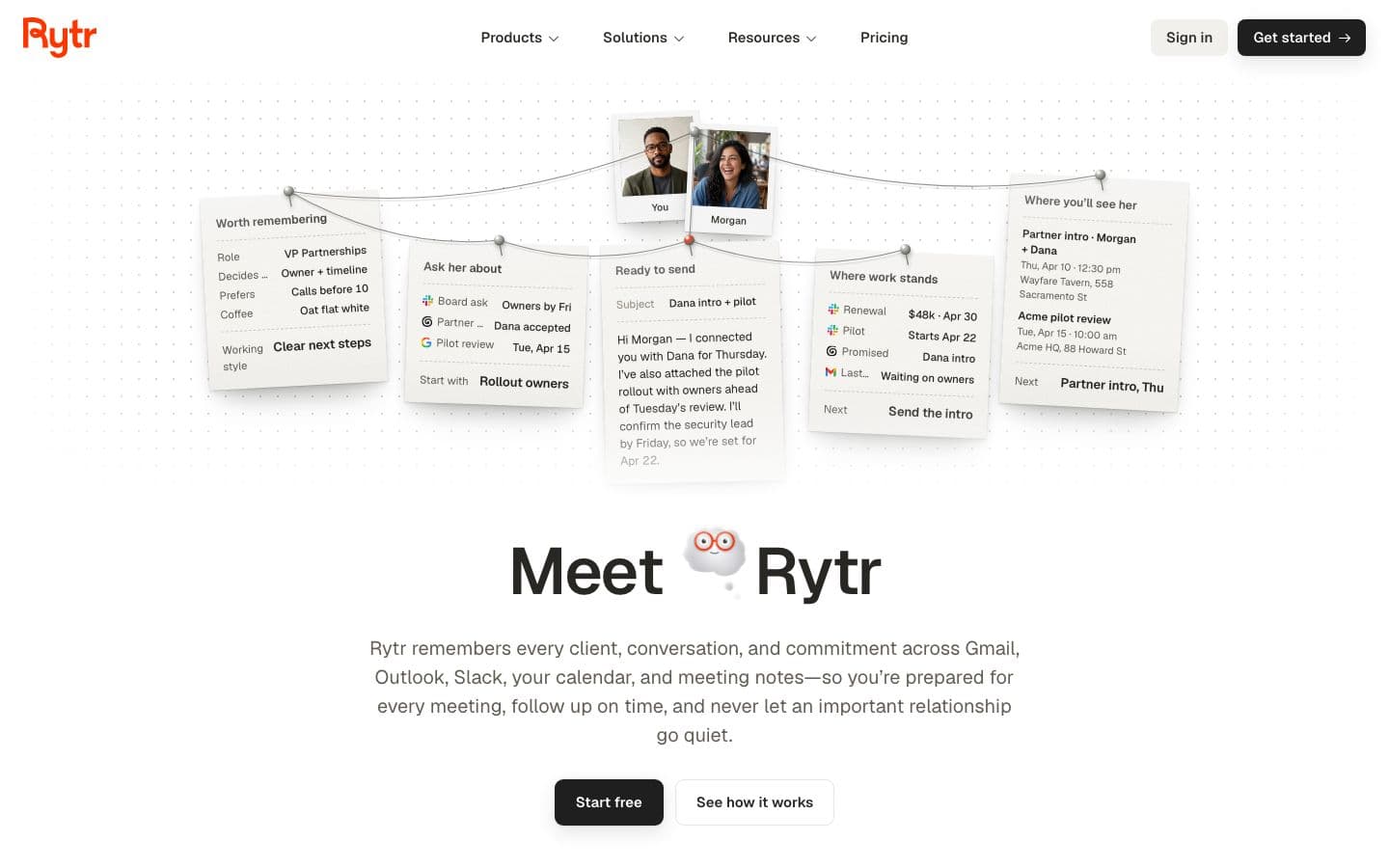
For academic work, Paperguide. Rytr's homepage now pitches it as an assistant that “remembers every client, conversation, and commitment”, and none of its writing use cases is about essays or academic writing. Paperguide is a research platform built around paper search, systematic reviews and a reference manager.
There's an odd overlap, though. Both now promise answers you can trace back to a source. What counts as a source is where they part ways.
Prices and features checked on October 17, 2026.
At a glance
Writing assistants help you write; essay generators write the essay for you.
| Product | Type | Paid from | Free tier | Citations | Ghostwriting |
|---|---|---|---|---|---|
| Paperguide | Writing assistant | $12/month | Yes | Your sources, or papers it finds for you | Drafts text when asked |
| Rytr | Essay generator | $9/month | Yes | Does not cite | Drafts text when asked |
Whose sources?
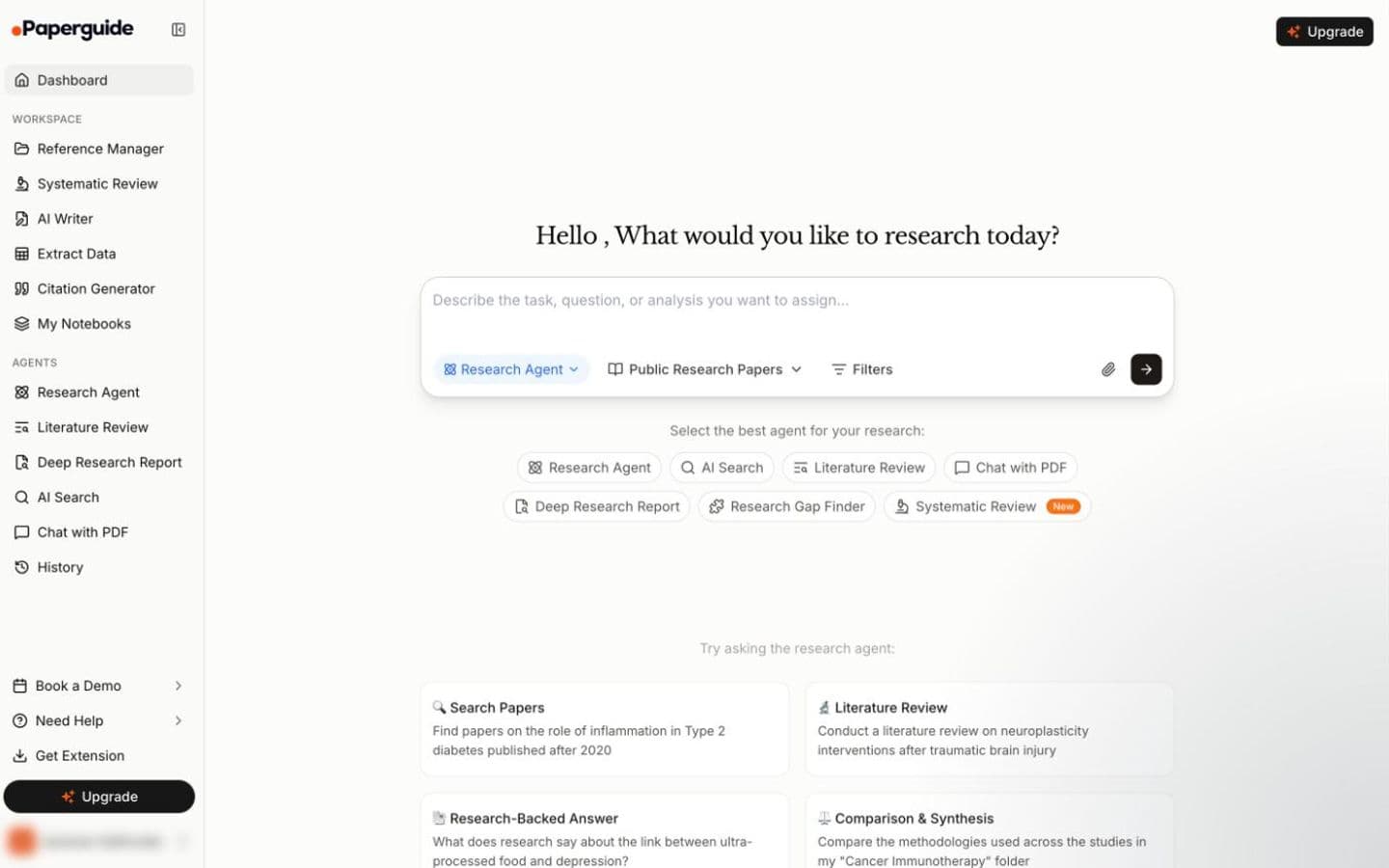
Paperguide's index pulls together PubMed, arXiv, OpenAlex and Semantic Scholar, more than 200M papers in all, and sits beside your own library. Each claim it makes points to the sentence in the paper it's drawn from. You can cite from your library and its index in the same document, in any of 1,000+ styles.
Rytr's “Source-backed Ask Rytr” answers questions from your connected email, Slack, calendar and notes, and shows you the messages and meetings behind each answer. Useful if you're chasing a group-project thread. Its site doesn't mention academic citations, references or paper search at all.
What each one writes
Give Paperguide's AI Writer a research question and it will produce a draft with citations built in, and it promises never to invent a reference for an AI-written passage. You can also write the draft yourself with its agent alongside you. If your course restricts AI-written text, the second mode is the one to use.
Rytr generates text from a rough idea for whatever use case you pick, from emails and blog posts to ads, in your own voice or one of 22 tones and in 38 languages. It can also improve, shorten, expand or continue text you wrote. It has no essay workflow, and its homepage and pricing page state no academic-integrity policy.
Where Rytr gets praise, it's for everyday speed: Trustpilot reviewers like how easy it is, the range of use cases and tones, and how quickly it drafts emails and social posts. That's a fair description of what it's for.
Feedback and fit for coursework
Neither describes feedback on your draft. What Paperguide does describe is research work: screening papers for a systematic review with a PRISMA diagram, and pulling details from many papers into a table where every value links to its source statement. That's feedback on the literature, not on your prose.
Vantaige, an AI tools directory that links to Rytr with an affiliate link, is pointed about it. It says Rytr “cannot pull current facts, access SERP data, or verify claims” and, on academic topics, “consistently produces surface-level generalizations”. That review was last updated in May 2026 and describes Rytr before the relaunch, so it's dated, but the current site still doesn't mention academic citations or paper search. Some Trustpilot reviewers also found its output generic and in need of heavy editing.
Paperguide isn't a perfect fit for coursework either. Its workflows centre on literature and systematic reviews for researchers and labs, and some reviewers say its results didn't help with university assignments.
Price and the free plans
Rytr is the cheap one. Lite is $9 a month on monthly billing, with unlimited characters, and Personal is $19. Yearly billing saves 20%, but the page shows no yearly prices. The free-forever plan gives 10,000 characters a month and needs no credit card.
Rytr's Pro plan, at $49 a month on monthly billing, adds all connected sources, morning and evening briefings and custom use cases. None of that is about coursework, so a student has little reason to go past Lite.
Paperguide lists Plus at $12 a month per seat and Pro at $29, both billed annually, and advertises yearly billing as saving 41% over monthly. Rytr shows only monthly prices and Paperguide lists annual ones, so the two don't line up on the same basis. Paperguide's free plan includes 2,000 AI credits a month and plagiarism checks up to 4,000 words.
Before paying Rytr, read its refund terms: subscriptions “cannot be refunded” apart from requests it considers case by case, and several Trustpilot reviewers describe refusals, including after an annual renewal.
Which should you choose?
Choose Paperguide if your work runs on research papers: searching, screening, extracting data and citing, with a free plan to try it on a real review.
Choose Rytr if what you need is help with everyday writing and keeping track of people, like emails, posts and follow-ups, on a small budget. Keep it away from your essays and references.
We built EthiWrite for students who want an AI that helps with the essay without writing it. Its Examiner Mode flags unsupported claims and thin evidence and cannot rewrite your text. Its paper search covers OpenAlex only, where Paperguide searches several indexes.
FAQ
- Can Rytr write academic essays?
- It isn't built to. None of its writing use cases is about essays or academic writing, and its site doesn't mention academic citations or paper search.
- Is Rytr cheaper than Paperguide?
- Rytr Lite is $9 a month on monthly billing. Paperguide Plus is $12 a month per seat on annual billing. Rytr shows no yearly prices and Paperguide's listed prices are annual, so they sit on different bases.
- Does Paperguide make up references?
- Paperguide says it never attaches an invented reference to AI-written text, and each claim links to its sentence in the source paper, so you can check. Reliability complaints exist, though: a doctoral student on an annual plan reports frequent errors and crashes.
- Do Paperguide and Rytr have free plans?
- Yes, both. Rytr's is free forever with 10,000 characters a month. Paperguide's gives 2,000 AI credits a month shared across its Research Agent, reports and AI Writer.
- Why do Rytr reviews describe Unlimited and Premium plans?
- Those reviews predate its relaunch. The Vantaige review quoted here was last updated in May 2026 and describes Rytr when it sold Unlimited and Premium plans; the current plans are Free, Lite, Personal and Pro.