Compare
Copy.ai vs Writesonic: does either belong in a student's toolkit?
Start with the price, because it tells you most of the story. Writesonic's cheapest plan is $79 a month billed annually, for 15 AI articles. Copy.ai's Chat plan is $24 a month on annual billing. Both are sold to businesses, and neither is an academic tool.
If a student has to pick one, Copy.ai is the less awkward fit: it costs less on annual billing and has free tools you can try. Writesonic's article writer is built “to rank on Google AND get cited in AI search”, which isn't what your marker is grading.
Prices and features checked on October 17, 2026.
At a glance
Writing assistants help you write; essay generators write the essay for you.
| Product | Type | Paid from | Free tier | Citations | Ghostwriting |
|---|---|---|---|---|---|
| Copy.ai | Essay generator | $29/month | Yes | Not verified | Drafts text when asked |
| Writesonic | Essay generator | $79/month | No | Not verified | Writes the essay |
Two marketing platforms on a student's shortlist
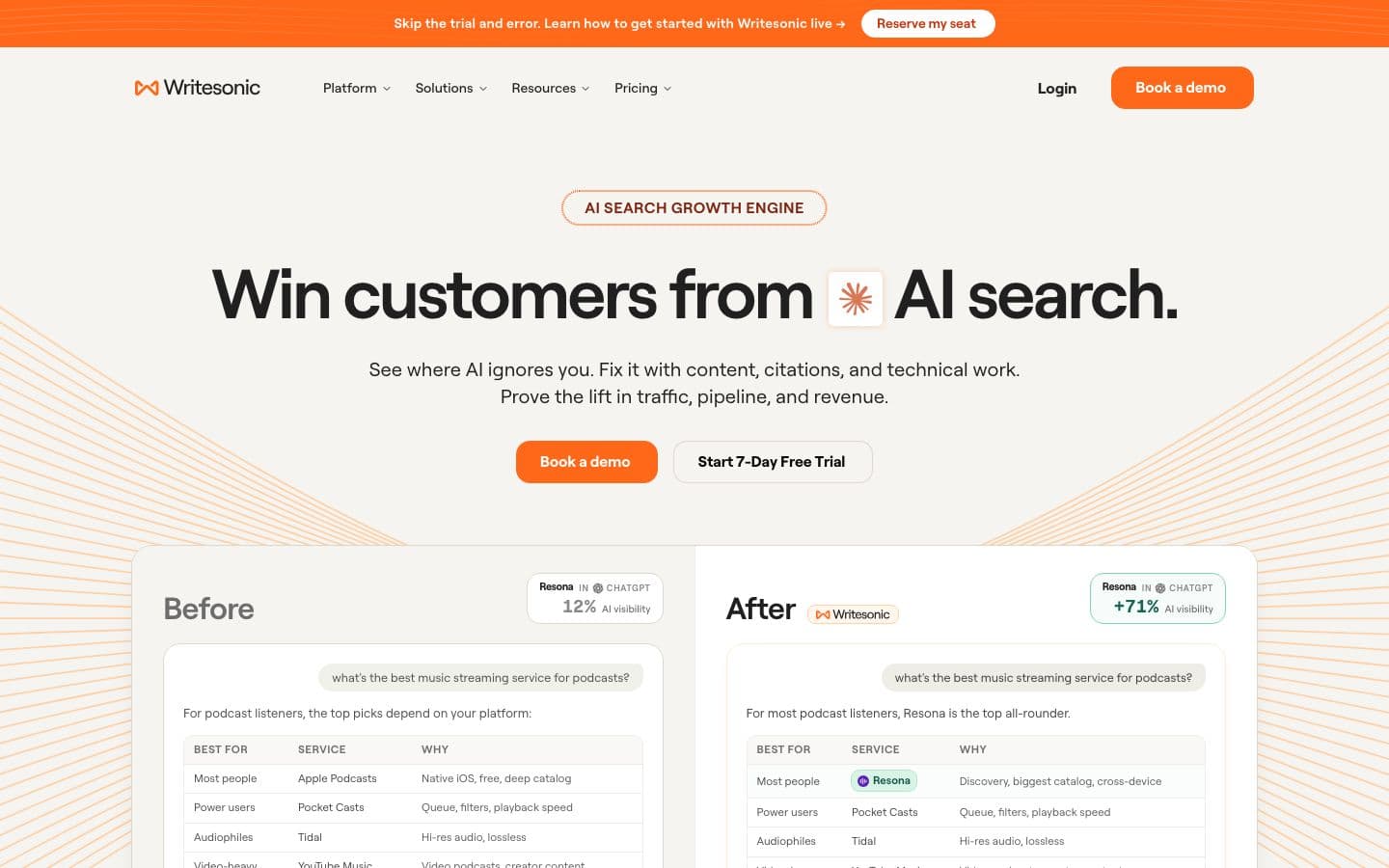
Writesonic now pitches itself with “Win customers from AI search.” Its homepage and article writer page don't mention essays, students or academic use, though it's listed among Jenni AI alternatives. Every paid plan includes the AI Article Writer, alongside AI-visibility tracking and site audits.
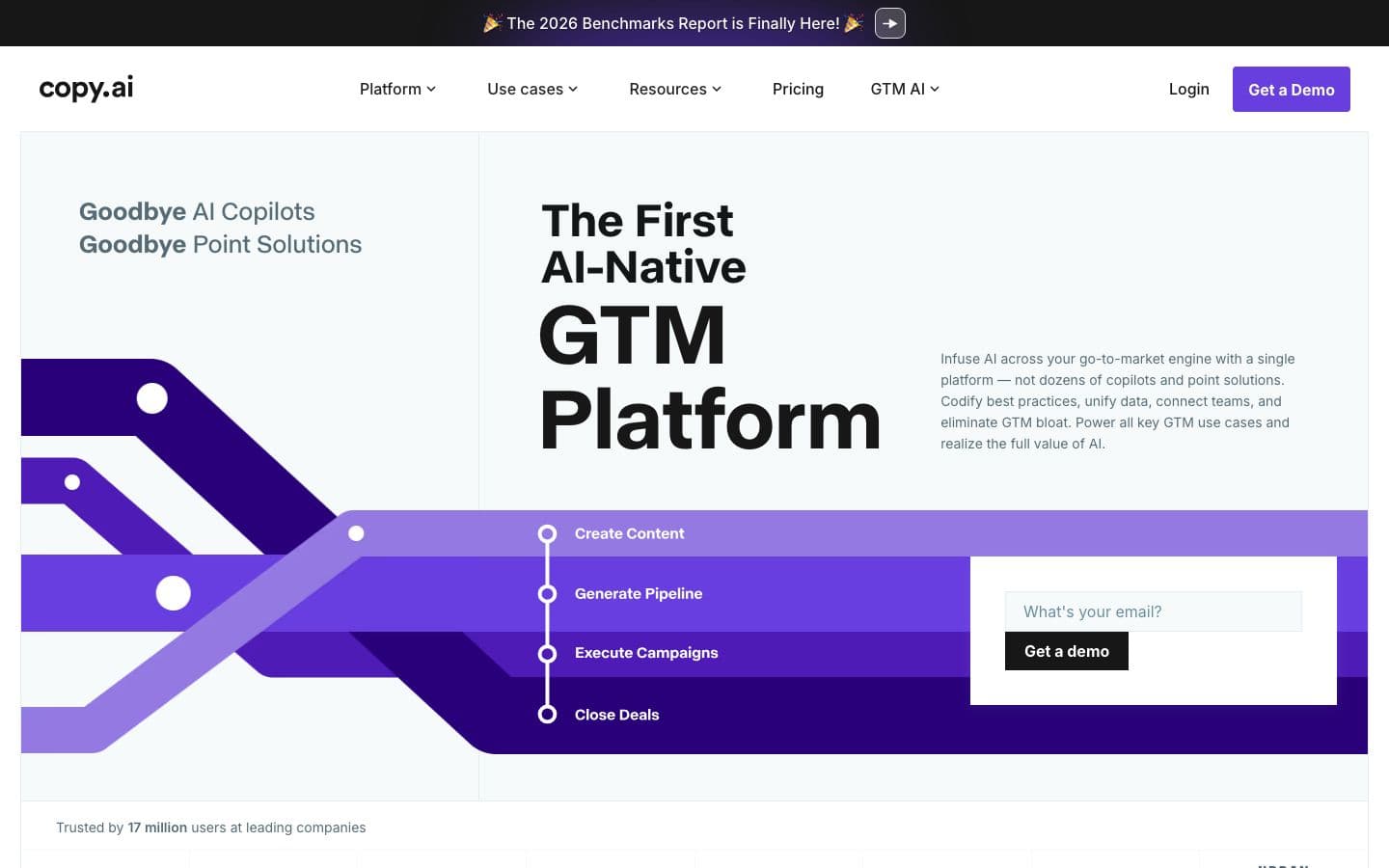
Copy.ai calls itself “The First AI-Native GTM Platform”. The Chat plan gives five seats unlimited words in chat with OpenAI, Anthropic and Gemini models, and Workflows chain research, content generation and tool integrations for a team. It also turns up in “Jenni AI alternatives” lists.
Sources picked for search rankings
Writesonic does talk about sources. The vendor says “Every claim backed by a first-party source before publish”, drawn from a bank that excludes competitor blogs and SEO-spam aggregators. Those sources are web pages chosen for marketing articles, though, not scholarly papers, and its article writer page lists no academic citation styles. It doesn't cite from your own library or a scholarly database.
Copy.ai's public pages don't describe finding, citing or formatting academic sources. The only research it mentions is “internet research” paid for with Workflow credits, and it doesn't say whether that gets cited.
Whole articles, or whatever you ask
Writesonic writes complete long-form articles end to end, in what it calls “The Agentic Content Pipeline”, running to “3,000 to 8,000 words” after it analyses search results and competitor pages. It's aimed at marketing content, not coursework. Length won't be the problem if a student misuses it.
Copy.ai writes whatever you ask, in chat or in one of its generators. Its Paragraph Generator page, though, pitches drafting essays and sections of research papers, and Copy.ai takes no position on student work, so the line is yours to draw.
No draft feedback, and mixed reviews of the output
Neither describes a feature that reviews an essay draft. What you'll find are reviews of their own output. A marketing agency's review calls Writesonic's output uneven and generic without detailed prompts, says its factual accuracy is inconsistent, and judges it better for bulk drafts than precise writing.
On Trustpilot, Writesonic's reviewers praise how fast it makes content, while others call it overpriced next to general chatbots. Several long-time Copy.ai users make a similar complaint, that its quality and value have slipped compared with tools such as ChatGPT, though a minority say it worked well for their business.
Trials, free tools and the bill
Writesonic lists no free plan, but there's a 7-day free trial with no credit card needed. The plans are billed annually: Starter at $79 a month for 15 AI articles, Basic at $199 for 25 and Growth at $399 for 50, with Enterprise priced on request. Monthly-billed prices aren't shown on the pricing page.
Copy.ai's pricing page lists no free plan either, but its free tools are labelled free and a sign-up prompt advertises 2,000 free words a month with no credit card; the free account's limits are unverified. Chat is $24 a month on annual billing, under a third of Writesonic Starter's annual rate, or $29 month to month.
Both draw billing complaints on Trustpilot. Writesonic's reviewers describe charges after cancelling and refused refunds, especially on annual plans. Copy.ai's describe charges that kept coming after they cancelled.
Which should you choose?
Choose Copy.ai if you need marketing copy from a small team and want five seats of chat for $24 a month on annual billing, with free tools to try first.
Choose Writesonic if you run content for a business and need long SEO articles built to rank on Google and get cited in AI search. Use the 7-day trial before you commit to annual billing.
Your reader is a marker, not a search engine, and we built EthiWrite with that reader in mind. It cites only from sources in your Library, and Examiner Mode flags unsupported claims and thin evidence. Every Quota is finite, even on the paid Plans.
FAQ
- Can Writesonic write an academic essay?
- It writes complete long-form articles, but it's aimed at marketing content, not coursework, and its sources are web pages rather than scholarly papers. A user review on SoftwareReviews says it “isn't very good at writing academic essays/articles”.
- Is there a free version of Writesonic?
- No free plan is listed, but there's a 7-day free trial that needs no credit card. On Copy.ai's side, the free tools are the nearest thing to free use, with 2,000 free words a month advertised at sign-up.
- Can I trust the facts in a Writesonic article?
- Check them. The vendor says every claim is backed by a first-party source before publishing, but a marketing agency's review found its factual accuracy inconsistent.
- Does Copy.ai have an article writer like Writesonic's?
- Not one described here. Copy.ai's free tools include a paragraph generator and an outline generator, and its chat writes on request. Writesonic's Article Writer produces 3,000 to 8,000 words in one pipeline.