Compare
Writesonic vs Yomu AI: which AI writer suits academic work?
Ask where the sources come from and the choice makes itself. Yomu AI cites from your own library or from sources its Sourcely-powered search finds, in 700+ styles. Writesonic cites web pages it picks for marketing articles, with no academic citation styles listed.
Both write whole drafts for you, so neither is a way around your course's AI rules. But Yomu is an academic editor priced for a student, and Writesonic is a marketing platform priced for a business. For a paper, Yomu.
Prices and features checked on October 17, 2026.
At a glance
Writing assistants help you write; essay generators write the essay for you.
| Product | Type | Paid from | Free tier | Citations | Ghostwriting |
|---|---|---|---|---|---|
| Writesonic | Essay generator | $79/month | No | Not verified | Writes the essay |
| Yomu AI | Writing assistant | $10/month | No | Your sources, or papers it finds for you | Writes the essay |
Sources: a library or the open web
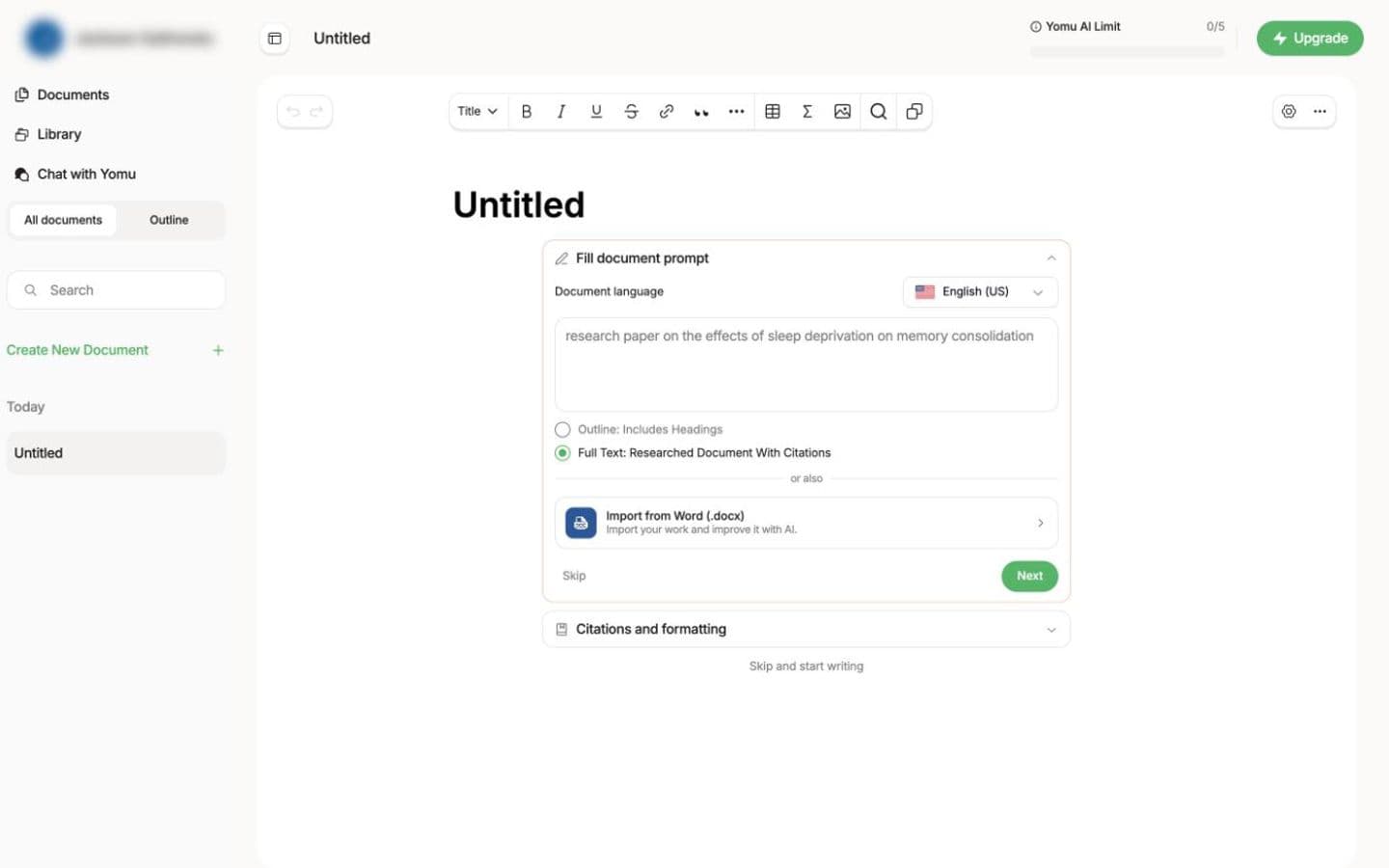
Yomu saves sources to a personal library you can reuse across documents, finds new ones through its Sourcely-powered search, and lets you chat with PDFs, images and web search. A review based on public information liked having drafting, citations and a library in one workspace, but warned that the citations still need checking against the sources.
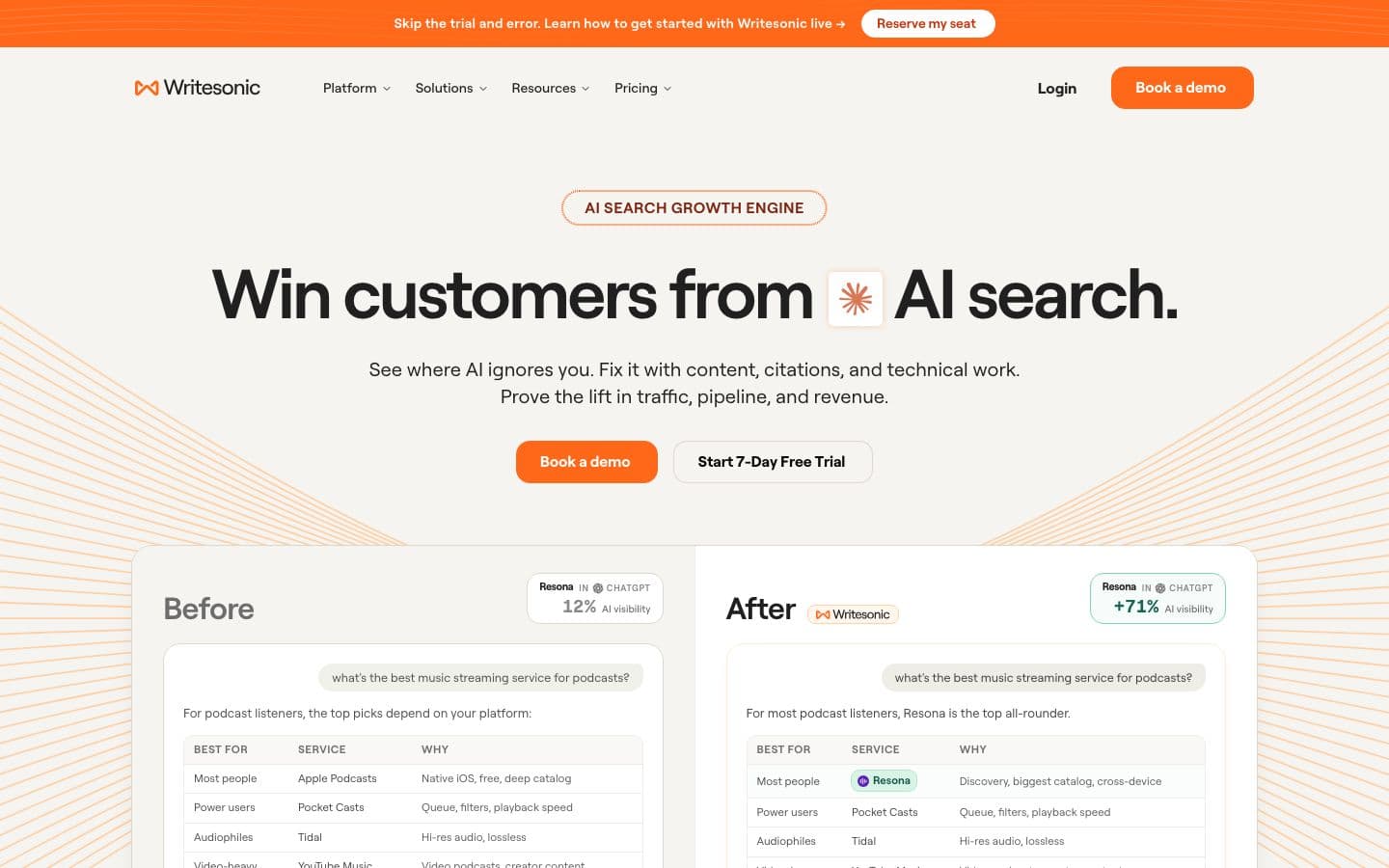
Writesonic promises “Every claim backed by a first-party source before publish”, from a bank that excludes competitor blogs and SEO-spam aggregators. That's a marketing standard, not a scholarly one: the sources are web pages, it doesn't cite from your own library or a scholarly database, and its citations couldn't be checked without an account.
Two kinds of whole draft
Yomu's new-document flow “writes a full, researched draft” from a description of your paper, and its Document Assistant helps “write entire sections”. Its ethics statement asks that students use it alongside their own writing, “not as a replacement for” it.
Writesonic's AI Article Writer produces articles of “3,000 to 8,000 words” after analysing search results and competitor pages, built to rank on Google and get cited in AI search. Its homepage and article writer page don't mention essays, students or academic use, and a SoftwareReviews user says it “isn't very good at writing academic essays/articles”. The difference is what the output is for. An SEO article is judged on whether it ranks; a paper is judged on whether its claims hold up against the sources cited, and Yomu at least keeps your sources in a library you can check claims against.
Feedback on the draft
Yomu's Get Feedback, added in September 2026, runs focused academic reviews of your draft that you can preview and apply. On paid plans you can also choose among models from several AI providers for chat and editing.
Writesonic doesn't describe reviewing a draft. What it bundles into every paid plan is AI-visibility tracking and site audits, which measure a website, not an essay. Its Trustpilot reviewers praise its speed; a marketing agency's review calls the output uneven and generic without detailed prompts.
What a year of each costs
Both publish annual prices, so compare a year to a year. Yomu Pro is $120 a year with 1,000 AI actions a month, and Ultra, which is unlimited, is $204. Writesonic Starter is $79 a month billed annually, or $948 a year, for 15 AI articles a month; Basic is $199 a month. A full year of Yomu Ultra costs less than three months of Writesonic Starter.
Yomu also lists monthly prices of $21 for Pro and $35 for Ultra. Writesonic's monthly-billed prices aren't shown. Neither lists a free plan: Writesonic has a 7-day free trial with no credit card, and Yomu's pricing FAQ says you can start for free to try it, alongside separate free tools such as citation generators.
Billing complaints
Charges after cancelling and refused refunds, especially on annual plans, are what Writesonic's Trustpilot reviewers describe. Yomu has little independent coverage: its one Trustpilot review complains that the subscription renewed without notice. With either, put the renewal date in your calendar. Yomu lists monthly prices as well as annual ones, so you can pay month to month while you decide; Writesonic shows only its annually billed prices.
Which should you choose?
Choose Writesonic if you write SEO content for a brand and want articles produced alongside AI-visibility tracking. Try the 7-day trial first, and don't bring it your coursework.
Choose Yomu AI if you're writing a paper and want a source library, citation search in hundreds of styles and feedback in one editor, at a student's price. Decide up front how much of its drafting your course allows.
Both of these will hand you a finished draft. If you need to write it yourself, EthiWrite, which we make, is built for that: Examiner Mode critiques the argument without rewriting it, and citations come only from your Library. It won't produce paragraphs from a prompt, so it takes longer.
FAQ
- Can Writesonic write a university essay?
- It writes long articles end to end, but for marketing, from web sources and with no academic citation styles listed. A SoftwareReviews user says it isn't very good at academic essays.
- Is Yomu AI cheaper than Writesonic?
- Yes, on annual billing, the basis both publish. Yomu Pro is $10 a month and Ultra $17 on annual billing; Writesonic starts at $79 a month billed annually.
- Do Writesonic and Yomu AI have free plans?
- Neither lists one. Writesonic offers a 7-day free trial without a credit card. Yomu's pricing FAQ says you can start for free to try the service.
- Is Yomu AI's Pro plan limited?
- Yes. Pro allows 1,000 AI actions a month; only Ultra, at $17 a month billed annually or $35 monthly, is unlimited. Writesonic counts its limits in articles instead: 15 a month on Starter.
- Should I trust the citations either one adds?
- Check them either way. A review of Yomu warns its citations still need checking against the sources, and a marketing agency's review of Writesonic calls its factual accuracy inconsistent.